Israel–Hezbollah Flashpoint: The Bekaa Strikes That Could Shatter a Fragile Ceasefire
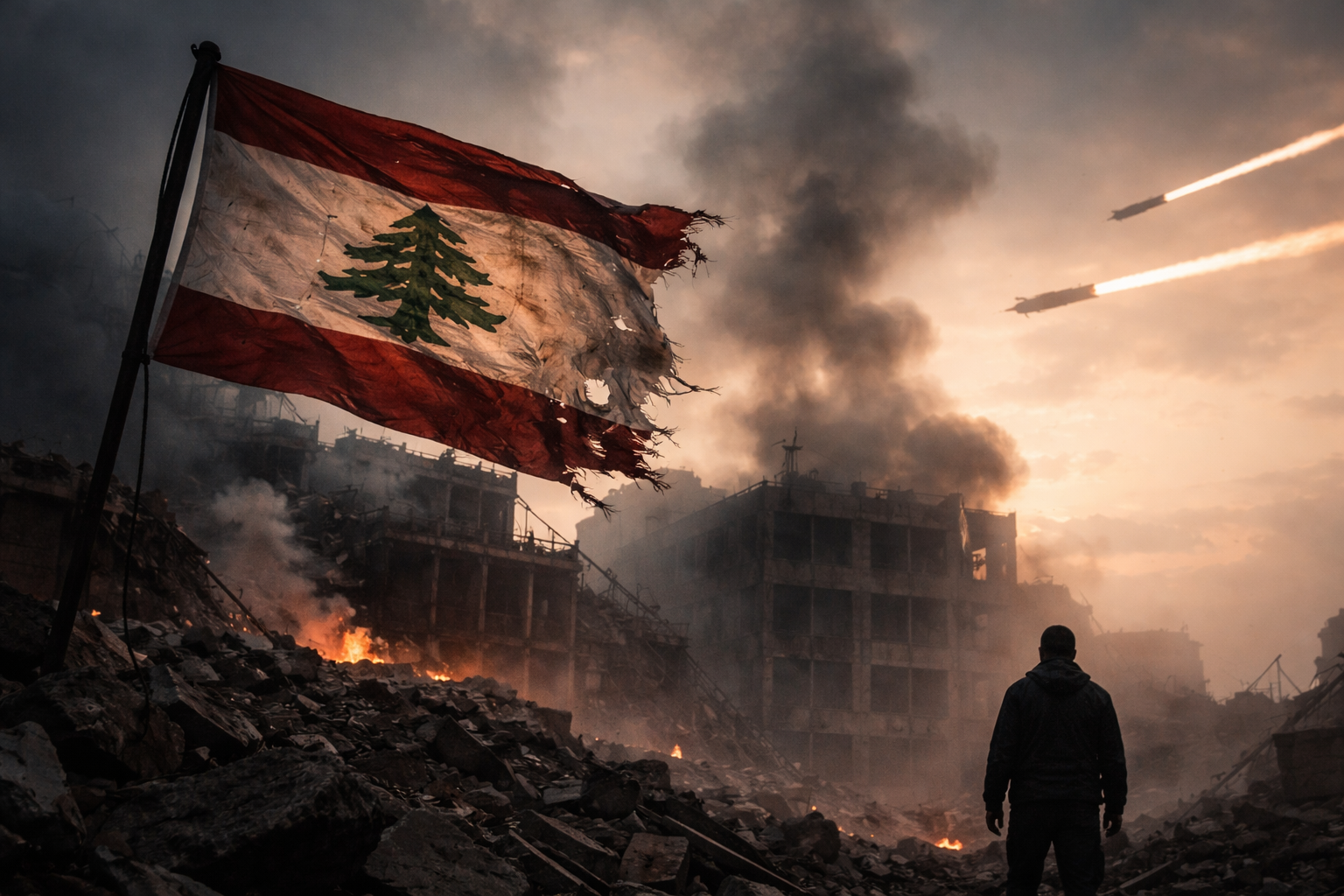
Israel–Hezbollah Escalation Risk: How Bekaa Could Ignite a Wider War
Israel and Hezbollah at the Brink: Bekaa Airstrikes and the Risk of Escalation
Residential buildings shook and collapsed in Lebanon’s eastern Bekaa Valley after Israeli airstrikes, with officials reporting at least 10 killed and dozens wounded.
Reports also described a senior Hezbollah figure among the dead, a detail that sharpened the escalation risk because it changes what each side feels it must “answer.”
This is the kind of moment that exposes what a ceasefire really is: not peace, but a set of limits, routines, and enforcement tools that try to keep violence from compounding.
The hinge is not simply about who was hit. It is whether the ceasefire’s enforcement and verification machinery can still control the grey zone where both sides claim self-defense.
The narrative revolves around the ability of the ceasefire's monitoring and enforcement system to avert a retaliatory cycle following a high-casualty strike.
Key Points
Israeli airstrikes in Lebanon’s Bekaa Valley reportedly killed at least 10 people and wounded dozens, with some reporting placing casualties higher.
Reporting also described a senior Hezbollah figure among the dead, which raises pressure on Hezbollah to respond in a way it can sell internally as deterrence restored.
Israel framed the strikes as targeting Hezbollah command centers and missile-related activity, implying a figure orpreemption rationale rather than a symbolic strike.
The escalation risk is highest when responses expand in scale, geography, or target type (senior leaders, strategic infrastructure, or mass civilian harm).
A “response ladder” exists below all-out war, but it narrows quickly when each side believes credibility is on the line.
Off-ramps depend on credible verification and face-saving narratives—especially via ceasefire monitoring channels and third-party messaging.
Background
A ceasefire in this context is a managed constraint: it seeks to cap cross-border violence, define what counts as a violation, and create mechanisms for complaints, investigation, and deconfliction. When it is fragile, both sides keep operating in a contested “grey zone,” using limited strikes, deniable actions, and selective restraint.
Accusations of violations and continued strikes have repeatedly stressed a U.S.-brokered ceasefire framework from 2024, as described in recent reporting. It includes a monitoring concept intended to reduce miscalculation, but its effectiveness depends on cooperation, access, and political will.
In that environment, a high-casualty event in a sensitive location like the Bekaa Valley matters not only for what was hit but also for what it signals about intent, rules, and the ability to enforce limits.
The trap: retaliation that signals strength but buys less security
Hezbollah’s immediate incentive is reputational: if a senior figure is killed, leadership must show it can impose costs, or it risks looking penetrated and constrained. Israel’s incentive is preventive: it wants to reduce threats and keep the initiative by framing strikes as necessary disruptions of attack planning.
The trap is that both incentives push toward action that is legible as “deterrence,” even if that action increases the chance of the other side escalating to avoid appearing deterred. This is how limited cycles form: not because either side wants full war, but because each side wants to avoid the political price of restraint.
The escalation thresholds: what flips “spikes” into a self-sustaining cycle
Think of thresholds as changes that alter risk calculus in one move rather than gradually.
One threshold is civilian salience: large numbers of civilian deaths, images of destroyed residential blocks, or child casualties raise public pressure and narrow leaders’ room to “absorb” a blow.
A second threshold is target hierarchy: confirmed senior figures killed increases the perceived need for an “equivalent” response. That often means either targeting a comparable figure, or changing the kind of target to demonstrate reach.
A third threshold is new geography: moving strikes deeper, hitting new types of sites, or widening to additional arenas (for example, linked militant infrastructure outside the usual tit-for-tat corridor) creates momentum and raises the odds of misread intent.
A fourth threshold is tempo: if exchanges compress from days to hours, the deconfliction channels get less time to work, and errors become more likely.
The response ladder: what each side can do next without triggering all-out war
Below all-out war, there are still rungs—but each rung has a “credibility price” and a “control risk.”
Hezbollah’s lower rungs often include symbolic fire with limited damage; targeting military assets rather than population centers; actions designed to be reversible; and timing choices that signal “we responded” without forcing Israel into a maximal reply. These are classic face-saving moves.
Israel’s lower rungs often include continuing strikes framed as pre-emption against specific capabilities, focusing on operational nodes rather than broad infrastructure, and using messaging that leaves room for an adversary to pause without humiliation.
The danger is the mid-rungs: strikes that kill multiple senior figures, large volleys that overwhelm defenses, or attacks that create mass civilian harm. Those rungs are hard to climb down from because they make restraint look like weakness.
The hinge visibility rule in plain language: who can prove compliance in the grey zone
Ceasefires break less from declared abandonment than from disputed facts that nobody can adjudicate quickly.
When each side claims the other violated first, the “referee” matters. If monitoring cannot establish what happened or cannot impose consequences, the ceasefire becomes a public-relations shell: both sides keep acting while insisting they are still inside the rules.
That is the hinge because it governs incentives. If leaders believe there is no credible enforcement, they treat restraint as unilateral—and unilateral restraint rarely survives a high-casualty shock.
The signal test: what to watch in the next 24–72 hours
First, watch target selection. If either side shifts from operational targets to prestige targets, the ladder is being climbed.
Second, watch tempo. Multiple rounds in a short window suggest the deconfliction space is shrinking.
Third, watch messaging. Statements that define new red lines (“any strike will be met with…”) reduce flexibility and often precede escalation.
Fourth, watch the monitoring channel. If mediators or monitoring mechanisms are actively referenced and both sides use language that leaves room for “investigation,” that is an off-ramp signal.
What Most Coverage Misses
The hinge is that ceasefire survival depends less on deterrent “will” and more on whether a credible enforcement-and-verification system can function fast enough to prevent disputed incidents from compounding.
Mechanism: when verification is slow or politically blocked, each side assumes the worst and acts to restore credibility. That pulls them up the response ladder even if privately they prefer to stop. When verification is credible and quick, leaders can accept a pause by pointing to the process—“the mechanism is handling it”—instead of looking passive.
Signposts: watch for (1) explicit activation of monitoring or liaison channels and public acknowledgement of them, and (2) a shift in official language from moral certainty (“unprovoked”) to procedural framing (“reviewing,” “addressing through the mechanism”).
What Happens Next
In the short term (24–72 hours), the risk is a fast retaliation cycle because high casualties and reports of senior leadership losses compress decision time. The operational question is not “will there be a response?" but “will the response be designed to cap the next step?"
In the longer term (weeks to months), the ceasefire either evolves into a managed regime with routines that restore predictability, or it degrades into a pattern of “ceasefire in name only,” where force becomes the default arbitrator because the process cannot do it. This matters because repeated grey-zone strikes gradually normalize risk until one strike crosses a threshold and the system fails.
Decisions and events to watch are the ones that change enforcement capacity: announcements about monitoring, constraints on weapons presence, or new rules for cross-border incidents.
Real-World Impact
A logistics firm in the Bekaa region delays overnight routes, not because roads are closed, but because staff refuse to drive under drone noise and intermittent strikes.
Hospitals and emergency services operate under surge conditions, burning through supplies and staff stamina, even without a full-scale war footing.
Border communities on both sides change daily routines: school attendance dips, nighttime movement shrinks, and local commerce thins as risk perception rises.
Insurance pricing and credit appetite tighten for businesses exposed to cross-border volatility, even if physical damage is geographically limited.
The next move problem: avoiding the step that forces a larger war
The core dilemma is credibility versus control. Each side wants to show it cannot be hit without consequence, but each also wants to avoid stepping onto the rung that removes choice.
Operationally, “ceasefire collapse” looks like this: strikes become more frequent; target sets broaden; command-and-control nodes and strategic infrastructure enter the mix; air defenses, rockets, and drones operate at a higher tempo; and deconfliction channels go quiet or are ignored. The conflict stops being episodic and becomes continuous.
The signposts are concrete: expanded geography, higher tempo, higher-status targets, and the disappearance of process language. If those appear together, the ceasefire is no longer constraining events—it is merely describing what used to constrain them.
This moment will be judged historically by whether the system of limits held under stress or whether this became another case where “managed conflict” quietly turned into a new normal of open-ended escalation.
