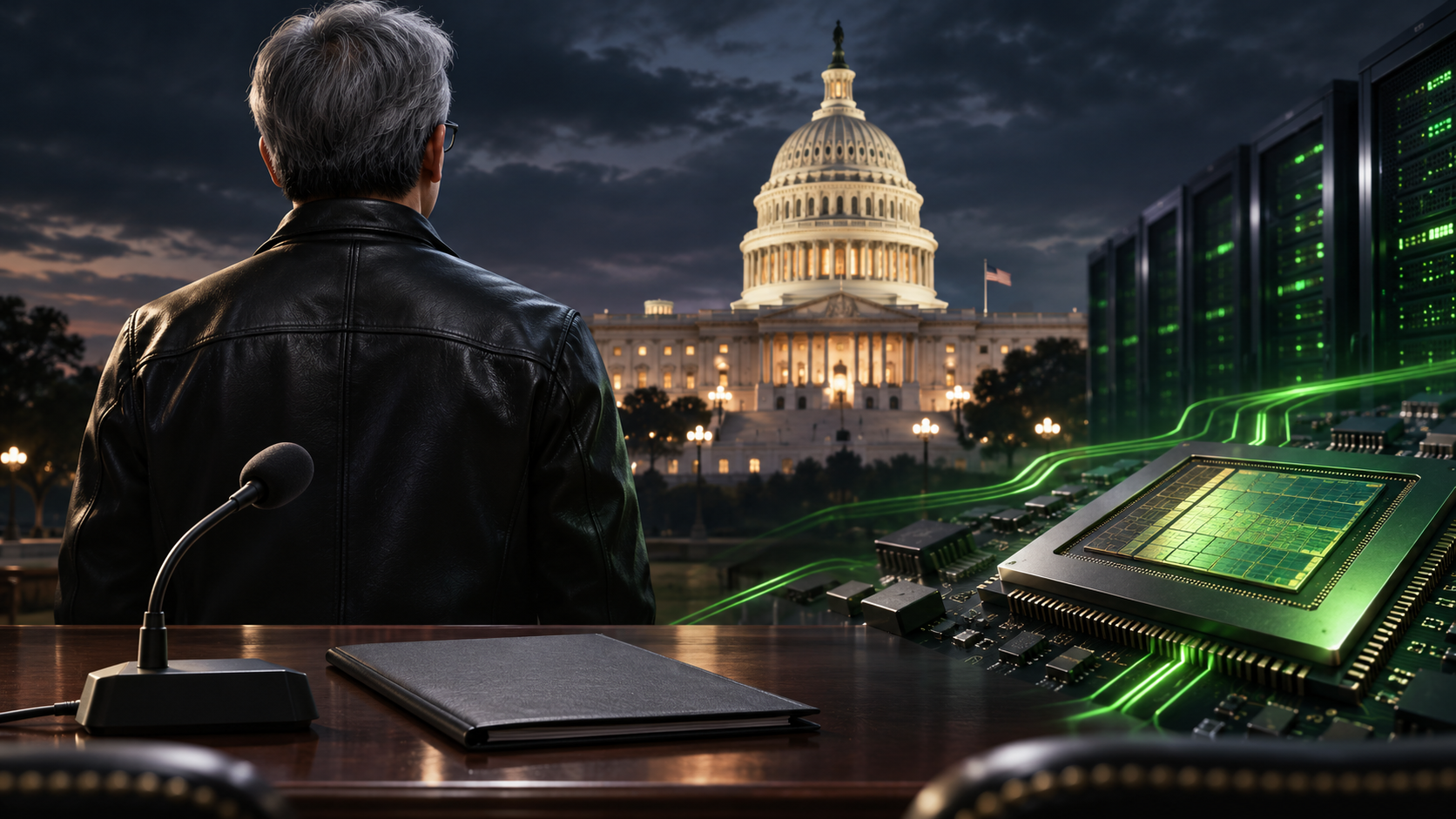
What Congress Wants From Jensen Huang and Nvidia’s Top Lawyer
Congress Wants To Establish Who Gained Access To Nvidia’s Technology And What The Company Knew.
Jensen Huang has agreed to a congressional interview on 1 December 2026, with Nvidia general counsel Tim Teter scheduled to appear the following day. Three House committees will examine concerns about access to advanced American chips, Nvidia’s security safeguards and the role of an alleged Chinese intelligence asset.
The dates, confirmed by committee chairmen on 17 November, turn demands for cooperation into a scheduled examination. They do not establish that espionage occurred or that Huang knowingly helped anyone evade export restrictions.
The most useful way to understand the inquiry is to separate three questions: who could obtain sensitive information, who could obtain restricted technology, and what Nvidia and government officials did when concerns emerged. Evidence answering one will not automatically answer the others.
Who Will Question Jensen Huang?
The interviews involve the House Foreign Affairs Committee, the Select Committee on the Chinese Communist Party and the House Intelligence Committee. Their Republican chairmen are Brian Mast, John Moolenaar and Rick Crawford.
The committees previously sought closed-door questioning and threatened to compel Huang’s appearance if he did not cooperate. Their latest announcement confirms voluntary, transcribed interviews with Huang and Teter.
A transcript will create a record of their answers. The announcement does not promise an immediate public release or a televised hearing.
Huang’s departure from Nvidia’s leadership has therefore not ended congressional scrutiny. The questions concern decisions and relationships during his tenure, while Teter’s separate appearance gives lawmakers an opportunity to examine the company’s response.
What Is the Concern About Alice Huang?
The committees’ original letter, dated 4 November, requested a briefing on Nvidia’s safeguards against foreign espionage and Jensen Huang’s interactions with Alice Huang, a former Megaspeed executive whom lawmakers described as a reported Chinese intelligence asset.
That description remains an allegation requiring investigation. It should not be treated as a proven finding simply because it appears in a congressional demand.
Megaspeed is a Singapore-based company that has faced scrutiny over alleged diversion of advanced Nvidia technology to China. It says it conducts lawful business and has appointed outside lawyers to investigate claims about its operations. The company says Alice Huang left on 30 August 2025 and has no current role.
The evidential distinction is essential. A personal relationship could create opportunities for access or influence, but establishing either requires more than demonstrating that the relationship existed.
Relevant evidence could include communications, meeting records, access permissions and decisions involving the customer. Those are examples of material that could test the concerns; the committees have not published a complete inventory of evidence they possess.
A Government Timeline Changes the Questions
A joint Commerce Department and Justice Department statement dated 16 November provides a concrete sequence for lawmakers to examine.
The departments say Commerce opened an investigation into Megaspeed in 2024 after identifying suspicious activity involving possible semiconductor diversion. Investigators requested Nvidia records concerning direct or indirect sales to Megaspeed in May 2025.
According to the statement, Nvidia placed Megaspeed on its internal “no sell” list in June 2025. That month, American investigators and Singaporean law enforcement conducted an inspection at Megaspeed and interviewed Alice Huang. The Justice Department subsequently took the lead in the criminal investigation.
This account challenges any blanket suggestion that authorities took no investigative action. It does not establish whether their response was sufficient.
The next questions concern what the investigation found, what restrictions achieved and whether officials pursued warning signs effectively. The existence of an investigation and the effectiveness of enforcement are separate issues.
Why Nvidia’s Internal Restrictions Matter
The reported June 2025 sales restriction gives the inquiry a specific decision to reconstruct.
An internal prohibition can demonstrate that a company recognised a customer-related concern and acted. Its practical effect, however, depends on its scope and implementation.
A useful examination would establish who approved the restriction, which transactions it covered, how relevant teams were informed and how compliance was checked. These are analytical questions arising from the government’s chronology, rather than a confirmed list of questions lawmakers will ask.
The distinction between direct and indirect sales also matters because the government’s records request expressly covered both. Reviewing only transactions made directly with a named customer could leave unanswered questions about other routes through which equipment reached it.
None of this establishes that Nvidia’s controls failed. It explains what evidence would be needed to assess whether they worked.
Why Is Tim Teter Appearing Separately?
Teter’s interview could help lawmakers distinguish Huang’s personal knowledge from Nvidia’s institutional response.
A chief executive may explain particular relationships, meetings or commercial decisions. A general counsel may be positioned to explain how legal concerns were escalated, how the company responded to investigators and how restrictions were implemented.
Those are potential areas of examination based on their respective roles. The announcement does not disclose Teter’s expected answers or establish that he acted improperly.
Separate interviews also create an opportunity to compare accounts against contemporaneous records. If recollections differ, dated documents may help establish whether the difference reflects incomplete memory, different responsibilities or a more substantial contradiction.
The inquiry’s value will depend on that comparison, rather than the prominence of either witness.
Government Decisions Are Also Under Scrutiny
The wider congressional examination extends beyond Nvidia.
In a separate letter to Commerce Secretary Howard Lutnick, Democratic representatives Gabe Amo, Gregory Meeks and Sydney Kamlager-Dove requested information about official awareness of concerns involving Alice Huang and Megaspeed.
Their questions included whether other agencies recommended restrictions, what Commerce did in response, which exports it approved and what checks it conducted on ownership and end users.
They also asked about access to computing capacity through overseas data centres. That broadens the inquiry beyond the physical movement of hardware to the question of who benefits from it.
These requests show why a finding about Nvidia alone would leave part of the story unresolved. Corporate decisions and government decisions need their own evidence and chronology.
For the wider policy context, Taylor Tailored’s examination of China’s response to America’s new AI chip restrictions explains the dispute over overseas computing access.
What Would a Meaningful Answer Look Like?
The committee chairmen are already using the controversy to press for legislation. Their 12 November statement called for the AI OVERWATCH Act, Chip Security Act, MATCH Act and Remote Access Security Act to be included in the annual defence authorisation legislation.
That is a stated political objective, not evidence that the proposals have become law or that the interviews will resolve every allegation.
The strongest result would be a documented account connecting warnings to decisions: who received information, what they understood, what action followed and whether that action addressed the risk.
Huang’s appearance supplies an opportunity to obtain answers. The decisive development will be whether those answers can be tested against records showing what happened to the technology and who ultimately gained access.
Sources
House Foreign Affairs Committee — Jensen Huang and Nvidia Agree to Appear Before Congress — Confirms the participants, interview dates and stated investigative concerns.
US Departments of Commerce and Justice — Joint Statement on Megaspeed Investigation — Provides the government’s investigation chronology, Nvidia records request and reported sales restriction.
House Committee Chairmen — Letter to Jensen Huang, 4 November 2026 — Establishes the original request concerning security safeguards and Huang’s interactions.
House Foreign Affairs Committee — Second Request to Jensen Huang and Nvidia — Documents the expanded requests and legislative proposals.
House Foreign Affairs Democrats — Letter to Commerce on AI Chip Exports — Sets out questions about government knowledge, licensing and end-user checks.
ABC News — Alleged Chinese Spy Alice Huang Left Megaspeed Last Year, Company Says — Provides Megaspeed’s response and the unresolved status of the allegations.
Next Reads
Jensen Huang Resigns as Nvidia CEO. Here’s Why He Left and What Happens Next — The leadership change preceding the congressional interviews.
What Has China Said It Will Do About America’s New AI Chip Restrictions? — The international dispute over access to advanced computing.
Why NVIDIA Dominates AI: The Chips, Customers and OpenAI Deals Behind Its Empire — Background on Nvidia’s position in the AI industry.
