Why the Trump–Iran Standoff Is Becoming So Difficult to End
Both Governments Can Make Waiting Costly Without Making Compromise Easier.
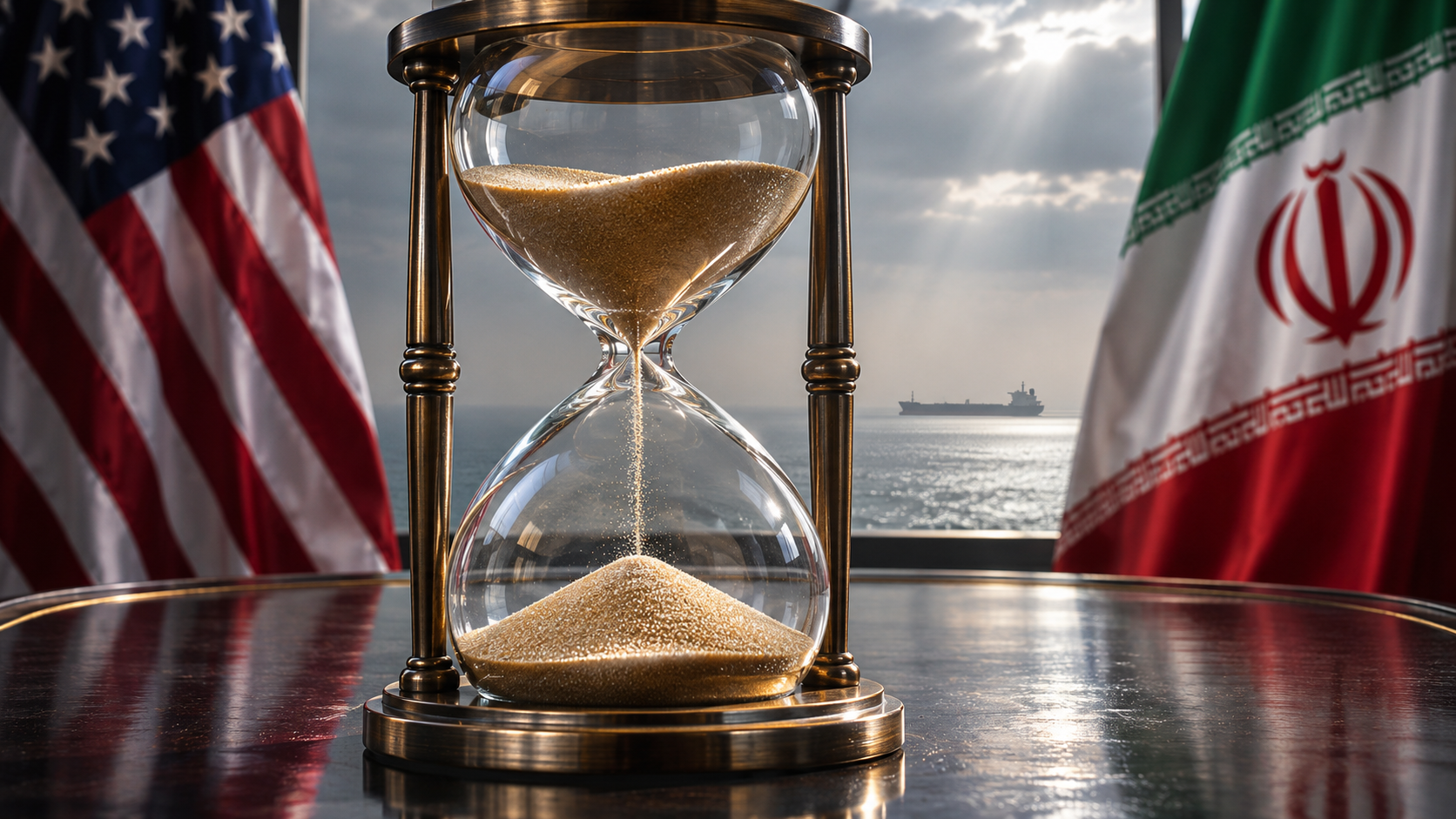
Donald Trump is relying on economic pressure to improve Washington’s negotiating position. Iran is relying on the political and economic costs of a prolonged confrontation to weaken America’s resolve. Nearly nine months into the war, both governments still have reasons to believe that accepting today’s terms would mean surrendering advantages they could retain tomorrow.
That is the central problem with their competing bets on time. Each can identify pressure on its opponent. Neither has demonstrated that this pressure will produce an acceptable settlement.
The distinction matters because a country can become poorer, a president can become less popular, and a conflict can become more expensive without the disputed issues becoming any easier to resolve.
What Would Make Trump’s Waiting Strategy Work?
Economic coercion depends on a chain of events. Restrictions must cause damage; that damage must reach people who influence decisions; those decision-makers must conclude that a negotiated concession costs less than continued resistance.
Failure at any stage can leave a policy inflicting hardship without achieving its objective.
Iran’s experience earlier in the war illustrates the difficulty. In August, petrol queues in Tehran were lengthening, purchasing power was deteriorating and the currency was under severe pressure. President Masoud Pezeshkian nevertheless publicly rejected surrender.
Those observations establish that economic pain and political resistance can coexist. They do not establish how long that combination can last.
For Washington, the decisive evidence would therefore be a change in negotiating behaviour. A worsening economic indicator alone cannot demonstrate that an agreement is approaching.
There is also a question of what Iran expects to receive. If leaders doubt that concessions will produce reliable relief, even an increasingly damaging blockade may fail to make compromise attractive. A successful pressure strategy needs an intelligible route out: what must change, what relief follows, and how both sides know the other has complied.
Without that route, waiting can become a policy whose success is always predicted for the following month.
Why Political Pressure Gives Tehran Hope
The American political cost is already visible. Following November’s midterm elections, Vice-President JD Vance was among senior Republicans linking the party’s poor performance to the Iran war.
That gives Tehran a reason to take domestic American pressure seriously. It does not prove that Trump will accept Iranian terms.
An electoral setback can produce competing responses. A president might seek a settlement to remove a damaging issue. He might also become more determined to secure a result he can defend as a success. The same political weakness can encourage compromise or make an apparently humiliating compromise harder to accept.
Before the vote, Taylor Tailored examined accounts of Iran’s efforts to deny Trump a pre-election agreement. The question now is different: whether electoral damage changes the terms Washington will accept.
Tehran cannot answer that simply by observing Republican losses. It needs evidence that the administration’s negotiating position is moving.
This is the weakness in treating domestic opposition as a diplomatic victory. Pressure on an opponent creates an opportunity only if that opponent responds in the anticipated way.
Hormuz Shows Why Neither Side Controls Every Consequence
The Strait of Hormuz connects the confrontation to energy consumers far beyond the Gulf.
Data released by the US Energy Information Administration on 16 November estimate that oil flows through the strait averaged 9.1 million barrels a day in the third quarter of 2026, compared with 21.6 million in the final quarter of 2025.
That is approximately 58% lower, calculated from the agency’s figures. It also represents a recovery from the second quarter’s estimated 5.1 million barrels a day.
Both comparisons matter. Traffic remained severely disrupted, but it was not uniformly absent. These are quarterly estimates, not a measurement of conditions on 17 November, and the agency warns that unreliable ship signals make frequent revisions necessary.
The wider implication is that neither government can assume a fixed relationship between disruption and political pressure. Buyers can adapt, alternative supplies can emerge, demand can weaken and some shipments can resume. Equally, a fresh incident can reverse improvements.
Iran’s influence depends partly on how difficult it remains for others to accommodate the disruption. Washington’s position depends partly on whether the wider costs remain tolerable.
Energy markets do not wait passively for either strategy to succeed.
The Disagreement Over What Happens First
Iran’s proposed route out of the war, described publicly earlier in November, envisages ending the American port blockade, lifting some sanctions and stopping bombing in exchange for reopening Hormuz. Nuclear negotiations would follow. Washington has rejected that approach.
The order is consequential.
If economic relief comes first, Washington risks giving up pressure before obtaining the nuclear outcome it seeks. If major concessions come first, Tehran risks surrendering bargaining power before receiving benefits it considers dependable.
This is a problem of reciprocal vulnerability. Each government wants the other to take the more exposed position.
Saying that both sides should negotiate does not resolve it. A workable agreement would need to specify which actions occur together, which can be independently checked, and what happens if implementation stops halfway through.
A promise to discuss a difficult issue later is less valuable to a government that believes its strongest negotiating position exists now. Conversely, a demand to settle everything immediately can make even a limited improvement impossible.
That tension helps explain why talks can continue while the distance between acceptable outcomes barely changes.
Why Endurance Is An Incomplete Measure Of Success
A useful test is to ask what each side would actually gain from another month.
Would Washington obtain a more enforceable agreement, or merely impose additional costs? Would Tehran secure more favourable terms, or simply demonstrate that it remained capable of resisting?
Those outcomes should not be confused.
Continued resistance may preserve a government’s freedom of action while leaving its population worse off. Continued pressure may demonstrate determination while leaving the original security problem unresolved.
There is a serious alternative explanation for the stalemate: both sides may recognise these weaknesses and still consider the available agreement worse than continued confrontation. Delay does not necessarily mean confidence. It can also mean that leaders have found no politically acceptable way to stop.
That interpretation changes what outsiders should watch. Confident statements reveal little about whether a settlement is becoming possible. Changes in concrete demands, implementation arrangements and willingness to accept verification reveal much more.
What Would Show That Diplomacy Is Advancing?
The strongest sign would be an agreed first step that creates a reason to take the second.
For example, a limited arrangement could make a defined measure of relief conditional on a specific, observable action, with further benefits dependent on continued compliance. This is a possible negotiating structure, not an announced agreement.
Its value would lie in reducing the amount either side must surrender on trust. Mediators could help clarify obligations and confirm performance, although they could not eliminate the underlying political dispute.
An arrangement would also need to distinguish stopping immediate harm from resolving every long-term disagreement. Otherwise, any unresolved issue could become a reason to preserve every form of pressure.
The test of time is therefore practical. Does another week make a mutually implementable agreement more likely?
If the only measurable changes are greater damage and more entrenched demands, waiting is consuming the conditions for peace rather than improving them.
Sources
Reuters — Trump and Tehran Gamble on Time as Iran War Stalemate Deepens — The current strategic standoff, published on 17 November 2026.
Reuters, via Investing.com — Trump to Meet Iran War Mediator Qatar, No Imminent Deal Seen to End the War — Iran’s proposed sequence, American objections and the post-election political context.
US Energy Information Administration — Global Energy Security Data — Estimated Hormuz oil flows and methodological limitations.
Associated Press, via The Durango Herald — Iran’s Gas Lines Are Growing, but There’s No Sign So Far That Its Leaders Will Bow to US Sanctions — August evidence of economic hardship alongside continued political resistance.
Next Reads
Iran Is Delaying US Talks to Weaken Trump Before Midterms, Officials Say — The earlier electoral calculation behind delayed negotiations.
Trump’s Window Before January: Could Defeat in Congress Bring Escalation Abroad? — How the political calendar interacts with the risk of renewed military action.
Trump and Iran History: The Long Arc of a Hostility He Kept Reframing, From Oil Seizure Talk to Nuclear Red Lines — The longer background to Trump’s approach to Tehran.
