Why Trump Changed the Stakes for Ukraine Before His Talks With Putin and Xi
What Can Three Presidents Agree Without Kyiv Or Tehran At The Table?
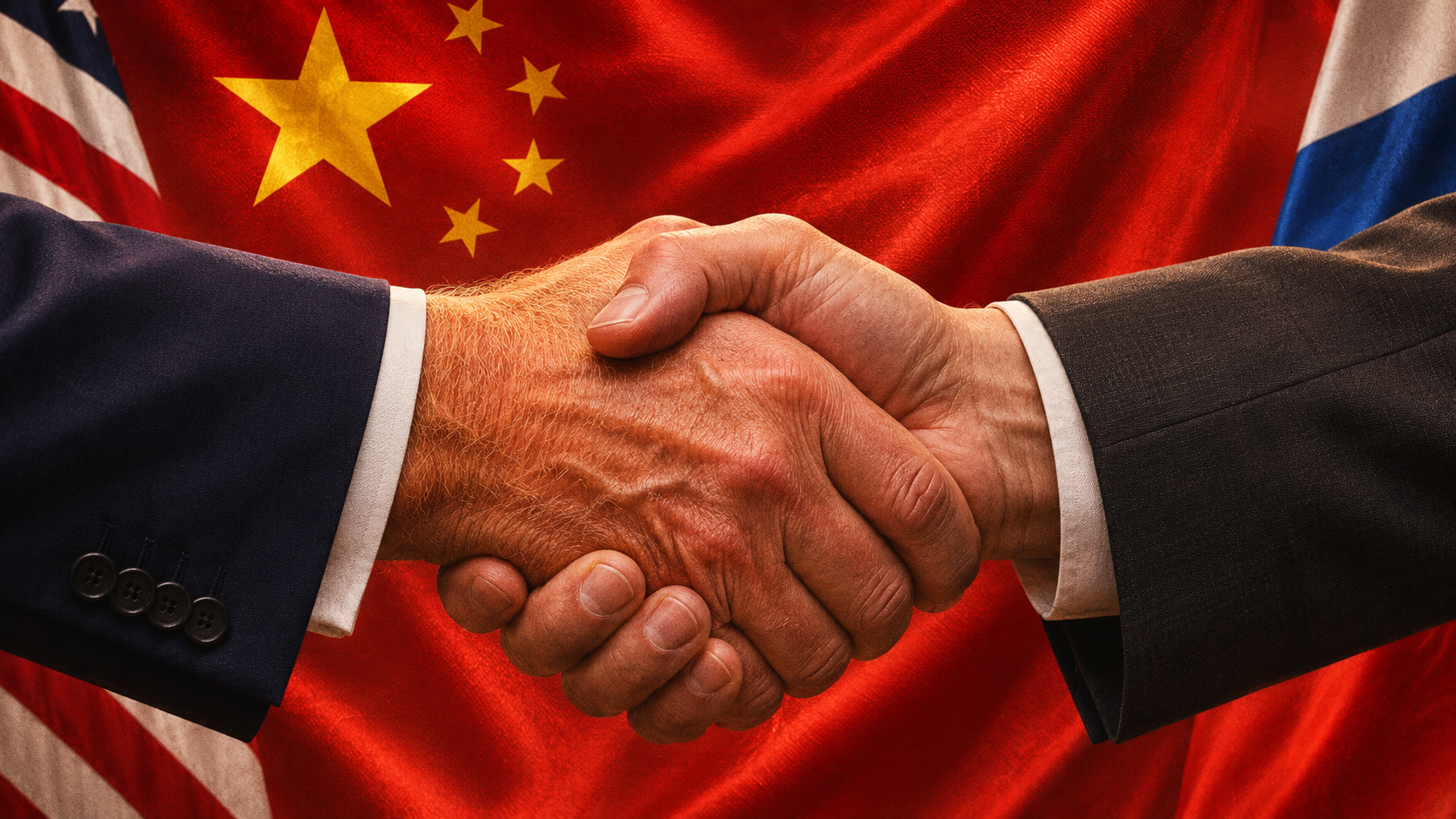
Donald Trump and Vladimir Putin shook hands in Shenzhen on Wednesday 18 November 2026 as Xi Jinping looked on before the Asia-Pacific Economic Cooperation summit’s welcome banquet. Their formal three-way talks are scheduled for Thursday. Nuclear arms control and the war in Iran are the clearest items on Trump’s agenda. Ukraine has become more likely to come up after Trump publicly raised the prospect, despite his own officials having said it belonged in separate negotiations.
The most likely outcome is an agreement to keep talking. That could still matter. A date for nuclear negotiations would give officials a way back into discussions about weapons all three governments control. A declaration about Ukraine or Iran faces a different test. Someone in Kyiv or Tehran would have to agree to what the presidents proposed.
Nuclear Weapons Offer the Clearest Opening
The strongest reason to take Thursday seriously is something that happened in February. New START, the last treaty limiting deployed US and Russian strategic nuclear weapons, expired. Trump wants a new arrangement that brings China into the conversation. US officials have described Shenzhen as a possible beginning for that work and have played down expectations of an immediate agreement.
The obstacle is easy to grasp. The United States and Russia each possess a much larger nuclear stockpile than China. Beijing has long argued that Washington and Moscow should take the lead on reductions. If Trump proposes equal percentage cuts, China would still occupy the distant third position it objects to having formalised. If he proposes a common ceiling high enough to accommodate the two larger powers, it might leave China room to expand. All three can endorse the principle of restraint while disagreeing profoundly about the arithmetic.
The best realistic nuclear outcome would be a date, named negotiators and a defined first subject. One possibility would be for Washington and Moscow to discuss future limits on deployed weapons while all three examine ways to prevent a military incident being misread as preparation for a nuclear attack. That would give Beijing a meaningful role and allow the two largest nuclear powers to begin work even while the question of Chinese reductions remains unresolved.
The adverse outcome would be a three-way deadlock that also blocks two-way progress. If Washington insists that China must participate before it negotiates limits with Russia, Beijing’s refusal could leave the world’s two largest arsenals without a replacement agreement for longer. That is a more credible risk from Thursday than an abrupt nuclear confrontation.
On Iran, What Could Xi and Putin Actually Deliver?
Trump has said he wants to discuss ending the war in Iran. US Secretary of State Marco Rubio has framed Washington’s objective as preventing Iran from acquiring a nuclear weapon. Tehran denies seeking one. The diplomatic question for Xi and Putin is whether they can help establish terms that Washington and Tehran would each be willing to examine.
A useful outcome could be quite narrow. China or Russia could agree to carry a specific American proposal to Tehran and bring back an answer. That would let the parties test a question with immediate consequences for civilians and shipping in the Gulf. What restraint would Washington offer, what reciprocal step would it seek from Iran, and how would each side know the other had carried it out? Any wider pause in the US-Israeli war with Iran would also depend on Israel’s decisions.
The danger is that the leaders leave with different understandings of the same conversation. Trump could interpret a promise to approach Tehran as a sign that Iran is ready to concede. Tehran could read a subsequent American announcement as an attempt to impose terms it had never seen. Under those conditions, an optimistic declaration could make the next exchange harder by forcing each government to contradict the others in public.
Why Ukraine Has Become the Most Sensitive Question
On 13 November, a US official said the administration expected Ukraine to stay on a separate diplomatic track, where Kyiv was already involved. On Tuesday, Trump indicated that he expected to discuss ending the war with Putin and Xi. His remarks make Ukraine a likely subject. How far he intends to go remains uncertain.
For Putin, the difference between those two positions is substantial. A discussion about how to bring Russia and Ukraine into further negotiations leaves Kyiv a say in the outcome. A conversation in which the US president indicates what territory he thinks Ukraine should concede could change the starting point before Ukrainian negotiators enter the room. Moscow could cite an American remark as an undertaking. Kyiv would then face pressure to reject terms publicly or negotiate from a weaker position.
The best plausible result for Ukraine would be a specific Russian commitment that Kyiv can help shape and verify. A proposed prisoner exchange, for example, gives the parties something tangible to negotiate and families a way to judge whether promises were kept. A broader ceasefire proposal would need answers about who monitors violations and what happens when fighting resumes. There is no public indication that an exchange or such a ceasefire is already agreed.
The worst credible outcome for Kyiv is an apparent breakthrough that leaves it less secure. If Washington signals acceptance of territorial concessions without Ukrainian agreement, Putin could gain diplomatic ground without making a corresponding concession on the battlefield. Britain and other European allies would then face pressure to help uphold or finance an arrangement they had little opportunity to shape.
What Trump, Putin and Xi Each Want
Trump’s clearest prize is something he can show after the meeting. He has publicly identified nuclear weapons and the wars in Iran and Ukraine as subjects he wants to address. Of those, arms control offers the cleanest immediate result. He could announce that American, Russian and Chinese officials will meet again, and all three leaders have the authority to make that happen.
Putin already gains something from being there. He can criticise Western sanctions in front of business leaders and still be received alongside the American and Chinese presidents that evening. A further advantage for Moscow would be getting its preferred Ukraine terms into the US account of the talks. European governments will therefore read the wording closely, especially anything Trump says about territory or future security guarantees.
Xi can gain influence in either of two ways. Hosting gives China visibility as a country to which both presidents will travel. Securing a follow-up that both entrust Beijing to organise would give Xi a continuing diplomatic role. His economic interests are also immediate. He used Wednesday’s summit to defend open trade just as fresh US restrictions on advanced AI chips added pressure to the US-China trade truce. Trade and technology are live disputes, although the public evidence for their place in the three-way talks is weaker than it is for nuclear arms and Iran.
What Would Change for Britain, Europe and Asia?
For Britain and Europe, the first question after Thursday is whether Washington consults Kyiv and its European partners before endorsing any Ukraine proposal. A ceasefire that relies on European governments to supply weapons, fund reconstruction or offer security guarantees requires decisions in those capitals. The order matters. Asking allies what they can sustain before announcing terms makes an agreement more credible. Announcing terms first leaves those allies to price promises someone else has made.
In Asia, the precedent may travel further than the substance of the talks. Governments with close US security ties will watch how Washington handles an absent partner’s interests. If Trump explicitly reserves decisions about Ukraine for Kyiv, that offers some reassurance about how he approaches allied sovereignty elsewhere. If he appears willing to bargain over another country’s future, Asian allies have reason to ask how much consultation they would receive in a crisis of their own.
There is also a genuine upside to the format. Washington, Moscow and Beijing can take decisions about their own military communications that make the rest of the world safer. A commitment to clarify an ambiguous military incident, followed by evidence that officials can actually reach one another, could be valuable even if the leaders issue no joint statement on either war.
What to Look for on Thursday
Read the three governments’ accounts side by side. If all three identify the same next meeting, the same subject and the same officials responsible, Shenzhen will have produced something that can be checked. If only one government announces progress on Ukraine or Iran, the next developments to watch will be the responses from Kyiv, Tehran and, in the latter case, Israel.
The most consequential sentence on Thursday may be a modest one giving a date for nuclear negotiators to meet. The sentence deserving the most scrutiny would be one declaring peace close while leaving unclear who has agreed to what.
Sources
The Guardian, 18 November. The welcome-banquet report and Reuters photograph document the Trump-Putin greeting with Xi present. The Guardian
Reuters, 8 and 13 November. Trump’s initial description of the talks and the subsequent White House briefing establish the US position on Iran, arms reductions and the original plan for Ukraine. investing.com
Associated Press, 18 November. Trump’s later remarks explain why Ukraine became a more likely topic than the original briefing suggested. apnews.com
Radio Free Europe/Radio Liberty, 14 November. Reporting on the expiry of New START, the disparity in nuclear stockpiles, Washington’s expectations for the meeting and Rubio’s stated objective concerning Iran. rferl.org
Reuters, 18 November. Reporting from Shenzhen on Xi’s trade speech, Putin’s criticism of sanctions, US chip restrictions and the concerns in European and Asian capitals. investing.com
