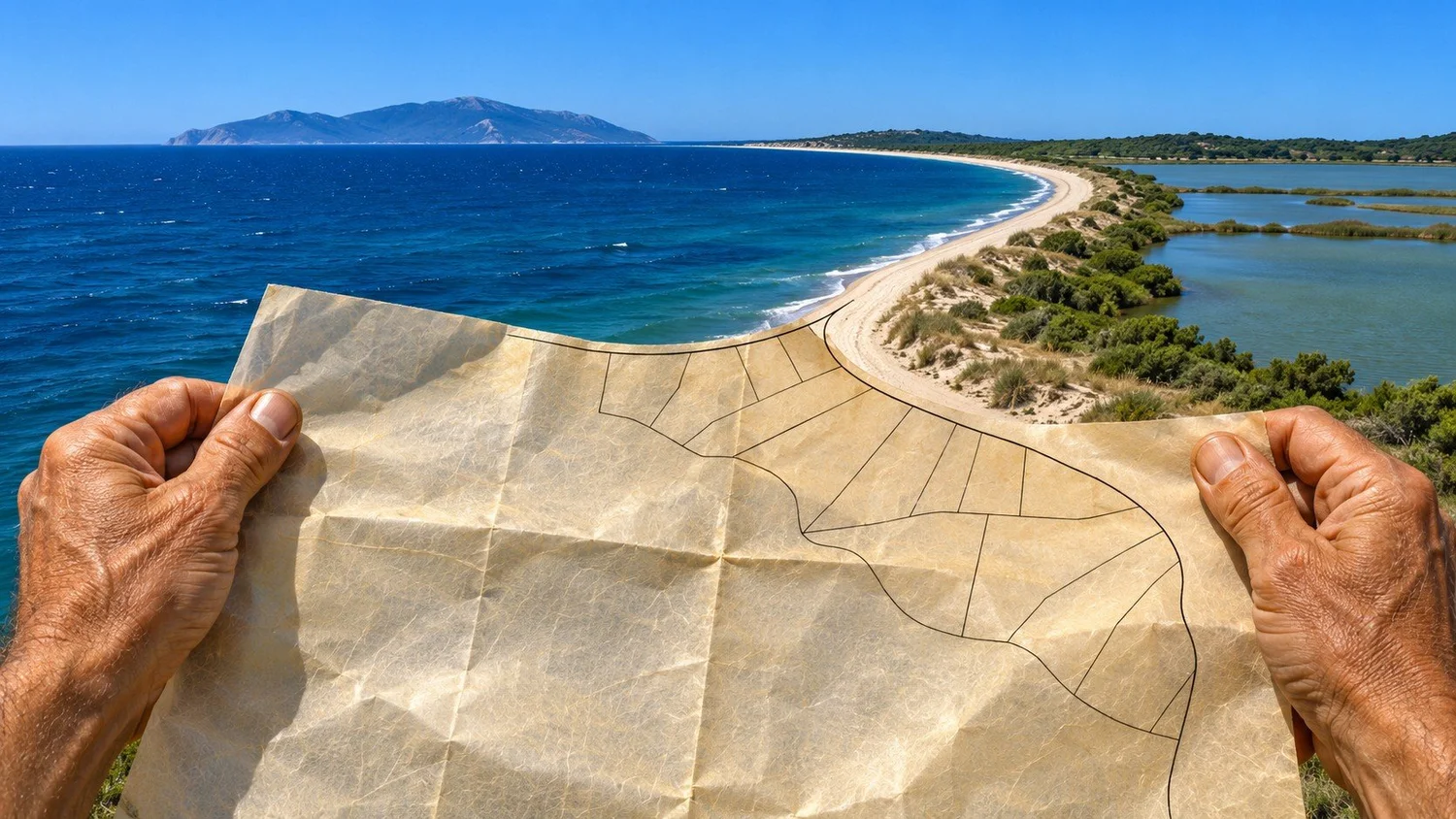
Why Has a Quiet Stretch of Adriatic Coast Become a Property Battle?
On a quiet stretch of Albania's Adriatic coast near the city of Vlorë, a beach, a wetland and a decommissioned Cold War island have become the centre of one of Europe's most unusual property disputes. Jared Kushner, son-in-law of US President Donald Trump, and his wife Ivanka Trump want to build a five-star resort there. Albania's prime minister has promised the project will go ahead. But villagers, an old Albanian family and now the country's prosecutors are asking a basic question: did the land ever belong to the man who sold it?
A new NPR investigation published on 24 November has brought the dispute back into focus. Here is what is known, what is alleged and what happens next.
The Project: Zvërnec and Sazan Island
The plan has two parts. The first is a coastal development at Zvërnec, a village of a couple of hundred people on a strip of beach and cliffs that shelters the Narta Lagoon, part of a protected wildlife area. The second is a smaller resort on Sazan, an uninhabited island across the bay.
Sazan has a remarkable history. It was used by Italian, Soviet and Albanian forces as a military base; under the communist dictator Enver Hoxha it was a fortified lookout, and the Soviet Union once used it as a submarine base. Since 2010, the waters around it have formed the Karaburun-Sazan Marine Park.
Kushner first unveiled plans in 2024 with renderings showing hotels, homes, pools and yacht jetties. The Albanian government declassified Sazan for civilian use in December 2024, and in January 2025 the project received "strategic investor" status, which allows faster permits. Both Kushner and the government have said that his family ties to Trump played no part in those decisions.
The Purchase
According to NPR, a company working for Kushner bought about 300 acres of coastline at Zvërnec, including Hidrovor Beach, in April 2026 for more than $130 million. NPR reports that the land was sold to Moutaz and Ramez Al-Khayyat, Syrian-born Qatari brothers described as Kushner's financial partners. A representative of Sazan Real Estate, the company behind the project, confirmed the brothers' involvement to CBS News.
In a statement on his website, Kushner has said his partnership bought the land from a private party in a private transaction and that "title was reviewed by counsel and verified." Reuters, which investigated the dispute in June, found no evidence of wrongdoing by Kushner and noted that he is not directly involved in the villagers' legal fight. A spokesperson has said the partners are investing in a personal capacity rather than through Kushner's investment firm, Affinity Partners.
The Competing Claims to the Land
The villagers
A group of Zvërnec residents say the farmland was theirs and was sold without their consent. They showed Reuters deeds and tax records, and say none of them has been compensated. An Albanian court ruled in their favour in 2013, according to their lawyer, but the seller appealed and the case remains unresolved.
The Mocka family
Gentian Mocka told NPR that his family has owned part of the beach and wetland since the Ottoman era and provided land titles that, NPR says, appear to support this. Like many Albanian families, the Mockas lost their land when the communist government seized property after the Second World War. Mocka says that when the family tried to reclaim it after communism fell in 1991, it ran into better-connected rival claimants.
The seller
The land was sold by Artur Shehu, an Albanian-American businessman who lives in Miami. He told Reuters in June that his family's claim also dates back to the Ottoman Empire and that it is "undisputed". He said he sold the land through a middleman and did not know who the buyer was. Shehu did not respond to NPR's request for comment and has previously denied any wrongdoing.
What Prosecutors Say
This is where the dispute has escalated. In court documents obtained by NPR, Albanian prosecutors argue that the land involved in the development is "suspected of having been illegally acquired through forgery". That is a suspicion set out by prosecutors, not a finding by a court, and the transaction is now under review.
A former lawyer for Shehu, Kujtim Cakrani, told NPR that prosecutors have opened an investigation into Shehu and frozen his bank accounts. Cakrani, who says he now represents around 30 of Shehu's relatives who claim to be the rightful owners, alleges that a forged inheritance certificate was used to make it appear the land had passed down to Shehu. These are Cakrani's allegations. NPR does not report that Shehu has been charged with any offence.
In a separate case, a court in Vlorë on 18 November sentenced an associate to seven years in prison for falsifying documents relating to coastal property, and ordered related land to be confiscated. NPR reports that this confiscated land does not include the Mocka family's plot.
Separately, Albania's Special Prosecution Office Against Corruption and Organised Crime (SPAK) confirmed on 1 June that it had opened an investigation into changes to Sazan's protected status and land ownership.
The Government's Position
Prime Minister Edi Rama has championed the project and vowed it will go ahead. He has argued that the development is legal, that protected habitats will be safeguarded and that an ongoing court case does not automatically freeze a property. In June he told lawmakers that no final proposal had been submitted and the environmental study was incomplete.
A government spokesperson, Elona Sinaj, told NPR that if the seller turns out not to be the legitimate owner, the purchase money will "remain within the Republic of Albania". The government describes its goal as a new benchmark for sustainable Mediterranean development.
Protests and Environmental Concerns
The project has triggered a sustained wave of protests. In late May, a fence went up around a large area of the coast, blocking public access to the sea, and several people were injured in clashes with private security guards. Authorities later revoked the licences of two private security companies. The fence was later removed and the bulldozers withdrew.
Demonstrators have gathered in Tirana since the end of May, calling for Rama's resignation and turning a local planning row into a broader anti-corruption movement. Environmental groups have filed legal complaints, arguing that the site is protected under international treaties and that fencing and clearance have already damaged dunes, disrupted water flows in the lagoon and broken up a bird migration corridor. The European Union has also expressed concern about the impact on wildlife.
The project has supporters too. Tour operator Sherif Durmishaj told NPR that it could be ecologically sustainable and set a better standard than the haphazard coastal building by local developers that has scarred other parts of Albania's shoreline.
Why It Matters in Washington
The dispute has also become a US political story. Democratic congressman Jamie Raskin, expected to chair the House Judiciary Committee in the new Congress, told NPR that the Albania project is one of several Kushner-backed deals drawing committee inquiries, accusing Kushner of "two-timing on the American people".
Analysis: the case sits at the intersection of two long-running problems. One is Albania's unresolved legacy of communist-era land seizures, which has left overlapping claims to coastal property across the country and created opportunities for fraud. The other is the scrutiny that follows any foreign deal involving a sitting president's family. Even if Kushner's side bought in good faith, a finding that the title was forged would leave the government, the buyers and the families with a serious problem to untangle.
What Happens Next
- The ownership question is likely to be settled in Albania's courts, where the villagers' 2013 case is still under appeal and prosecutors have challenged the sale.
- The SPAK investigation into Sazan's protected status and land ownership is ongoing.
- Construction has paused since the summer clashes, and no final development proposal has been submitted.
- US congressional scrutiny may intensify when the new Congress sits.
The Bottom Line
Nobody has been convicted of any wrongdoing connected to the Kushner-linked purchase, and Kushner's team says the title was checked. But a resort marketed as a model of sustainable luxury now rests on land that prosecutors suspect may have been acquired through forgery, that villagers won in court a decade ago and that an old family says was taken from it twice. Until Albania's courts decide who really owns Zvërnec, the five-star vision on its shore remains on hold.
Sources
- NPR: Who really owns the Albanian land Jared Kushner wants to turn into a 5-star resort? (24 November 2026)
- NPR: Luxury development planned on land some Albanians say is theirs
- Reuters via The Star: Kushner project being developed on disputed land, Albanian villagers say
- CBS News: Albania protests snowball into anti-corruption movement
- NPR: In Albania, anger grows against the government for supporting a Kushner-linked resort
- NPR: Plans for a Trump family-linked resort spark protests in Albania
- Wikipedia: Sazan Island Resort
