

Musk Declares War on Starmer’s Online Crackdown—Is X Next?
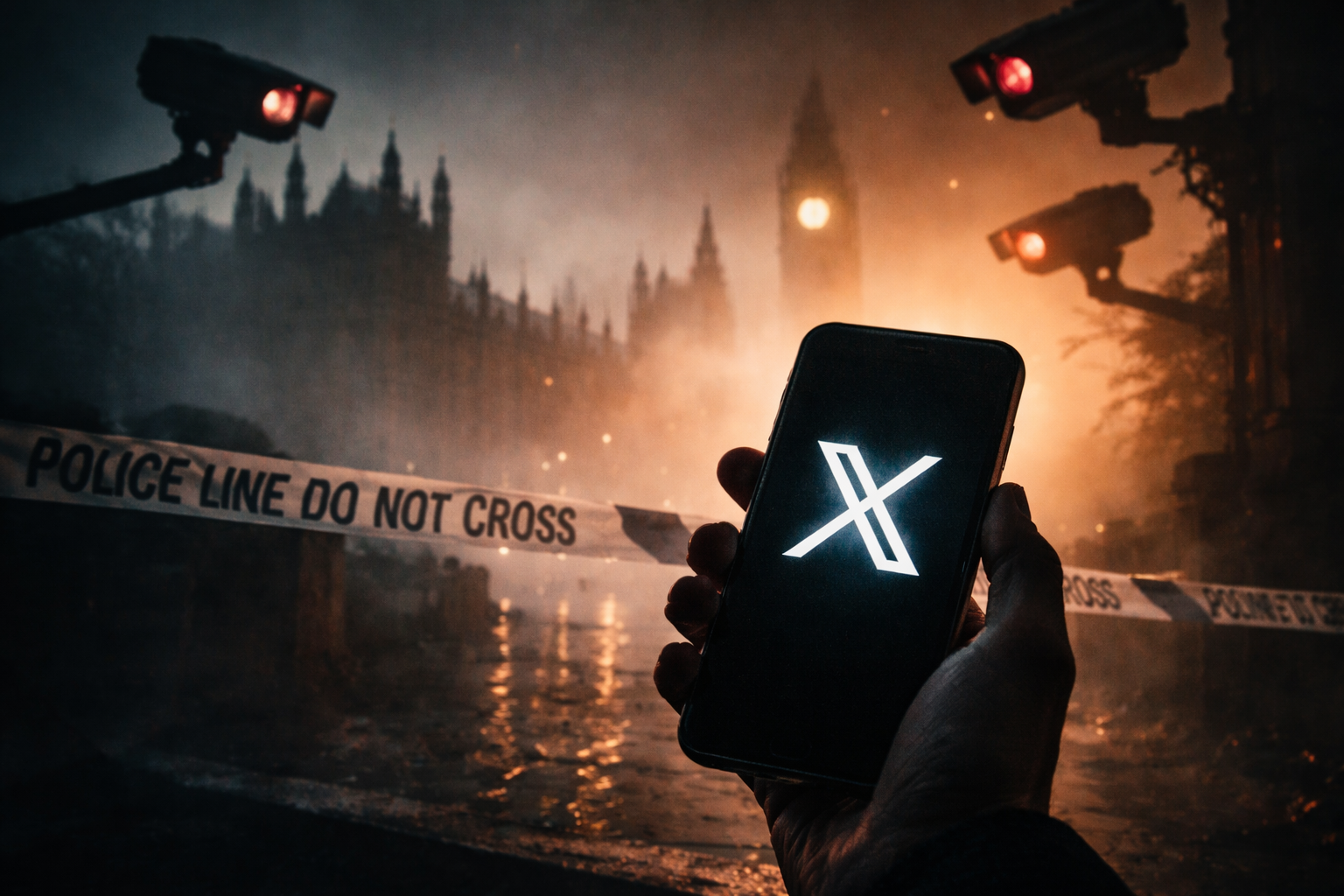
Britain’s Internet Flashpoint: Musk Says Starmer Is Building a Censorship Machine
Is The UK Is Building a Switch That Can Turn Platforms Off?
Elon Musk’s latest attacks on Britain’s Labour government fuse three explosive claims into one story: censorship is rising, policing is “two-tier,” and authorities want X banned because it reveals uncomfortable truths.
The UK is currently debating stricter online regulations following deepfake and child-safety scandals that thrust X—along with Musk's Grok chatbot—into the spotlight.
Musk’s rhetoric is designed to feel like a regime exposure. But the more important question is not whether politicians dislike his platform. It’s whether regulators now have a workable mechanism to punish noncompliance fast enough to matter.
The pivot is procedural power, not ideological: the capacity to escalate from warnings to crippling sanctions—and, in extreme cases, to service blocking.
The story turns on whether Britain can turn online-safety urgency into credible, enforceable action without expanding state power in ways that make “censorship” accusations easier to sustain.
Key Points
Musk has amplified claims that Britain is becoming censorious and politically selective in enforcement, including variations of his earlier remark that the UK releases “convicted pedophiles” while jailing people for social media posts.
The UK government proposed or signaled tougher obligations for platforms and AI tools, including rapid takedown expectations and the possibility of severe penalties, up to and including being blocked for noncompliance.
Ofcom has publicly stated it is investigating X in relation to reports involving Grok and illegal deepfake content, putting regulatory scrutiny on the platform itself, not just the speech around it.
The “ban X” framing blurs two different things: a political desire to punish a platform versus a legal process where blocking is positioned as an enforcement backstop.
The dispute is likely to intensify because both sides benefit: Musk gains a free-speech villain, while politicians gain a high-profile target to signal toughness on child safety and abuse.
The next measurable signals are procedural: legislative amendments, regulator notices, and any escalation steps that show whether the UK’s “off-switch” is real or mostly rhetorical.
Musk has criticized UK governance and policing before, using language that frames Britain as drifting toward state coercion.
In 2024 he publicly argued that people were being imprisoned for social media posts while “convicted pedophiles” were being released, a claim widely disputed in Britain but repeatedly recycled online because it compresses anger into a single image.
In early 2026, a separate controversy ignited: Grok, the chatbot associated with Musk’s ecosystem, was linked to the creation and sharing of sexualized deepfake images, including content involving children in some reports. That pushed regulators and politicians to close perceived loopholes and expand scrutiny to AI tools integrated into platforms.
Ofcom, the enforcement center in the UK, has announced its investigation into the scope of the Online Safety Act and its duties related to illegal content, following reports about the Grok account.
The political pitch from Downing Street has been simple: platforms and AI systems must remove illegal content quickly, and if they do not, the penalties can be severe—fines and, in the background, the possibility of blocking.
The pressure point: when speech becomes “compliance” under threat of blocking
Musk sells the conflict as a free-speech showdown. The UK is presenting it as a crackdown on illegal content and child safety. These frames collide because the public experiences both as the same thing: more removals, more moderation, and more consequences.
The legal distinction matters, though. A system built to remove illegal deepfakes quickly is not automatically a system built to silence lawful dissent. But the more severe the enforcement tools become, the easier it is for opponents to argue that the state is effectively controlling lawful expression through compliance pressure.
That is why the “ban X” line travels. It converts a regulatory backstop into a political intention.
The “two-tier” frame: high emotion, low falsifiability
“Two-tier policing” is a powerful slogan because it implies selective punishment without requiring a single, testable metric. It asks audiences to trust pattern recognition over datasets, and it turns every individual arrest into evidence for a bigger theory.
That means differential treatment sometimes happens. It means the claim often moves faster than proof can follow. As a political weapon, it is almost perfect: any counterexample can be dismissed as an exception, while any corroborating anecdote is treated as representative.
For Musk, this frame achieves something practical: it makes any enforcement action against X feel tainted, because the referee is accused of bias before the whistle is blown.
The constraint: regulators punish systems, not slogans
Here is the uncomfortable reality for both sides. Regulators usually act for reasons other than disliking speech. They act because they can document repeated process failures: risk assessments undone, reporting channels ineffective, illegal content unremoved, safeguards unimplemented, or obligations unmet.
That is why the Grok deepfake episode matters even to people who do not care about Musk’s politics. It provides a policy-relevant narrative: an identifiable harm, a visible failure mode, and public anger that can justify faster enforcement.
In other words, Grok is useful as an example. But the machinery being built is broader than Grok.
The hinge: the UK’s off-switch for platforms is becoming operational
What most commentary misses is the shift from “we can fine you” to “we can make you disappear.” Blocking a major platform is an extreme step, but public statements and reporting around recent proposals have kept it on the table as a compliance backstop.
That changes incentives. Fines can be absorbed, litigated, negotiated, or treated as a cost of doing business. A credible threat of blocking forces a platform to treat UK compliance as existential, not optional.
If the UK can operationalize that switch—procedurally, legally, and politically—it will not just be about X. It will become a template for how states bargain with platforms under the banner of safety.
The measurable signals: deadlines, notices, and escalation triggers
Viral clips will not determine this story. It will be decided by paper: amendments, guidance, risk assessment requirements, enforcement notices, and whether Ofcom’s investigation produces concrete findings or escalatory steps.
Watch for three signals. Firstly, the focus should be on whether the UK formally broadens its enforcement duties to include AI chatbots and integrated tools as primary targets, rather than mere features.
Second, we need to determine whether "48-hour" expectations will harden into enforceable timelines with clear escalation for noncompliance, rather than remaining as political messaging.
Thirdly, the question arises as to whether the X investigation stays focused and technical or if it expands to serve as a demonstration of the UK's approach to managing a significant global platform that openly challenges regulatory standards.
What Most Coverage Misses
The hinge is not whether British politicians dislike Musk or fear Grok. It is about whether Britain is assembling a credible escalation ladder that ends with the ability to block a platform, making compliance a survival question.
Mechanism matters here. A platform can shrug off outrage, survive headlines, and even absorb fines. But if the regulator can credibly move from investigation to enforceable orders to platform-level sanctions, every design decision changes: staffing, tooling, content pipelines, and the speed at which illegal content is detected and removed.
Two signposts will confirm the hinge quickly. One is procedural clarity: explicit guidance that ties deadlines to escalation steps in a way that is predictable and hard to game. The other is action: any formal notice or penalty that signals regulators are willing to test the upper end of their powers against a household-name platform.
What Happens Next
In the short term, the next 24–72 hours and the next few weeks are about political momentum and regulatory posture. Expect sharper messaging from Downing Street about protecting children and punishing abusive content, because that is the strongest moral ground for tougher tools.
Expect Musk to keep reframing every enforcement step as political censorship, because that protects X’s brand identity and turns compliance disputes into culture war energy.
In the longer term, months rather than weeks, the critical consequence is precedent. If the UK demonstrates that blocking is a credible enforcement endgame, other governments will be tempted to borrow the model—because it shifts bargaining power from platforms to the state.
The main consequence flows through one mechanism: once blocking becomes plausible, platforms will optimize for regulator satisfaction first, because the downside is existential.
Key things to pay attention to are any new laws that clearly include AI chatbots in the UK's online safety rules and any updates from Ofcom about X that show if enforcement is getting stricter or just making a statement.
Real-World Impact
A parent trying to protect a teenager will experience this as a simple question: does the platform remove exploitative content fast enough to prevent it from spreading and being copied?
A small business running customer support and marketing through social channels will experience it as an instability risk: sudden feature changes, stricter moderation, or disruptions to reach if a platform scrambles to comply.
A journalist or activist will experience it as boundary uncertainty: what is removed as illegal content versus what is throttled because moderation systems tighten under political pressure.
A regular user will experience it as a mood shift: more warnings, more takedowns, more account restrictions, and a rising sense that online spaces are being governed by rules that change overnight.
The next precedent Britain sets
Musk's assertions about Starmer's Britain prioritize virality over measurement. The UK’s crackdown case is built for legitimacy, not nuance.
The decision point is unambiguous. Britain can create enforceable protections against deepfake abuse and child exploitation while keeping the boundary between illegal harm and lawful speech clear. Or it can build an enforcement machine so powerful that “censorship” becomes a permanently plausible accusation, even when the intent is safety.
The trade-off is not abstract. The stronger the off-switch, the more care is needed in how it is governed, audited, and constrained.
Watch the signposts that are boring but decisive: regulator notices, enforcement steps, and whether legal definitions stay narrow enough to prevent mission creep.
If this escalates into a test case for blocking a major platform, it will mark an important day in the history of how democracies try to govern the modern internet.
