Iran Talks Face a Clock—and a Bigger U.S. Military Posture Raises the Cost of a Bad Step
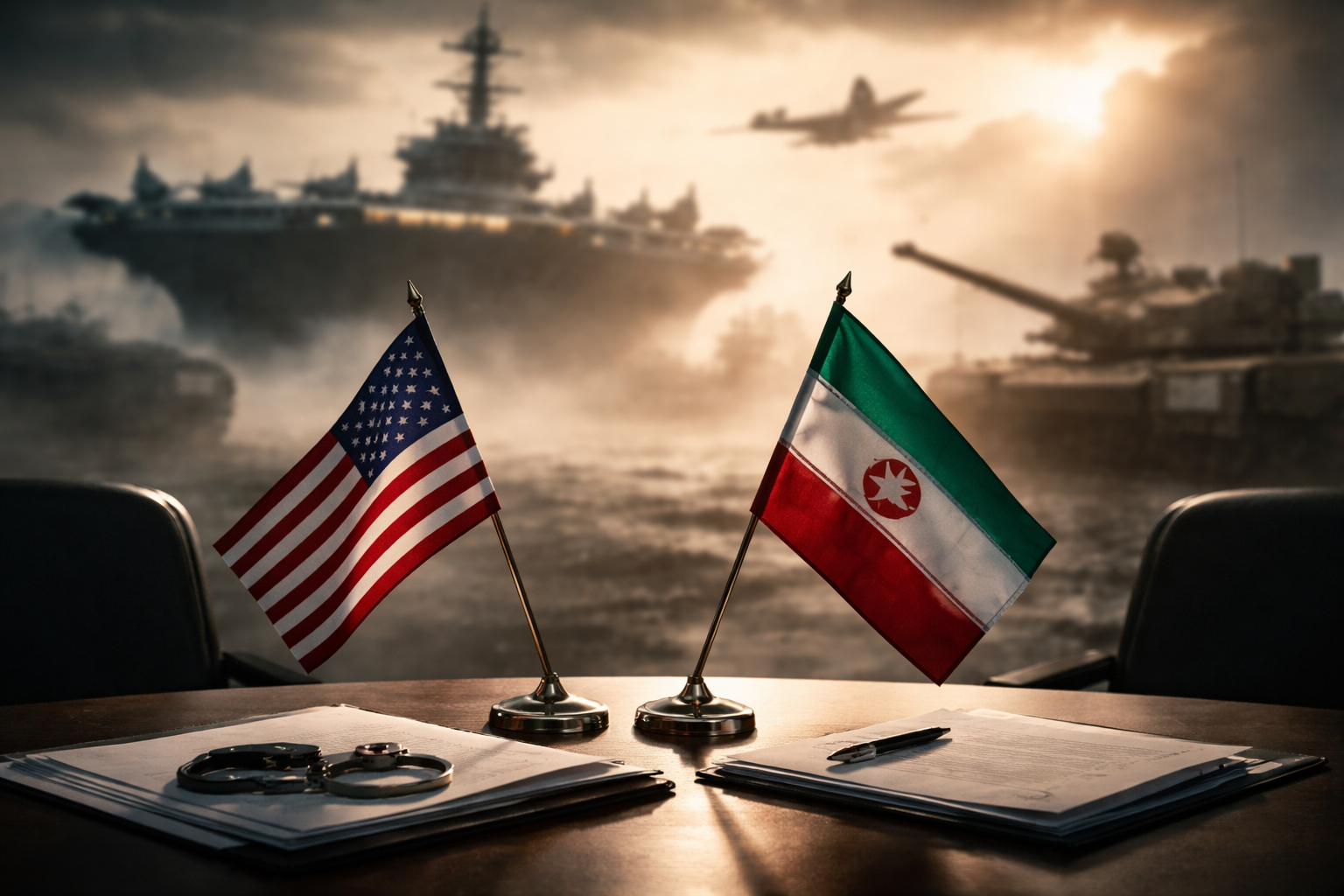
The Iran Endgame Is Being Shaped by a Simple Mechanism: What Happens First
The Iran Talks Don’t Turn on “A Deal”—They Turn on Verification Sequencing
Washington’s public messaging on Iran is getting sharper even as diplomacy remains nominally on the table.
Within the last day, U.S. officials have emphasized that talks depend on Iran delivering a substantive proposal while the United States sustains a visible military buildup in the region.
That combination—harder language plus heavier posture—raises the risk of misreading signals, mistiming moves, or treating a negotiating deadline like a military one.
The real tension is not whether both sides “want a deal.” It’s whether they can agree on what happens first, what counts as proof, and what gets delivered second.
The story turns on whether sequencing becomes a verifiable pathway to de-escalation—or the argument that detonates the next crisis.
Key Points
U.S. officials are publicly tying further talks to Iran submitting a detailed proposal while maintaining a reinforced regional posture.
The sharper tone changes incentives: it can pressure Iran to move, but it can also shorten the political runway for compromise on both sides.
Negotiations are likely to bottleneck on sequencing—what Iran must do first on nuclear steps and what the U.S. must do first on sanctions relief.
The highest-risk scenario is not a planned escalation; it’s a chain of reactive moves driven by deadlines, deployments, and domestic politics.
Watchable signals exist: the specificity of any Iranian proposal, the language on inspections and enrichment, and whether U.S. posture shifts from “deterrent” to “deadline-enforcing.”
The under-modeled decision tree is what each side does next if talks stall: tighten pressure, pause, or pivot to coercion with off-ramps.
The current round of U.S.–Iran diplomacy is framed around Iran’s nuclear activities and the question of what limits, verification, and concessions are acceptable.
Public reporting indicates the U.S. position is demanding and centered on Iran making major nuclear concessions, while Iran’s stance has emphasized sovereignty, continued enrichment, and sanctions relief, with resistance to negotiating its defense capabilities.
Simultaneously, the U.S. has visibly strengthened its force posture in the region. In addition to increasing U.S. bargaining leverage and deterring Iranian escalation, this strategy also reduces the margin of error if either side tests boundaries.
This is why “proposal and sequencing” matters. In practice, the fight becomes procedural: which steps are front-loaded, which are reversible, and which create irreversible advantages?
The escalation trap: harsher language narrows room for error
Coercive public language can be a tool, not a tantrum. It signals resolve to Iran, reassures domestic audiences, and tightens alignment with partners who want a harder line.
But it also raises the penalty for backing down. When officials speak in more absolute terms, the political cost of compromise rises, and the threshold for declaring “Iran didn’t comply” can fall.
In that environment, misunderstandings become more dangerous. Routine military moves can look like preparation. Negotiating pauses can look like deception. “Time to decide” can sound like “time to strike,” even if that’s not the intent.
The bargaining collision: maximal demands versus minimal concessions
Two basic models compete.
Model one is a “capitulation frame”: Iran must make sweeping nuclear concessions up front, and relief follows once compliance is proven.
Model two is a “phased trade frame”: Iran takes concrete, monitorable steps and receives staged relief in return, with verification deepening over time.
The collision happens because each side fears being trapped. The U.S. fears providing relief that Iran can bank while maintaining its capabilities. Iran fears giving away leverage first and never getting meaningful relief.
That fear is why both sides obsess over the order of operations, not just the destination.
The enforcement reality: sanctions relief is reversible, nuclear capability isn't. t
This is the core constraint, and it shapes every credible pathway.
Sanctions relief can be reimposed. Oil waivers can be tightened. Financial channels can be closed again. That reversibility makes relief politically “safer” for Washington to promise—but also easier to claw back.
By contrast, nuclear knowledge and certain technical gains can’t be unlearned. Equipment can be rebuilt. Expertise remains. That makes Washington want deeper, earlier constraints and makes Iran reluctant to front-load irreversible steps without durable guarantees.
So sequencing becomes an argument about irreversibility: who gives up the harder-to-recover asset first?
The hinge the market can see: sequencing as a credibility filter
This is where the story becomes measurable instead of rhetorical.
A credible proposal is not just “ideas.” It is a sequence that defines
what Iran does first that can be verified quickly,
what the U.S. does first that can be delivered quickly,
What happens if either side claims the other failed to comply?
If that sequence is vague, the talks are structurally fragile. If it is precise, the talks can survive political shocks because disputes can be adjudicated against agreed steps.
In other words, sequencing is a credibility filter. It turns a political promise into an operational plan.
The signposts that matter: deployments, deadlines, and inspection language
If you want early warning for escalation—or early confirmation of de-escalation—watch for three clusters of signals.
First, posture. Are deployments described as open-ended deterrence or linked to implicit deadlines? Does the rhetoric shift from “preparedness” to “consequence”?
Second, proposal specificity. Does Iran submit a document that names concrete nuclear steps, timelines, and verification language, or does it remain a high-level framework?
Third, verification architecture. Any movement on inspection access, monitoring mechanisms, or the treatment of enrichment levels is a stronger indicator than broad diplomatic optimism.
These signals are not perfect predictors. But they are the cleanest measurable indicators that the process is moving toward a stable pathway rather than a rhetorical dead end.
What Most Coverage Misses
The hinge is that sequencing isn’t a technical footnote—it’s the only part of this negotiation that can be objectively scored in near-real time.
Mechanism: when steps are ordered so that each side can verify the other’s move before delivering the next concession, incentives change. It reduces the fear of getting trapped, gives domestic audiences a visible “compliance ladder,” and creates off-ramps that don’t require humiliation.
Signposts: In the coming hours and days, confirmation would look like (1) a proposal with explicit step-by-step commitments tied to verification language and (2) U.S. messaging that describes relief or restraint in staged, conditional terms rather than as a binary reward or punishment.
What Happens Next
In the short term, the key question is whether an actionable proposal arrives and whether U.S. officials treat it as a basis for structured talks or as insufficient by design.
If the talks continue, they are unlikely to result in a significant agreement. It is a narrow framework that tests sequencing because that is the only way both sides can claim progress without surrendering core positions.
If talks stall, there are three plausible paths.
One path is pressure escalation: a tighter sanctions posture, louder warnings, and more visible military signaling—because coercion is easier to message than compromise.
A second path is a diplomatic pause with intermediaries: a quieter attempt to fix sequencing language out of the spotlight.
A third path is a crisis spiral: a local incident, a misinterpreted move, or a deadline-driven decision that forces leaders to react in public.
The main consequence is straightforward because sequencing failure pushes both sides toward coercion: if neither side can credibly verify the other’s next step, pressure becomes the default tool.
Real-World Impact
Aviation and energy planners face uncertainty. Even without conflict, elevated risk can disrupt routing, insurance pricing, and investment decisions tied to regional stability.
Households feel it through price volatility. Fuel costs and shipping disruptions can move quickly into headlines, even before any real-world supply interruption occurs.
Businesses operating in sanctioned environments confront compliance whiplash. Staged relief, if it appears, often arrives with conditions and reversibility that complicate long-term contracts.
Security routines tighten. When posture rises, so do alerts, travel warnings, and corporate risk controls—costs that accumulate quietly across the economy.
The historical significance: when sequencing becomes the battlefield
This moment is less about a single statement and more about a narrowing structure.
When leaders harden public language while maintaining a reinforced posture, the diplomatic channel can still work—but only if it is converted into a sequence of verifiable steps that prevents each side from feeling ambushed.
The fork in the road is simple: a measurable compliance ladder that creates off-ramps or an escalation ladder where each move feels necessary and each pause looks like weakness.
Watch the proposal’s specificity, the verification language, and whether deployments are framed as deterrence without deadlines.
History tends to remember these episodes not for the talks that happened, but for whether the system found a stable pathway before an avoidable miscalculation made choices irreversible.
