

Oil Market Catastrophe: Saudi Aramco Warns Iran War Could Trigger Global Supply Shock
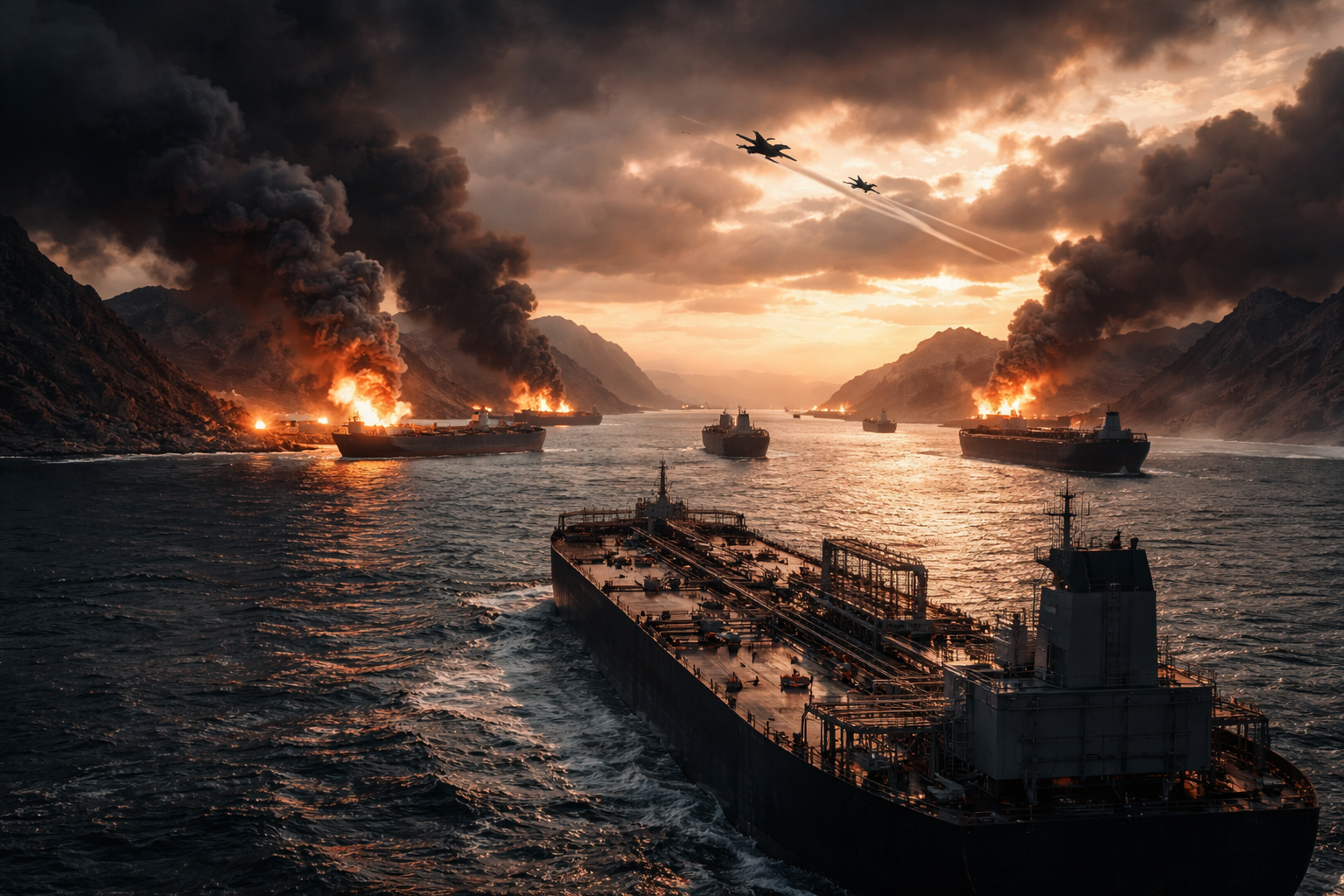
Strait of Hormuz Crisis: Aramco Warns Oil Market Could Collapse
Iran War Threatens Global Oil Lifeline
The world’s largest oil producer has issued one of the starkest warnings yet about the economic fallout of the escalating Iran war.
Saudi Aramco’s chief executive said the global oil market could face “catastrophic consequences” if disruption to Middle Eastern energy exports continues, particularly around the Strait of Hormuz—the narrow maritime corridor that handles roughly one-fifth of the world’s oil supply.
The warning comes amid rising fears that the conflict involving Iran, the United States, and regional allies could evolve from a geopolitical crisis into a full-scale global energy shock. Tanker traffic through the Gulf has already been severely disrupted, and producers across the region are scrambling for alternative routes.
Behind the dramatic language lies a simple reality: the modern global economy still runs on oil, and the chokepoints that move it remain dangerously fragile.
The story turns on whether the Strait of Hormuz reopens before global oil inventories begin to run out.
Key Points
Saudi Aramco warns that prolonged disruption in the Strait of Hormuz could trigger “catastrophic consequences” for global oil markets and the wider economy.
The strait normally carries about 20% of the world’s oil shipments, making it the most critical energy chokepoint on the planet.
Conflict involving Iran has halted or threatened tanker traffic, forcing producers to reroute shipments and draw down global reserves.
Oil prices have surged toward levels not seen since the early stages of the Ukraine war, with analysts warning they could spike far higher if the crisis continues.
Even temporary disruption could ripple through aviation, agriculture, manufacturing, and global inflation.
The Chokepoint That Powers the Global Economy
Most of the world’s oil does not travel directly from producer to consumer.
Instead, it flows through a handful of maritime bottlenecks. None is more important than the Strait of Hormuz, the narrow waterway between Iran and Oman that connects the Persian Gulf to global markets.
Each day, roughly 18–20 million barrels of crude and petroleum products move through the strait. That represents close to 20% of global oil consumption.
Nearly every major Gulf exporter depends on it:
Saudi Arabia
Kuwait
Iraq
the United Arab Emirates
Iran itself
If shipping through the strait slows or stops, the impact is immediate. Tankers back up. Insurance costs spike. Futures markets surge. Governments start discussing emergency stock releases.
That is exactly the situation unfolding now.
War Disrupts the World’s Most Critical Oil Route
The crisis stems from the widening war involving Iran and regional powers.
Iran’s Revolutionary Guard has threatened to block oil exports from the Middle East if military strikes against the country continue. At the same time, attacks on infrastructure—including a drone strike that temporarily shut down Saudi Arabia’s Ras Tanura refinery—have intensified fears that energy facilities themselves could become targets.
For now, Aramco says it can still export some crude by diverting shipments through an east-west pipeline to the Red Sea port of Yanbu, bypassing the Gulf entirely.
But the workaround has limits.
Only a fraction of the region’s oil can be rerouted that way, leaving millions of barrels per day effectively stranded if the strait remains unsafe.
Meanwhile, other Gulf producers are already cutting output or declaring force majeure on exports as the conflict escalates.
Markets Are Already Reacting
The oil market moves fast when supply shocks loom.
Brent crude has surged sharply during the crisis, at one point nearing $120 per barrel, with analysts warning prices could reach $150 if Gulf exports remain disrupted.
Energy shocks usually spread beyond the oil market.
Higher oil prices feed directly into:
fuel costs
airline ticket prices
fertilizer and food production
shipping and manufacturing
household energy bills
Central banks also watch closely because oil spikes often push inflation higher, complicating interest-rate policy.
In previous crises—from the 1973 oil embargo to the Gulf War—similar disruptions triggered global economic slowdowns.
What Most Coverage Misses
Most reporting focuses on oil prices.
But the deeper vulnerability is logistics capacity.
Even if Gulf producers can technically pump oil, the world may still struggle to move it. The Strait of Hormuz is not just a shipping lane; it is the central artery of the global petroleum transport system.
Alternative routes exist, but they are limited:
Saudi Arabia’s east-west pipeline can bypass the strait, but only for part of its exports.
Other Gulf producers lack comparable pipelines to open ocean ports, which limits their ability to export oil efficiently and increases their vulnerability to supply disruptions.
Strategic reserves can cushion supply shocks, but only temporarily.
This scenario means the real danger is not simply a price spike. It is the rapid depletion of global inventories while producers scramble for shipping capacity.
Once inventories fall too far, markets can move from volatility to outright shortage.
The Real-World Stakes
The consequences extend far beyond energy traders.
For households, the impact would appear first at the petrol pump. For industries, the effects would spread across supply chains.
A sustained disruption could mean:
higher transportation costs
rising food prices
pressure on airlines and logistics firms
renewed inflation across major economies
Countries most exposed include those heavily dependent on Gulf energy imports, particularly in Asia.
Japan, South Korea, China, and India receive a large share of their crude from producers whose exports pass through Hormuz.
In extreme scenarios, governments could resort to releasing strategic petroleum reserves to stabilize markets, particularly if disruptions in the Strait of Hormuz lead to significant price spikes and supply shortages.
The Fork in the Road for Global Energy Markets
Energy crises frequently hinge on brief periods of time.
If shipping through the Strait of Hormuz resumes soon, the shock could fade into a short-lived market spike. Oil inventories and strategic reserves would likely absorb the disruption.
But if the conflict escalates—or if attacks on tankers and infrastructure continue—the global oil system could face a far deeper shock.
Watch three key signals:
whether naval escorts restore tanker traffic through the strait
whether Gulf producers expand pipeline exports to bypass the chokepoint
whether major economies release strategic oil reserves
The modern global economy still depends on a fragile network of energy corridors. When one of them closes, the consequences travel much farther than the battlefield.
