

Serbia Admits Buying Chinese Missiles After Leak—Chinese Supersonic Missiles Reach Europe
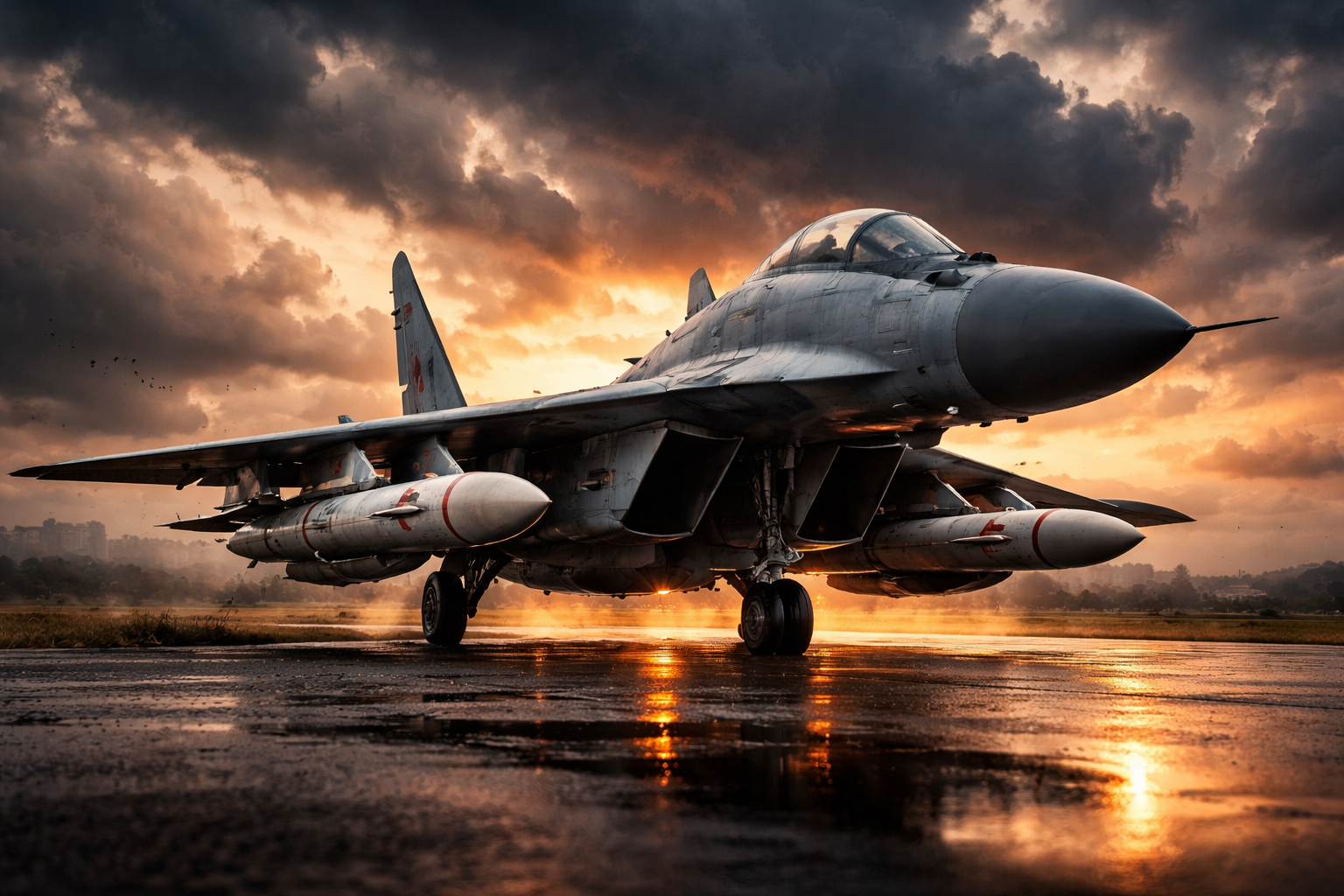
Chinese Supersonic Missiles in Europe? Serbia Confirms After Photo Leak
Serbia Reveals Chinese Missile Arsenal After Leak Sparks Alarm
Serbia has confirmed it purchased Chinese-made missiles after photographs leaked online showing them mounted on its fighter jets. The admission, made by President Aleksandar Vučić, reveals that the Serbian Air Force now operates Chinese CM-400AKG air-to-surface ballistic missiles, which are designed to strike ground targets from the air—making Serbia the first European country known to deploy the weapon.
The images, circulating across defense forums and social media earlier this week, showed the missiles attached to Serbia’s Soviet-era MiG-29 aircraft. Belgrade confirmed the purchase soon after the photos spread, acknowledging that the missiles are already in service and that the country possesses “a significant number” of them.
The development matters because it marks a visible expansion of Chinese military technology into Europe—and because the weapon’s capabilities extend Serbia’s strike reach across much of the western Balkans.
The story turns on whether Serbia’s growing military partnership with China is merely a pragmatic modernization strategy—or the start of a deeper geopolitical realignment in Europe’s most fragile region.
Key Points
Serbia confirmed it bought Chinese CM-400AKG air-to-surface missiles after photos of the weapons on MiG-29 jets leaked online.
The missile ranges up to about 400 km and can carry blast or penetrator warheads designed to destroy hardened targets.
Serbia is the first European country to deploy the system, previously exported mainly to states such as Pakistan.
Neighboring Croatia and other NATO members have raised concerns the purchase could destabilize the military balance in the Balkans, particularly fearing that it may lead to an arms race or increased tensions in the region.
The acquisition is part of a broader Serbian defense buildup that already includes Chinese air-defense systems and drones.
Belgrade continues to balance ties with NATO and EU ambitions while maintaining close relations with Russia and China.
The Weapon Behind the Headlines
The missile at the center of the controversy is the CM-400AKG, a Chinese air-to-surface ballistic missile designed to strike high-value targets from long distances.
The weapon can travel roughly 400 kilometers, giving aircraft the ability to launch attacks well outside most short-range air defenses. It can carry either a high-explosive blast warhead or a penetrator designed to destroy hardened structures such as bunkers or infrastructure.
Serbia has integrated the missile onto its MiG-29 fighter jets, which were originally built in the Soviet Union but have been upgraded with modern avionics and weapons.
In practice, this combination allows Serbian aircraft to strike targets deep into neighboring states without needing to cross their borders—a capability that dramatically extends Serbia’s potential reach.
How the Leak Forced Belgrade’s Hand
The purchase might have remained quiet if not for a set of photographs that began circulating online earlier this week.
Defense observers spotted the distinctive shape of the CM-400AKG, a type of air-to-surface missile, mounted beneath Serbian jets. Once the images spread across military forums and social media, questions mounted about whether Serbia had secretly acquired the system.
Rather than deny the reports, President Vučić publicly acknowledged the missiles during a television broadcast, confirming the country already had them in service and planned to strengthen the arsenal further.
The rapid confirmation suggests the acquisition was not intended to be entirely hidden—but that Serbia preferred to reveal it on its own timeline rather than under scrutiny triggered by a leak.
Serbia’s Strategic Balancing Act
Serbia occupies a unique geopolitical position in Europe.
The country maintains cooperation with NATO through partnership programs and has expressed ambitions to eventually join the European Union. At the same time, it has long-standing political and cultural ties with Russia and increasingly close economic and military relations with China.
This multi-directional diplomacy is visible in its military procurement strategy. Alongside Chinese systems such as the FK-3 air-defense missile, Belgrade has also ordered Western aircraft like French Rafale jets.
The result is a hybrid arsenal drawn from multiple geopolitical camps—an unusual model inside Europe.
The Regional Reaction
The announcement has already drawn criticism from Croatia, a NATO and EU member that fought a war with Serbia in the 1990s.
Croatian officials warned that the purchase could upset the military balance in the Balkans and accelerate an emerging regional arms buildup.
For neighboring states, the concern is not only the missile’s range but also the precedent it sets: Chinese weapons systems appearing inside Europe’s security environment.
Most European militaries heavily rely on American and European defense technology, which NATO logistics and command systems deeply integrate.
Chinese hardware operates outside that ecosystem.
What Most Coverage Misses
The headline story focuses on Serbia buying Chinese missiles. But the deeper shift is how China is quietly entering the European defense market through smaller states.
Major NATO members are unlikely to buy Chinese weapons because doing so would complicate alliance interoperability and risk political backlash. Smaller countries outside NATO’s core structures, however, face fewer constraints.
Serbia is the perfect test case.
It is militarily significant in the Balkans but politically non-aligned enough to buy weapons from multiple sources. By supplying systems like the FK-3 air defense missile and now the CM-400AKG strike weapon, China gains a foothold in Europe’s defense landscape without confronting NATO directly.
In other words, the missile sale is not only about Serbia’s military capabilities. It is also a sign that China’s defense industry is beginning to compete globally—even inside Europe’s strategic backyard.
Why the Stakes Extend Beyond Serbia
The Balkans has long been one of Europe’s most sensitive security regions.
Conflicts in the 1990s left deep political divisions, and tensions periodically flare between Serbia and Kosovo as well as among neighboring states. In such an environment, even modest changes in military capability can shift perceptions of power.
For Serbia, modernizing its armed forces serves multiple purposes: deterring adversaries, asserting regional influence, and reducing reliance on any single supplier.
For NATO members nearby, however, the combination of longer-range missiles and Chinese technology raises new strategic questions about how to respond to these developments and maintain a cohesive defense strategy in the face of evolving threats.
If more countries begin diversifying their arsenals in similar ways, Europe’s security architecture could become far more fragmented, potentially leading to increased tensions among NATO members and complicating collective defense strategies.
The Strategic Fork Ahead
The immediate controversy may fade once the news cycle moves on. Serbia has been modernizing its military for years, and this missile purchase is part of a broader pattern rather than a sudden shift.
But the larger question remains unresolved.
Will Serbia’s strategy of balancing between East and West continue to work—allowing it to buy weapons from China while maintaining relations with Europe and NATO?
Or will rising geopolitical competition force smaller states to choose sides more clearly?
The signals to watch are straightforward: future arms purchases, deeper Chinese defense cooperation, and whether neighboring states respond with their own military expansions.
Those decisions will determine whether this missile deal is remembered as a routine procurement—or as the moment China’s defense industry quietly entered Europe’s strategic landscape.
