

The Arctic Is Becoming a Battlefield—and Canada Is Spending $35 Billion to Prepare
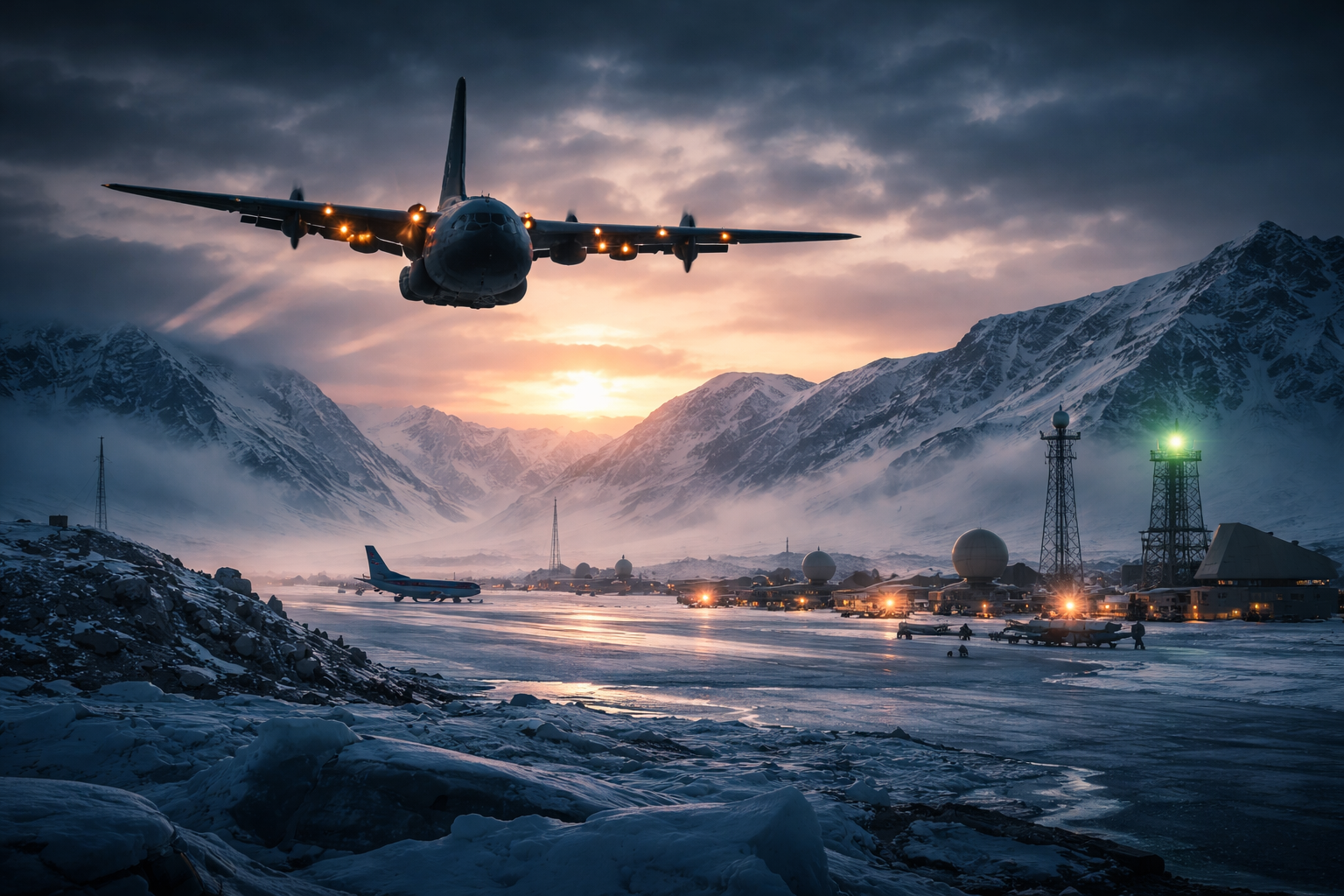
Canada Unveils $35 Billion Arctic Defense Plan as Global Tensions Rise
Why Canada Is Rapidly Militarizing the Arctic
Canada is dramatically expanding its Arctic military footprint, announcing a multibillion-dollar defense and infrastructure push designed to strengthen sovereignty across the vast northern region. As of March 12, 2026, the government unveiled plans worth roughly C$35 billion (about $25.7 billion) aimed at upgrading military bases, building new operational hubs, and improving Arctic transport networks.
The move reflects a deeper strategic shift: Canada says it can no longer rely primarily on allies—particularly the United States—for the defense of its Arctic territory.
What makes the announcement more than a routine military spending increase is the timing. Melting sea ice, rising global tensions, and growing Russian and Chinese interest in the region have transformed the Arctic from a remote frontier into a strategic crossroads.
The story turns on whether Canada can actually turn its vast Arctic territory into a defensible, year-round operating environment.
Key Points
Canada announced a C$35 billion plan to strengthen Arctic defenses through military infrastructure upgrades, operational hubs, and transportation projects.
The initiative includes expanding airfields, upgrading bases, and creating new remote operational hubs for rapid deployment in the Arctic.
Canada is seeking greater defense independence, which means reducing reliance on the United States, despite the long-standing NORAD (North American Aerospace Defense Command) partnership.
Climate change is opening Arctic waters and routes, attracting increased strategic attention from Russia, China, and NATO countries.
The region covers about 40% of Canada’s land area but has only about 150,000 residents, creating major logistical challenges for defense operations and infrastructure development in response to the increased strategic attention from global powers.
New radar systems and surveillance upgrades aim to strengthen early warning against missile and aircraft threats approaching North America.
Why the Arctic Suddenly Matters More Than Ever
For most of modern history, the Arctic was a natural defensive moat. Extreme cold, thick sea ice, and lack of infrastructure made it nearly impossible for sustained military activity.
That is changing.
Warming temperatures are shrinking Arctic sea ice, opening seasonal shipping routes, and allowing more aircraft and naval movement across the polar region. As the Arctic becomes more accessible, it also becomes more contested.
The region now sits along the shortest flight paths between Russia and North America, making it critical for missile detection and early warning. It also contains vast reserves of energy, minerals, and new shipping corridors linking Europe and Asia.
Canada’s northern territory is enormous—roughly 4.4 million square kilometers—but most of it remains sparsely populated and difficult to access.
That combination—huge territory, limited infrastructure, and growing strategic interest—has made the Arctic one of the most important emerging theaters of global security.
The Infrastructure Behind the New Defense Strategy
The plan focuses less on deploying large numbers of troops and more on building the infrastructure that makes Arctic operations possible.
Several existing forward operating locations—including Yellowknife, Inuvik, Iqaluit, and Goose Bay—will be upgraded to support sustained military activity.
These upgrades include:
Expanded airfields and runways
Fuel and ammunition storage facilities
Aircraft hangars and maintenance facilities
Communications and IT systems
Housing and logistics infrastructure
Canada also plans to establish new operational support hubs and nodes across the Arctic, allowing forces to deploy rapidly into remote regions when needed.
These hubs are designed to enable year-round operations in extreme conditions, something that has historically been one of the biggest barriers to Arctic defense.
Transportation projects—such as roads linking remote northern regions to southern Canada—are also part of the strategy, helping both military logistics and economic development.
Surveillance: The Real Backbone of Arctic Defense
Much of Canada’s Arctic security strategy focuses on detection rather than combat.
The country is expanding its role in modernizing NORAD, the North American Aerospace Defense Command, the joint U.S.–Canada system that monitors air and missile threats approaching the continent.
Key projects include new over-the-horizon radar systems, capable of detecting aircraft and missile launches thousands of kilometers away by bouncing radar signals off the ionosphere.
Two major radar systems are planned:
Arctic Over-the-Horizon Radar for monitoring approaches from the Arctic region
Polar Over-the-Horizon Radar to detect threats even farther north across the polar routes
The first systems are expected to reach initial operational capability around 2028, with full deployment later in the decade.
This type of surveillance technology is critical because the Arctic is the most likely route for long-range missile attacks against North America.
What Most Coverage Misses
The most important shift in Canada’s Arctic strategy is not the size of the spending. It is the political signal about defense autonomy.
For decades, Canada has relied heavily on the United States for Arctic surveillance and defense through NORAD. The new strategy explicitly emphasizes the need to defend Canadian territory without depending entirely on allies.
This matters because the Arctic security environment is becoming more complex. Russia has spent years expanding its Arctic military infrastructure, while China has declared itself a “near-Arctic state” and increased its research and economic presence in the region.
At the same time, geopolitical tensions have exposed how fragile traditional alliances can be during political disputes.
Canada’s investment is therefore not just about defending the Arctic. It is about ensuring Canada can assert sovereignty and maintain leverage in a region where great-power competition is quietly intensifying.
Who Gains, Who Loses, and Why It Matters
The new Arctic strategy reshapes several layers of power and influence.
For Canada, the investment strengthens claims over its northern waters and territory, reinforcing sovereignty in a region that could become a major shipping corridor in the coming decades.
For the United States, the move is both supportive and subtly independent. Canada remains a core partner in NORAD, but greater Canadian capability could shift how responsibilities are shared.
For NATO, the Arctic is rapidly becoming a strategic frontier. Military exercises across northern Europe and North America are already increasing as the alliance prepares for operations in extreme polar environments.
For Russia and China, the development signals that Western countries are taking Arctic security more seriously.
What to Watch Next in the Arctic Power Shift
Canada’s Arctic defense surge marks the start of a long-term transformation rather than a single policy move.
Three developments will reveal whether the strategy succeeds.
First, infrastructure delivery. Arctic projects face extreme costs, logistical barriers, and environmental challenges. Delays could undermine the plan.
Second, radar and surveillance deployment. The effectiveness of new early-warning systems will determine whether North America can reliably detect emerging threats.
Third, geopolitical competition. As sea routes open and resource exploration expands, more nations will seek influence in the Arctic.
For much of modern history, the Arctic was defined by isolation and ice.
Over the next few decades, it may instead become one of the world’s most strategically contested regions.
