

Starmer’s China Sanctions Gamble Could Drag Britain Into A Fight It Cannot Afford
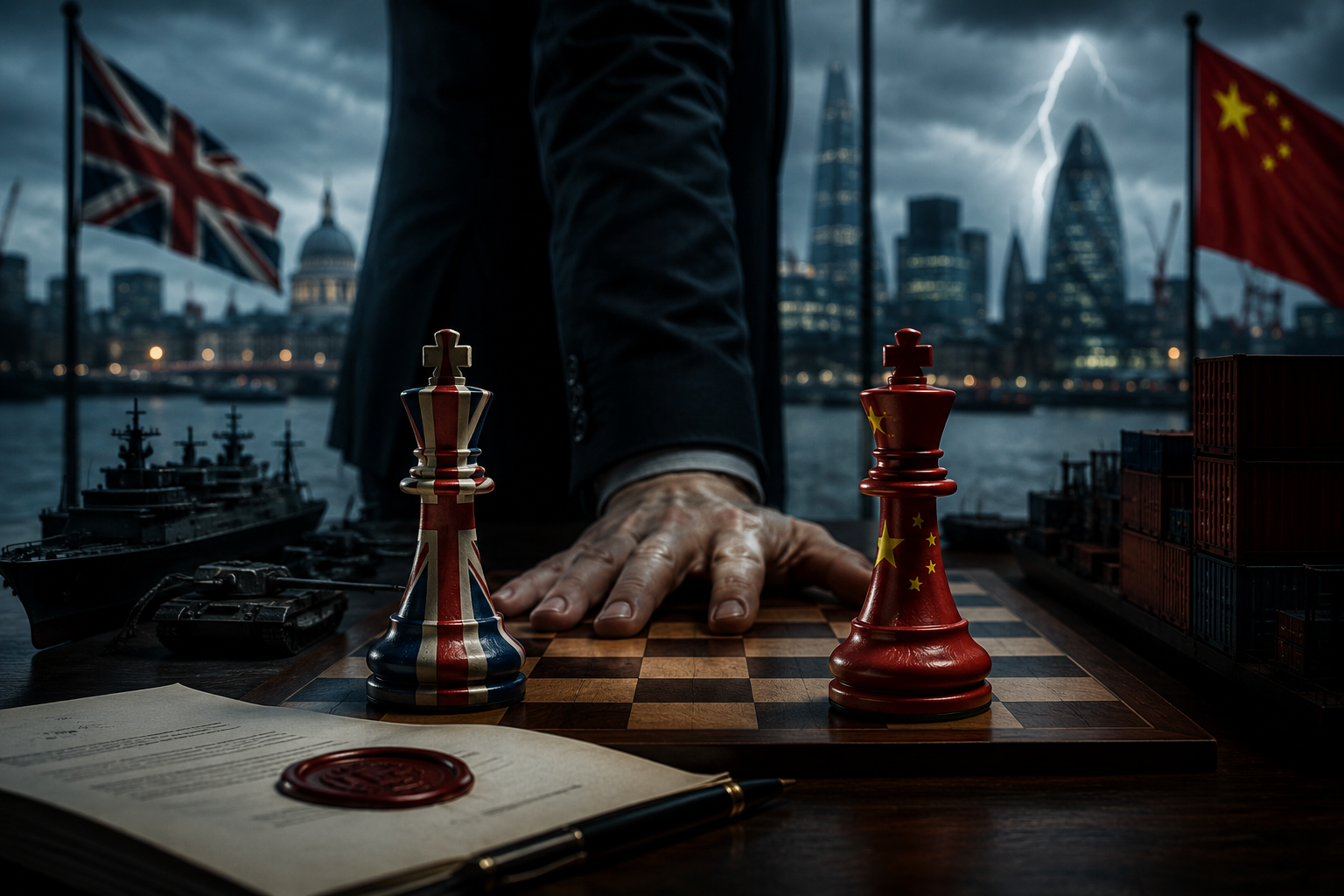
Britain Just Hit Chinese Firms Over Russia — And Beijing Is Warning Starmer To Back Down
Britain Just Picked A Fight With A Much Bigger Economic Power
What The UK Has Actually SanctionedThe UK has announced a new package of 70 sanctions aimed at Russia’s war machine, with the Government saying the measures target shadow-fleet shipping, military procurement supply chains and illicit finance networks used to bypass existing sanctions. The package includes action against more than 20 oil tankers, LNG vessels linked to Russia’s Arctic LNG 2 project, shipping insurers, financial networks and entities suspected of helping Russia acquire sensitive military technology.
The most explosive part is not only what Britain did to Russia. It is who else got caught in the net. The Government says the sanctions also hit third-country suppliers of critical military equipment to Russia in China, Thailand and Türkiye. That is why Beijing has reacted so sharply: this is no longer just Britain sanctioning Moscow; it is Britain accusing Chinese-linked entities of helping sustain Russia’s military capacity.
China’s embassy in Britain said it had made “serious representations” to British authorities after several entities, including four from China, were sanctioned over alleged supplies of key military equipment to Russia. Beijing urged Britain to withdraw what it called a mistake and said China would take necessary measures to protect the rights and interests of its companies.
Why China Is So Angry
China’s objection is simple: it rejects the idea that normal China-Russia business should be disrupted by Western sanctions policy. Its embassy argued that China has promoted peace talks over Ukraine and strictly controls exports of dual-use goods, while insisting that normal cooperation between Chinese and Russian firms should not be affected.
That is the surface argument. The deeper issue is sovereignty and precedent. If Britain can sanction Chinese companies for activity connected to Russia, then Beijing sees a Western government claiming the right to police Chinese commercial behaviour beyond British territory. China does not view that as a technical compliance dispute. It views it as political pressure.
This is why the language matters. China is not merely annoyed by a list of names on a sanctions register. It is pushing back against the wider Western strategy of using sanctions to make third countries choose between access to Western systems and cooperation with Russia. For Beijing, that is not just about Russia. It is about whether the US, UK and Europe can still dictate the rules of global trade.
Why Starmer Is Antagonising China
The official reason is Russia. The UK wants to cut off the shipping, finance, insurance, technology and procurement routes that allow Moscow to keep funding and equipping its war effort. The Government has said the new measures are intended to choke off Russia’s war effort across multiple fronts and reinforce G7 pressure during the summit.
But the political reason is harder to ignore. Keir Starmer needs to look strong internationally at a time when his domestic authority is under pressure. Sanctions are a convenient instrument because they allow a Prime Minister to project moral clarity, military seriousness and alliance loyalty without immediately putting British troops in a new conflict.
The problem is that toughness abroad is easy to announce and harder to manage. China is not a marginal state, a small intermediary or a weak rogue actor. It is one of Britain’s most important trading realities, a manufacturing superpower and a central player in global supply chains. Antagonising Beijing may satisfy the optics of G7 resolve, but it also risks creating costs that ordinary British businesses and consumers eventually feel.
The Starmer Problem Behind The Sanctions
This is where the anti-Starmer argument becomes sharper. Starmer’s Government appears to be trying to look strategically serious while still lacking a convincing broader China policy. One week Britain wants stable economic engagement. The next, it is targeting Chinese entities under a Russia sanctions framework. That may be defensible on security grounds, but it is not cost-free.
The danger is that Starmer drifts into a hardline posture without the leverage to make it work. Britain is no longer an imperial trading giant that can simply instruct the world to behave. It is a mid-sized power with fragile growth, high public spending pressures, weak productivity and a cost-of-living public already tired of paying for elite foreign-policy signalling.
If the sanctions genuinely disrupt Russian procurement, then there is a strategic case. But if they mainly provoke Beijing, invite retaliation and make Britain look like Washington’s junior enforcement arm, the political reward may be much smaller than the economic risk. Starmer may win a headline about resolve and inherit a longer diplomatic headache.
What Could Happen Next
The most likely short-term outcome is controlled diplomatic anger. China complains, demands reversal, warns of consequences and keeps the dispute within diplomatic channels. Britain refuses to back down, frames the move as part of its Ukraine security commitment, and the story becomes another pressure point in a relationship already strained by espionage concerns, technology disputes, trade dependency and human rights arguments.
The second likely outcome is targeted Chinese retaliation. Beijing could restrict engagement with specific UK officials, slow cooperation in selected areas, increase pressure on British-linked firms operating in China, or use state media and diplomatic channels to portray Britain as hostile and subordinate to US strategy. That kind of response would be designed to send a message without triggering a full economic break.
The more serious outcome is a gradual chilling of UK-China economic relations. That would not necessarily arrive as one dramatic rupture. It could come through fewer investment openings, colder diplomatic meetings, slower commercial approvals and more caution from companies caught between Western sanctions compliance and Chinese political sensitivity. For a Britain already struggling to generate growth, that matters.
The Bigger Risk Britain Is Being Asked To Ignore
The Government’s case is that sanctions are necessary to degrade Russia’s war machine. That argument has force. The UK’s wider sanctions framework has also been expanded to cover trade prohibitions, services restrictions, transport powers, new export bans, refined oil restrictions, LNG maritime services and broader ship-related measures designed to close evasion routes.
But sanctions policy is not magic. It creates pressure, but it also creates adaptation. Russia looks for shadow fleets, third-country routes, covert procurement networks and alternative finance channels. The UK then widens sanctions. China objects. The West tightens further. The result is a world where economic systems split into rival enforcement zones.
That is the real long-term danger. Britain may believe it is simply punishing Russia. China may read the same move as proof that Western governments are willing to weaponise trade networks against any state or company that crosses their geopolitical line. Once that belief hardens, the world becomes more fragmented, more expensive and less predictable.
Starmer Has Opened A Door He May Not Control
The sanctions may be legally targeted and morally framed around Ukraine, but politically they have opened another front with China. That is the part Starmer cannot spin away. Britain has chosen to escalate pressure not only on Russia’s war economy, but on the international networks accused of helping it survive.
If this works, Starmer gets to claim Britain helped tighten the noose around Moscow’s supply chains. If it fails, he risks looking like a Prime Minister who antagonised China for symbolic toughness while leaving Britain exposed to the consequences. The question is not whether Britain should oppose Russia’s war. The question is whether Starmer has a serious strategy for the larger confrontation his own sanctions have just intensified.
