Swinney Says ‘Stars Are Aligning’ for Scottish Independence — But a Referendum Remains Unsecured
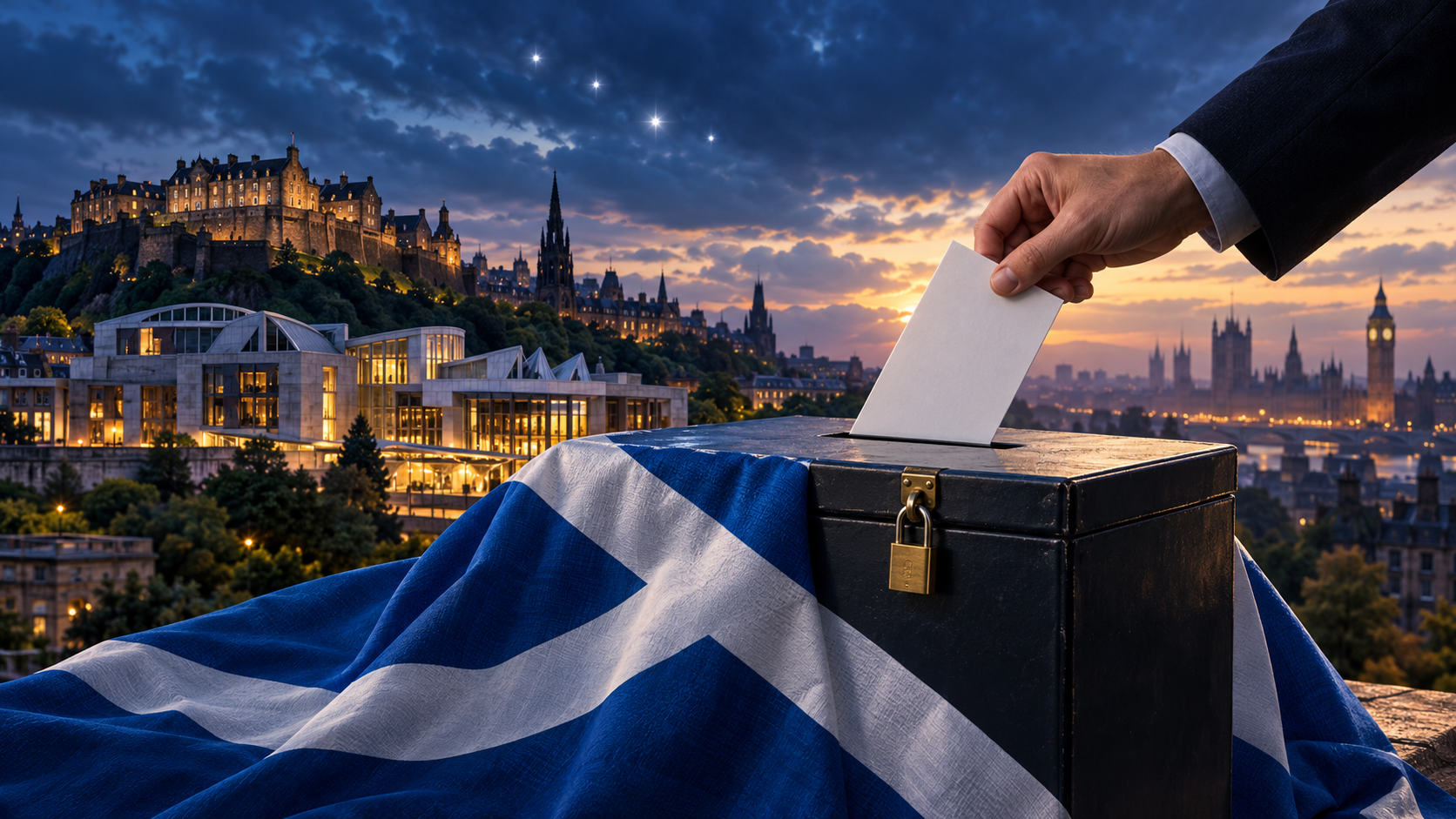
Scotland’s Constitutional Crossroads
Scotland’s Unfinished Independence Debate
The SNP leader points to nationalist gains across the UK, while the legal authority and political agreement needed for another vote remain unresolved.
John Swinney has told his party’s conference in Aberdeen that the “stars are aligning” for Scottish independence, presenting a changing political balance across the United Kingdom as an opening for his cause.
The Scottish First Minister’s address on Saturday 17 October came with a renewed campaign to persuade voters to leave the UK. It did not come with an agreed referendum date or permission to hold one. That gap is the central question behind his declaration of momentum.
Swinney’s argument is that the political conditions are becoming more favourable. Whether those conditions produce another ballot depends on decisions beyond the conference hall, including the position of the UK government and the strength of public support.
Why Swinney Sees an Opening
The SNP secured a fifth consecutive term in government at May’s Scottish Parliament election. In Wales, Plaid Cymru’s victory added another nationalist-led administration, alongside the presence of a Sinn Féin First Minister in Northern Ireland.
Swinney used that combination to argue that support for national self-determination now reaches across the three devolved capitals. It gives him a way to present Scotland’s constitutional argument as part of a wider challenge to how power is held in the UK.
There is an important limit to that electoral case. The SNP did not secure the overall Holyrood majority Swinney had made a target for pressing Westminster over another referendum. Returning to government preserved his platform. It did not deliver every part of the mandate he had sought.
Those facts can coexist. An election can strengthen a party’s ability to campaign while leaving its preferred constitutional outcome uncertain. Voters also choose governments for several reasons, including public services, leadership and economic policy. A parliamentary result cannot simply be read as the answer to a different ballot question.
A Campaign to Persuade Scotland
Swinney announced a nationwide effort called Choose Scotland, backed by a six-figure campaign budget. Its purpose is to build support for independence. Senior SNP figures also discussed the possibility that a future hung Westminster parliament could give the party leverage to negotiate another vote.
Both approaches involve work still to be done: winning over voters and securing political agreement. Campaign spending can help distribute an argument, organise supporters and reach people who do not attend party events. It cannot establish whether that argument has persuaded them.
The measure of progress will therefore be broader than enthusiasm among delegates. A successful persuasion campaign needs to answer the concerns of people who remain undecided, including those willing to consider independence but unconvinced by the practical arrangements.
Nor is a hung parliament a result the SNP can arrange by itself. Even if one emerges, its bargaining position would depend on the number of seats it holds, the other parties’ options and what those parties are prepared to concede. It is a possible opening rather than a timetable.
The Legal Barrier Has Not Moved
In November 2022, the UK Supreme Court considered whether the Scottish Parliament could legislate for a proposed independence referendum under its existing powers. The case concerned reserved matters, including the Union of Scotland and England and the UK Parliament.
The ruling established that Holyrood could not pass the proposed referendum legislation within its existing competence. Calling the vote advisory did not remove its constitutional significance.
That leaves a distinction between campaigning for a referendum and possessing the authority to organise it. A political mandate may be used to demand a change in the legal position; it does not itself make that change.
The judgment also needs to be understood within its scope. The court was resolving a question about legislative powers. It was not deciding whether independence would benefit Scotland or whether voters should ever be offered another choice.
For Swinney, the task is therefore political as well as constitutional. He needs a route that turns a demand for democratic consent into an authorised process. Announcing confidence in the outcome does not settle the process by which it would be reached.
Allies Have Different Constitutional Destinations
The cooperation between the SNP, Plaid Cymru and Sinn Féin gives Swinney a shared platform. Their Cardiff pact brought party leaders together around demands for constitutional choice.
It should not be mistaken for agreement by three entire populations, or for a single legal route out of the UK. Scottish independence, Welsh independence and Irish reunification are distinct projects.
Northern Ireland has a particular consent framework arising from the Good Friday Agreement and its implementing legislation. Scotland’s referendum dispute operates under a different settlement. Political solidarity can help leaders coordinate their message, but each movement must satisfy the requirements relevant to its own proposed change.
The alliance’s practical value will depend on what follows its declarations: specific proposals, negotiations and evidence that its arguments reach beyond existing supporters.
The Electorate Remains the Essential Test
Scotland’s last independence referendum took place on 18 September 2014. The result was approximately 55 per cent against independence and 45 per cent in favour. Turnout was about 85 per cent.
That was a direct decision on the constitutional question. It remains a different kind of evidence from a party election victory, a conference reception or a leader’s assessment of political opportunity.
The strength of that participation also shows why the arrangements for any future vote matter. The question, rules and authority behind a referendum help determine whether competing sides accept it as a legitimate decision.
For voters considering a different answer from 2014, the test will include the proposed state’s finances, institutions and relationship with its neighbours. For those who favour the Union, the debate concerns whether the existing settlement offers the more convincing future. Neither side can settle those judgments through confidence alone.
Swinney has committed his party to another effort to change minds. The next concrete test is whether Choose Scotland can produce sustained support beyond the SNP’s existing electorate, alongside a published and workable route to the ballot box.
Sources
PA / The Standard — ‘Stars Are Aligning’ for Scottish Independence, Swinney to Tell SNP Conference — Advance speech wording, the May electoral context and the SNP’s failure to win an overall majority.
The Guardian — SNP Says Campaign for Next Referendum on Independence ‘Has Already Begun’ — Delivered speech, Choose Scotland campaign funding and discussion of a hung parliament, 17 October 2026.
UK Supreme Court — Reference by the Lord Advocate, UKSC 2022/0098 — The constitutional case, reserved matters and judgment of 23 November 2022.
Next Reads
Scotland, Wales And Northern Ireland’s Party Leaders Unite To Challenge Westminster — Explains the Cardiff pact and the different constitutional routes facing its participants.
