

Taiwan Just Became the Battleground Before Trump Meets Xi
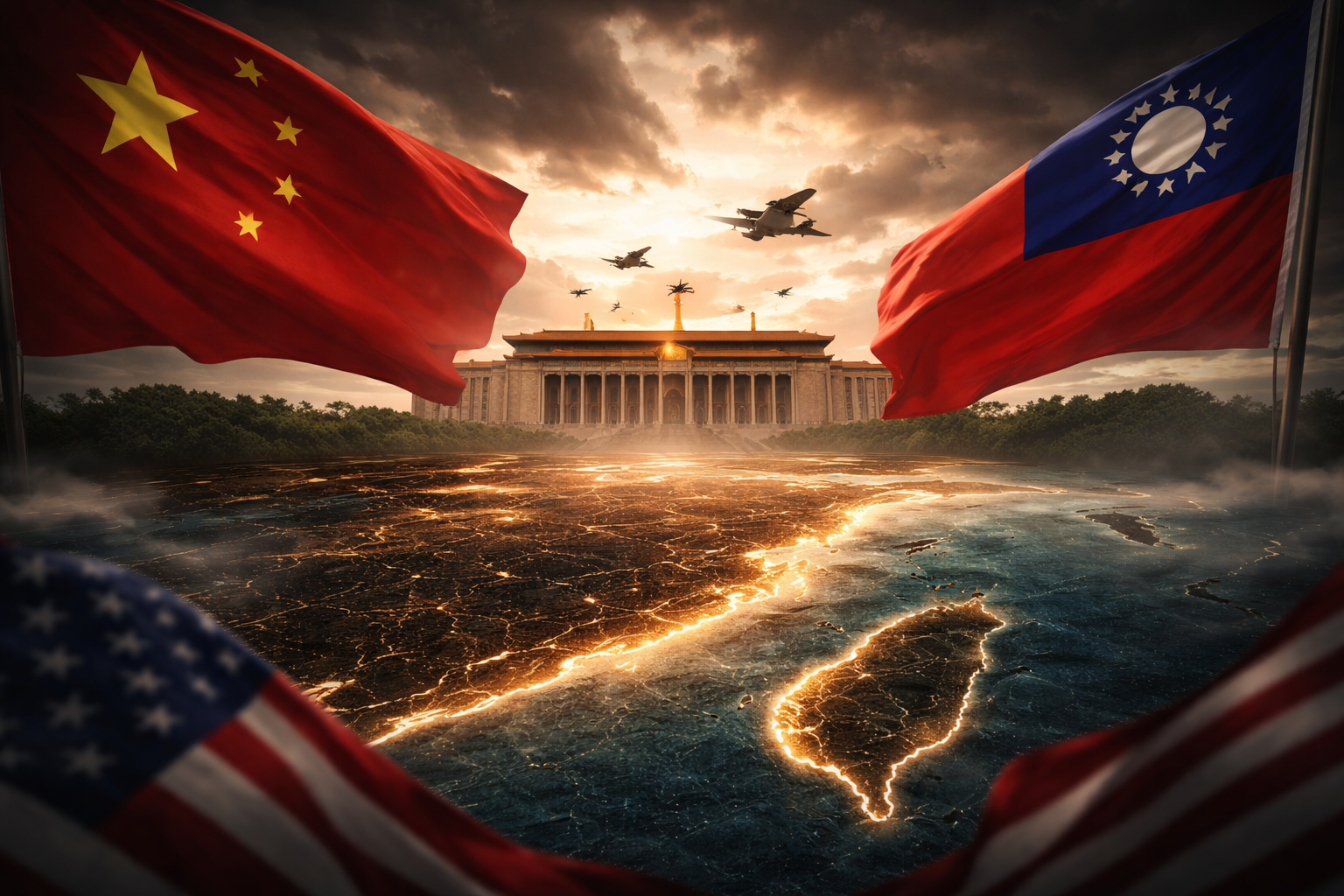
China Moves First on Taiwan Ahead of Trump Summit
Taiwan Opposition Leader’s China Visit Before Trump-Xi Summit Could Reshape the Entire Power Balance
Taiwan’s main opposition leader is heading to China just weeks before a high-stakes meeting between Donald Trump and Xi Jinping—and the timing is not accidental.
Cheng Li-wun, chair of Taiwan’s Kuomintang (KMT), has confirmed she will visit China from April 7–12, ahead of Trump’s planned mid-May trip to Beijing.
The move matters because it inserts Taiwan’s internal politics directly into great-power diplomacy—and hints that Beijing may be shaping the narrative before it sits down with Washington.
The narrative hinges on whether Taiwan will be used as a bargaining chip or assert its independence in the upcoming phase of U.S.-China relations.
Key Points
Taiwan’s opposition leader Cheng Li-wun will visit China in early April at the invitation of Xi Jinping.
The trip comes weeks before Donald Trump meets Xi in Beijing, elevating its geopolitical significance.
Beijing continues to refuse engagement with Taiwan’s current government while maintaining ties with the opposition.
The U.S. is simultaneously pressuring Taiwan to increase defense spending amid rising Chinese military pressure.
The visit could signal a competing diplomatic channel between Taipei and Beijing that bypasses the ruling administration.
This introduces uncertainty about Taiwan's representation—or leverage—during the upcoming U.S.-China talks.
A Visit That Reopens Old Channels Between Taipei and Beijing
The Kuomintang (KMT), Taiwan’s main opposition party, has long maintained a more conciliatory stance toward China compared to the ruling Democratic Progressive Party (DPP).
That difference is now becoming geopolitically relevant again.
Beijing has refused to engage with Taiwan’s current president, Lai Ching-te, whom it labels a separatist. Instead, it is reopening political dialogue with the opposition.
Cheng’s visit—covering Beijing, Shanghai, and Jiangsu—is framed as an effort to “promote stability” and improve cross-strait relations.
But the deeper reality is this: China is choosing who it talks to in Taiwan.
Why the Timing—Right Before Trump’s Visit—Matters
The sequence is the signal.
Cheng’s trip lands just weeks before Trump’s expected meeting with Xi in mid-May, where trade, security, and Taiwan will likely dominate discussions.
At the same time:
U.S. lawmakers are urging Taiwan to approve a $40 billion defense package
China is increasing military pressure around the island
Washington is accelerating arms sales to Taipei
This scenario creates a three-layer negotiation:
China ↔ Taiwan opposition (KMT)
China ↔ United States
United States ↔ Taiwan government
That is not stable—it is competitive diplomacy.
The Internal Split Inside Taiwan Is Now a Strategic Factor
Taiwan is not presenting a single unified position to the world.
The ruling DPP prioritizes sovereignty and defense
The KMT prioritizes stability and dialogue with China
Both claim to protect Taiwan’s future—but through opposite strategies.
This matters because Taiwan’s parliament is opposition controlled, meaning
Defense budgets can be delayed or reshaped
Strategic alignment with the U.S. can be moderated
Messaging to Beijing can diverge from official policy
That fragmentation weakens clarity at exactly the moment global powers are negotiating over Taiwan’s future.
What This Means for China’s Strategy
China’s approach is increasingly layered, not just military.
Beijing is:
Applying military pressure
Expanding economic and diplomatic incentives
Engaging selectively with Taiwan’s political actors
By inviting Cheng, China reinforces a key narrative:
Taiwan is not a unified actor and therefore can be influenced internally.
This provides Beijing leverage in future negotiations, especially with Washington.
What This Means for the United States
The U.S. is facing a more complex Taiwan problem than before.
It is not just about deterring China—it is about the following:
Ensuring Taiwan’s internal politics align with deterrence
Maintaining credibility with allies in Asia
Preventing China from exploiting political divisions
Recent warnings from U.S. lawmakers highlight concern that delays in Taiwan’s defense spending could weaken deterrence at a critical moment.
If Taiwan appears divided, it complicates U.S. strategy significantly.
What Most Coverage Misses
The key issue is not the visit itself—it is who is chosen to represent Taiwan in great-power politics.
Most coverage frames the event as a routine cross-strait engagement or political gesture. It is not.
This visit effectively creates a parallel diplomatic channel between Beijing and a major Taiwanese political force that is not currently in power—but could be.
That matters because:
It allows China to shape narratives before U.S.-China talks
It weakens the perception of Taiwan as a single negotiating entity
It introduces ambiguity about Taiwan’s long-term alignment
In strategic terms, ambiguity benefits China far more than it benefits Taiwan or the United States.
This issue is not about diplomacy—it is about control of the narrative before the negotiation even begins.
The Stakes Beyond Taiwan: A Signal to the Region
This development is being watched closely across Asia.
Allies such as Japan and South Korea are already worried that the U.S. is stretching its focus globally, which could weaken its commitments to the Indo-Pacific.
If Taiwan appears politically divided while China appears strategically coordinated, the perception gap grows.
And in geopolitics, perception is leverage.
The Next Phase: What to Watch Before the Trump–Xi Meeting
Three key signals will determine how the situation evolves:
Whether Cheng meets Xi directly and what language is used publicly
Whether Taiwan’s defense budget moves forward or stalls further
Whether the U.S. adjusts its posture ahead of the Beijing summit
This is no longer just about Taiwan’s future.
It is about how the US and China frame Taiwan before negotiating—and who speaks for it.
The next phase will reveal whether Taiwan is treated as a strategic partner, a divided system, or something far more dangerous: a negotiable variable in a major-power deal.
