UK-Russia Spy Clash Explodes as Diplomat Expelled
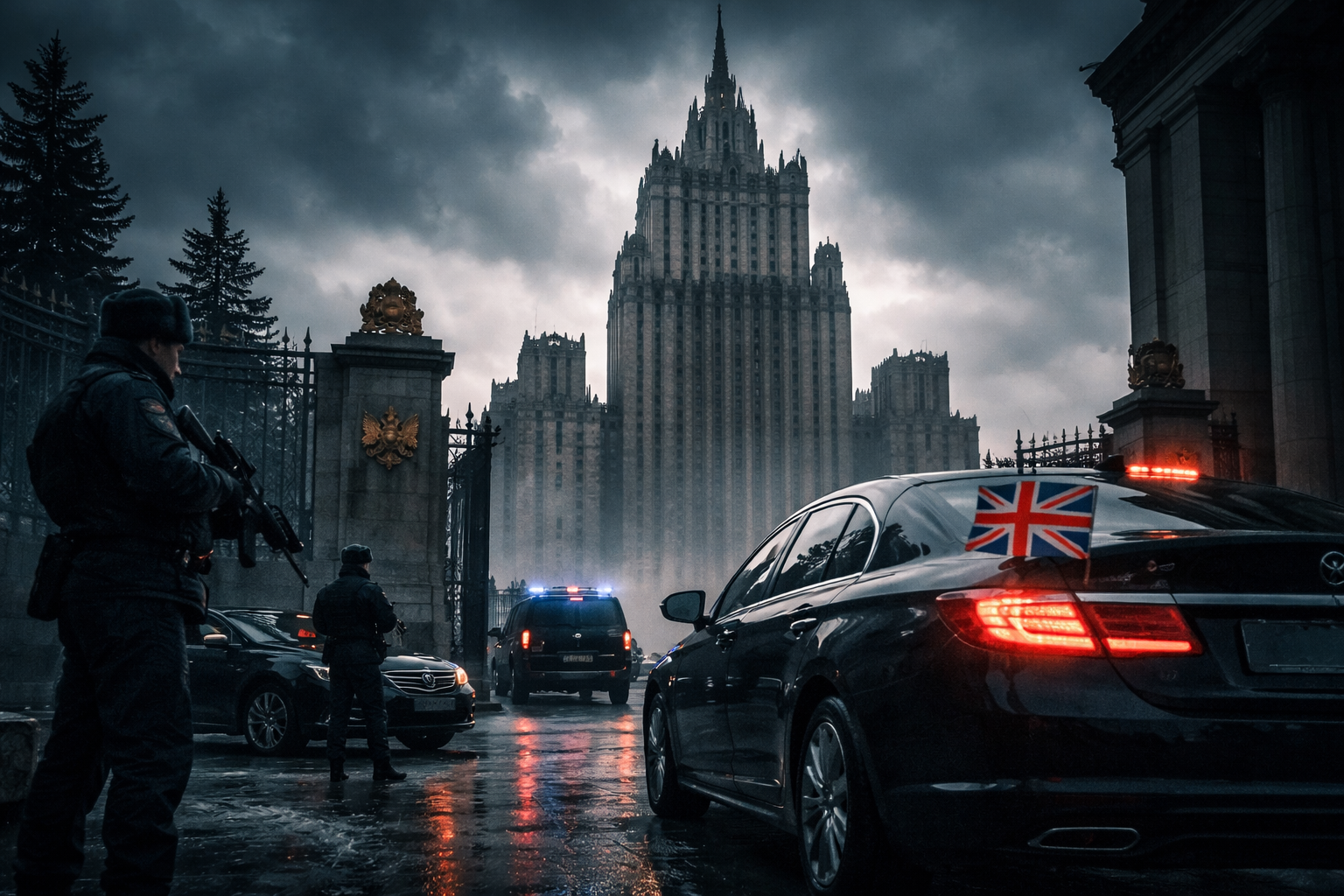
Russia Boots British Diplomat in Spy Row—Tensions Surge
Russia Expels British Diplomat Over Espionage Claims—A New Flashpoint in a Quiet Intelligence War
This is not an isolated incident. This incident represents a continuation of a pattern of reciprocal expulsions that has escalated since the onset of the Ukraine war, with both parties consistently accusing each other of covert operations disguised as diplomatic activities.
What makes this moment different is not just the accusation but the timing, signaling a deeper shift in how intelligence confrontation is now being conducted openly through diplomacy.
The story turns on whether the incident is routine diplomatic theater or the visible edge of a much broader intelligence escalation.
Key Points
Russia ordered a British diplomat to leave within two weeks after alleging links to UK intelligence services.
The UK government has rejected the claims as “malicious and baseless” and is considering its response.
This is part of a recurring cycle of expulsions between Russia and Western countries since 2022.
Moscow has warned it will respond to any UK retaliation with “mirror” measures.
Similar incidents have occurred multiple times in 2025 and 2026, indicating a sustained diplomatic breakdown.
No public evidence has been presented to support the espionage allegations.
The Immediate Trigger: A Familiar Accusation, A Strategic Signal
Russia’s foreign ministry claims it received intelligence linking the diplomat to British intelligence services, prompting a formal protest and expulsion order.
The accusation follows a well-established script:
Identify a diplomat as an “undeclared intelligence officer””
Summon the opposing embassy
Issue a deadline for departure
The UK’s response is equally predictable—reject the claim outright and frame it as politically motivated.
What’s notable is the absence of evidence. That absence is not unusual—it is, in fact, part of the mechanism.
Where This Escalation Really Begins
To understand this event, you have to go back to 2022.
Since Russia’s full-scale invasion of Ukraine, diplomatic relations between Moscow and Western countries—including the UK—have deteriorated to their lowest level since the Cold War.
Expulsions have become routine:
Multiple British diplomats expelled in 2025
Reciprocal expulsions by the UK
Ongoing intelligence accusations on both sides
This situation is not diplomacy in the traditional sense. It is a controlled confrontation—played out through embassies.
The Mechanics of Diplomatic Espionage
Diplomats have long been used as intelligence operatives under legal cover.
Under international law, diplomats cannot be arrested—but they can be expelled. That makes expulsion the default tool for dealing with suspected spies.
Russia’s intelligence agency, the FSB, has repeatedly framed such expulsions as counter-intelligence victories, identifying individuals allegedly working undercover.
Western governments rarely confirm or deny these claims. Instead, they respond diplomatically—often by expelling a counterpart.
The Power Shift: Who Actually Gains?
At first glance, expelling a diplomat looks like a defensive move.
In reality, it serves multiple strategic purposes:
Domestic signaling: Demonstrates strength against perceived Western interference
Operational disruption: Removes potential intelligence collectors
Reciprocal leverage: Creates justification for future retaliation
But there is a trade-off. Each expulsion reduces diplomatic capacity—fewer staff, less communication, more misunderstanding.
That increases the risk of miscalculation.
Real-World Stakes: Why This Matters Beyond Diplomacy
For most people, a diplomat being expelled feels distant. It isn’t.
These moves directly affect:
Intelligence visibility between nuclear powers
Crisis communication channels
Negotiation capacity on issues like Ukraine, sanctions, and security
As embassies shrink and trust collapses, informal communication disappears. That’s when crises become harder to control.
What Most Coverage Misses
The key insight is this: expulsions are not primarily about the individual diplomat—they are about managing intelligence exposure at scale.
Since 2022, Western countries have expelled hundreds of suspected Russian intelligence officers operating under diplomatic cover across Europe.
That severely degraded Russia’s intelligence network in the West.
What we are now seeing is a partial reversal—Russia pushing back, selectively removing Western personnel to rebalance the playing field.
This is not random. It is systemic.
Each expulsion is less about punishment and more about recalibrating how much each side can see, know, and influence inside the other’s territory.
What Happens Next: The Predictable Cycle
The likely next steps follow a familiar pattern:
The UK issues a formal protest
A Russian diplomat in London is expelled
Moscow responds again
This loop has repeated multiple times over the past two years.
The risk is not escalation into war—but escalation into complete diplomatic breakdown, where embassies operate at minimal capacity or not at all.
The Bigger Question Now
This incident is not about one diplomat. It is about the erosion of the last functioning layer of contact between adversaries.
As expulsions continue, diplomacy becomes thinner, slower, and more fragile.
The real question is no longer whether accusations are true or false.
It is whether both sides are still willing—or able—to maintain enough contact to avoid a larger crisis.
And that is the line now being tested.
