The 321-Diamond Trump Ring At The Centre Of A Tariff Firestorm
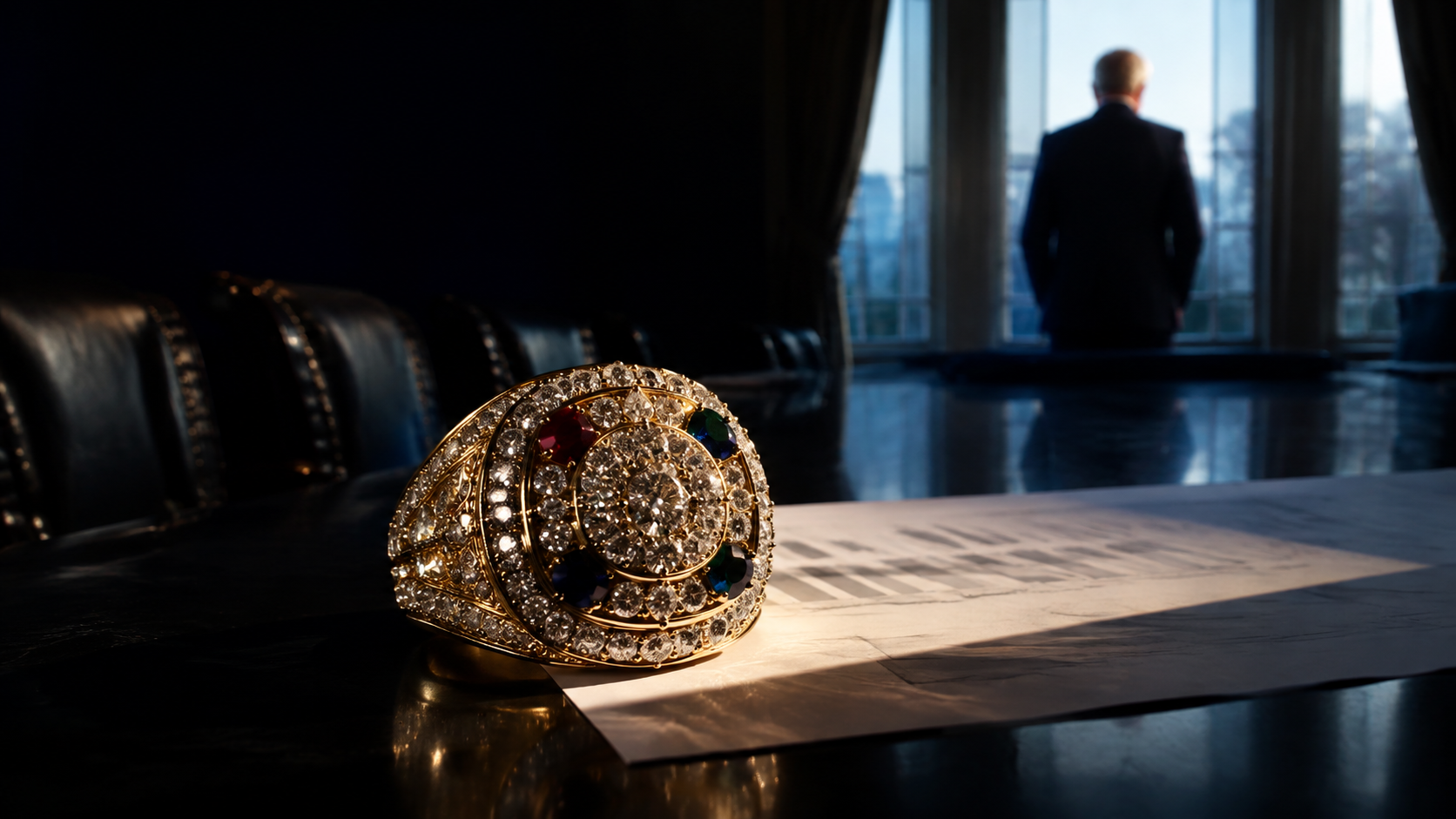
Did A 321-Diamond Ring Help Secure A Trump Tariff Exemption?
Antwerp Denies Trump’s Diamond Ring Influenced Tariff Exemption
Antwerp’s diamond industry has denied that an extravagant ring created for Donald Trump influenced the restoration of a valuable United States tariff exemption. The rejection follows accusations from two Democratic senators who questioned why the gift was presented less than four weeks before European natural diamonds regained tariff-free access to America.
The timing is politically explosive, but it is not proof of a deal. The Antwerp World Diamond Centre says the tariff campaign predated the ring, relied on longstanding economic arguments and had already produced an identical exemption in September 2025.
The Extraordinary Gift To Trump
The ring was presented to US Ambassador to Belgium Bill White during an America 250 celebration in Brussels on 28 June. It was intended for President Trump and designed to commemorate the 250th anniversary of American independence.
Created by Antwerp jeweller and diamantaire David Gotlib, the Super Bowl-inspired piece contains 321 natural diamonds set in 18-carat gold. It also features 56 sapphires, 13 emeralds and six rubies, alongside imagery celebrating the United States and Trump’s position as both its 45th and 47th president.
Antwerp’s diamond federation described the ring as a demonstration of Belgian craftsmanship and a celebration of a commercial relationship stretching back generations. Trump thanked the industry through a video message, while the American ambassador praised the bond between the two countries.
That explanation did not prevent the gift from attracting scrutiny once the tariff chronology became clear.
Democrats Demand Answers
Democratic senators Elizabeth Warren and Richard Blumenthal wrote to the Antwerp World Diamond Centre and David Gotlib Luxury Cufflinks on 11 August. They argued that the proximity between the gift and the tariff exemption created what they called a “glaring appearance of impropriety”.
Their letter went considerably further, describing the ring as what “appears to be a cartoonish bribe” and warning that the circumstances could potentially raise questions under federal bribery law. Those are allegations from the senators, not findings by a court, regulator or criminal investigation.
The companies were asked to disclose their communications with American officials, explain how the ring was financed and identify everyone involved in deciding to create it. Warren and Blumenthal requested answers by 24 August.
Antwerp Says The Timeline Tells A Different Story
The Antwerp World Diamond Centre insists the gift and tariff campaign were entirely separate. It says the ring would never have existed without the official anniversary celebration organised by the US Embassy in Belgium.
Its strongest defence is that the contested trade benefit was not new. European polished diamonds had already secured a 0% additional tariff in September 2025, following negotiations involving the diamond federation and European Commission.
That exemption was based on a straightforward economic argument: America does not have a domestic diamond-mining or diamond-polishing industry requiring protection from European competition. Tariffs on polished stones would therefore impose additional costs on American importers, jewellers and consumers without relocating meaningful production to the United States.
The original exemption temporarily disappeared in February 2026 after the US Supreme Court rejected the legal foundation used for Trump’s earlier reciprocal tariffs. The administration responded with a general 10% import surcharge under Section 122 of the Trade Act, which also caught European polished diamonds.
When that temporary surcharge expired on 24 July, European natural diamonds were exempted from the replacement Section 301 measures. The previous 0% position was consequently restored.
Antwerp says it merely repeated the same arguments that had succeeded in 2025. The White House has also denied granting a special favour, maintaining that the decision upheld preferential treatment established through the existing US–European Union trade framework.
Why The Exemption Matters
The decision carries substantial commercial value for Antwerp. Belgium exported approximately $2.1 billion of polished diamonds to the United States in 2024, making America one of the sector’s most important destinations.
Diamonds polished in the European Union can now enter the US without the additional tariff, while stones processed in several competing centres remain liable for import duties. Because a polished diamond’s origin is generally determined by where its substantial transformation occurred, the exemption could encourage more high-value stones to be cut in Antwerp.
The policy does not mean every diamond passing through Belgium automatically receives a zero rate. A stone polished in India and subsequently traded through Antwerp would retain Indian origin and remain subject to the applicable tariff.
The industry’s economic explanation is therefore credible. With no equivalent American production base to defend, a tariff risks raising prices rather than protecting US employment.
A Serious Optics Problem Is Not Proof
The ring nevertheless created an avoidable appearance problem. It was highly personalised, commercially symbolic and presented while the organisation behind it had an obvious interest in American trade policy.
Yet the publicly established chronology also complicates the senators’ most damaging implication. The 0% treatment existed months before the ring, and its temporary interruption resulted from a wider change in the legal framework rather than a decision aimed specifically at Antwerp.
There is currently no public evidence demonstrating that Trump ordered the exemption in exchange for the gift. Timing can justify oversight and disclosure demands, but it cannot by itself establish bribery, corrupt intent or a quid pro quo.
The administration has said the ring is federal property. Under American rules governing valuable foreign gifts, Trump would have to pay its assessed market value if he wanted to retain it personally, further weakening any suggestion that the presentation automatically delivered a private financial benefit.
What Happens Next
The most revealing evidence will be the communications requested by Warren and Blumenthal. Emails, meeting records and messages could establish whether the ring and tariffs were ever discussed together, or support Antwerp’s position that two parallel events have been combined into a political accusation.
For now, Antwerp has a stronger factual defence than the headline chronology initially suggests: it pursued the exemption before the ring existed, secured it once before and advanced an economic case that directly affects American consumers. The unanswered question is not whether the timing looks awkward—it plainly does—but whether the senators can uncover evidence connecting that awkward timing to the actual trade decision.
