The Reporter China Expelled May Reveal How High The Taiwan Stakes Have Become
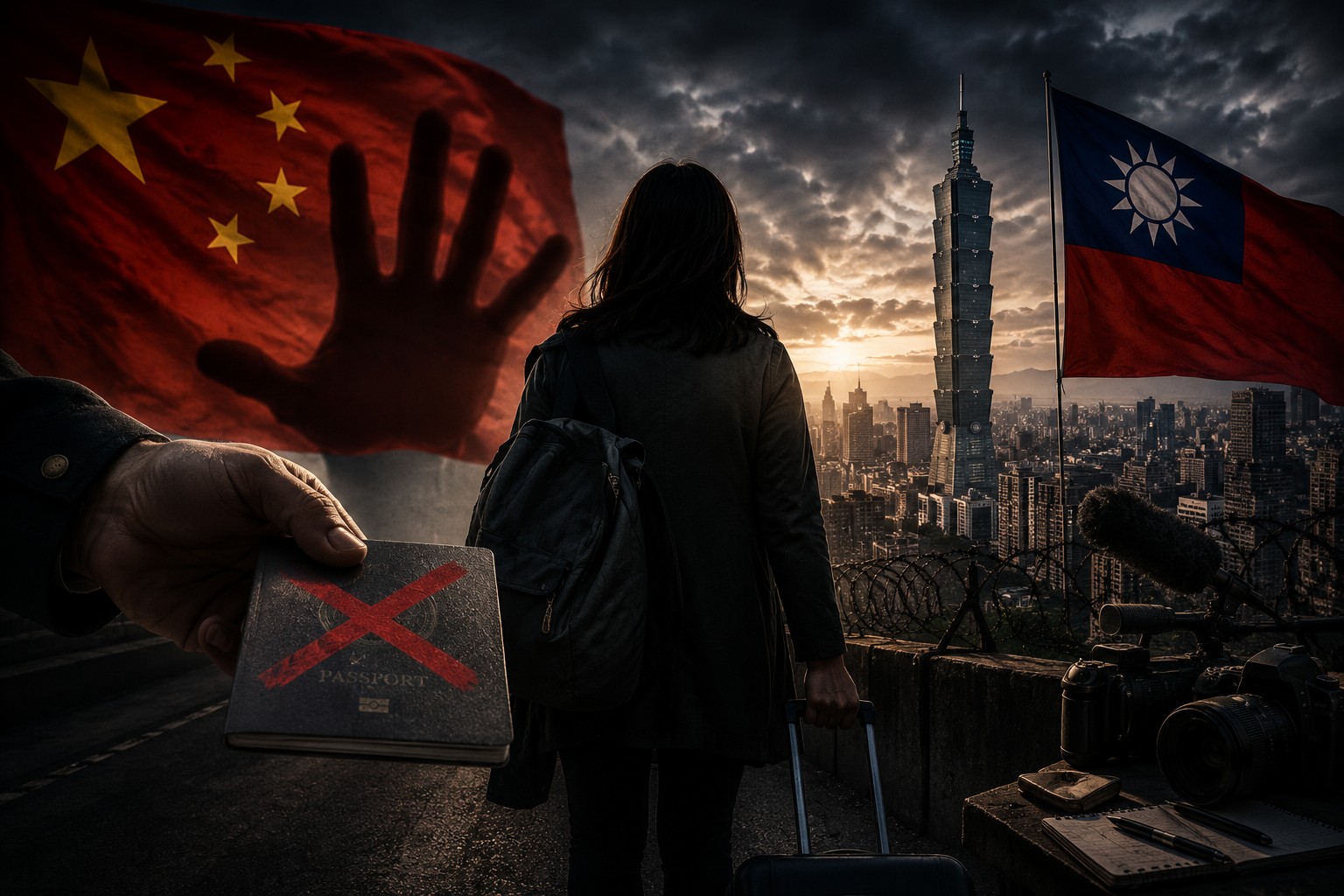
China Just Turned A Journalist Into A Geopolitical Flashpoint
The Story Is Bigger Than The Journalist
Taiwan has sharply criticised China after a foreign correspondent was expelled following a media organisation’s interview with Taiwanese President Lai Ching-te. According to public reporting, the journalist herself did not participate in the interview, yet Chinese authorities reportedly linked the expulsion to the event. Taiwan responded by accusing Beijing of interfering with press freedom and attempting to intimidate international media organisations.
On the surface, this appears to be another dispute between a government and a news organisation. In reality, it touches one of the most sensitive geopolitical issues on Earth. The Taiwan question sits at the centre of growing tensions between China and the democratic island that Beijing continues to claim as its own territory.
Why Beijing Reacted So Strongly
For China, Taiwan is not simply a foreign policy issue. It is a core political objective tied to national identity, sovereignty, and the legitimacy of the Chinese state. Beijing consistently opposes actions that could imply Taiwan is an independent country or a separate political entity.
That helps explain why international interviews involving Taiwan’s president receive intense scrutiny. Even when the conversation itself contains nothing extraordinary, the symbolism matters. Every appearance, interview, summit, and diplomatic engagement becomes part of a wider struggle over how Taiwan is perceived internationally.
The central issue is not merely what was said. It is who was given a platform, who was listening, and what message that sends to the rest of the world.
The Information Battlefield Is Expanding
Modern geopolitical competition is no longer fought solely through military deployments, sanctions, and diplomatic statements. Increasingly, it is fought through narratives.
Governments understand that public opinion shapes policy. Media coverage influences investors, voters, corporations, and foreign governments. In that environment, controlling the narrative becomes a strategic objective in its own right.
Taiwan argues that Beijing is attempting to suppress discussion and reduce Taiwan's international visibility. Beijing argues that foreign organisations should respect its position regarding sovereignty and territorial integrity. Between those competing views sits a growing struggle over who gets to define reality in the international arena.
This is why a journalist's visa can suddenly become a geopolitical issue.
Press Freedom And Strategic Signalling
The expulsion also sends a signal beyond the immediate case. Foreign journalists working inside China often operate under annual visa systems that can be renewed or revoked. The possibility of losing access creates an environment where reporting conditions can become part of broader diplomatic tensions.
The message interpreted by many observers is straightforward: organisations that provide high-profile platforms to Taiwanese leaders may face increased scrutiny. Whether that interpretation is Beijing's intention or not, it is the conclusion many international media organisations are likely to draw.
Taiwan's government has framed the incident as evidence that China is attempting to pressure independent journalism. Beijing, meanwhile, continues to maintain its longstanding position that Taiwan-related issues involve Chinese sovereignty.
A Wider Pattern Of Escalation
The timing is important. This episode arrives during a period of heightened regional tension. Military activity around Taiwan remains elevated, diplomatic pressure continues, and debates over Taiwan's international status have become increasingly prominent.
Recent reporting has also highlighted growing diplomatic friction between China and the United States regarding media access. The journalist's expulsion has reportedly already triggered reciprocal actions involving media personnel, raising the prospect of another layer of tension between the world's two largest powers.
What begins as a dispute involving one reporter can therefore evolve into something much larger. Media access, diplomatic recognition, strategic competition, and national prestige are increasingly becoming intertwined.
The Real Question Behind The Headlines
The most important takeaway is that this story is not really about journalism alone.
It is about the extraordinary sensitivity surrounding Taiwan's international presence. It is about how governments seek to shape narratives in an era of instant global communication. And it is about how seemingly small incidents can reveal much larger geopolitical pressures operating beneath the surface.
For readers watching events unfold from afar, the expulsion may seem like a niche dispute involving visas and media credentials. Yet it offers a revealing glimpse into one of the defining geopolitical confrontations of the twenty-first century.
The journalist may have been the immediate target of the decision. The real audience was likely much larger.
