

The Strait of Hormuz Is Effectively Closed — Here’s What Happens Next
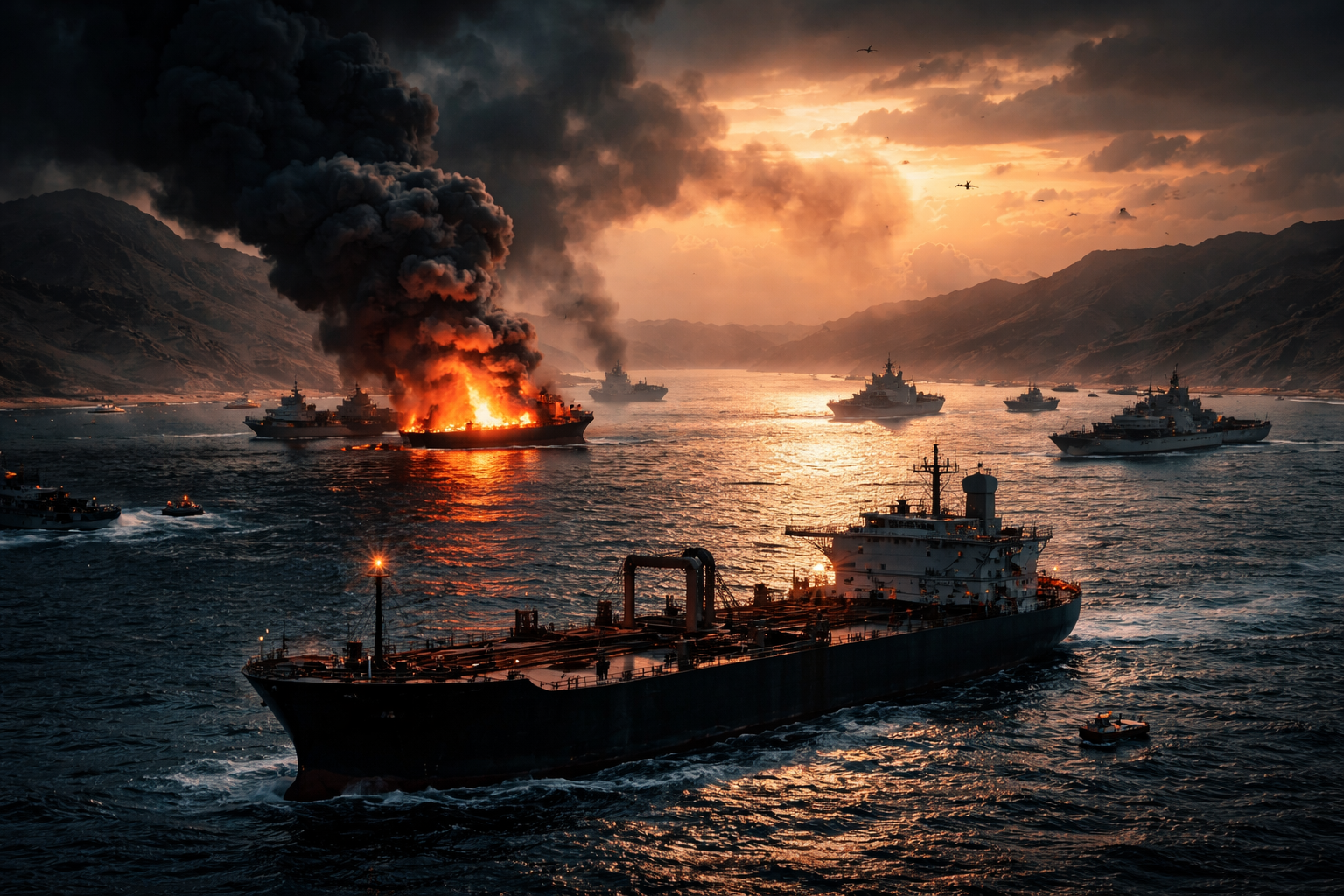
Global Energy Shock: Hormuz Shutdown Freezes 20% of Oil Supply
Iran War Halts ~20% of Global Oil Supply
The Strait of Hormuz—the single most important chokepoint in the global energy system—is now effectively closed as of after a wave of attacks on shipping and escalating military confrontation around Iran.
Commercial tanker traffic through the strait has largely halted following missile, drone, and projectile attacks on multiple vessels, with shipping companies refusing to send ships through the area due to safety and insurance risks.
The stakes are enormous: roughly 20% of the world’s oil and a similar share of LNG (liquefied natural gas) normally flow through this narrow waterway linking the Persian Gulf to global markets.
The immediate question now is not whether energy markets are disrupted—they already are—but how long the disruption lasts and whether the U.S. and allies can reopen the strait without triggering a wider regional war.
The story turns on whether global naval forces can restore safe passage before the shock spreads into a full-scale global energy crisis.
Key Points
Iran and regional conflict have effectively shut down tanker traffic through the Strait of Hormuz after attacks on ships and threats to fire on vessels attempting passage.
The waterway normally carries around one-fifth of the global oil and LNG (liquefied natural gas) supply, making it the world’s most critical energy chokepoint.
Shipping traffic dropped sharply and in some periods nearly to zero as insurers withdrew coverage and companies halted voyages.
Multiple vessels have been struck recently, including cargo ships hit by projectiles and fires aboard tankers.
The U.S. Navy has not yet begun escorting commercial shipping, saying the risks remain extremely high.
Oil markets have already surged, and analysts warn of the largest supply shock since the 1970s if the disruption continues.
The Chokepoint That Powers the Global Economy
The Strait of Hormuz is only about 21 miles wide at its narrowest point, yet it carries energy exports from Saudi Arabia, Iraq, Kuwait, Qatar, the UAE, and Iran itself.
For decades, it has been the artery through which Persian Gulf oil reaches the world.
Tankers leaving the Gulf must pass through the strait before reaching the Gulf of Oman and the wider Indian Ocean. For many exporters, there is no practical alternative route for most shipments.
Under normal conditions roughly:
20 million barrels of oil per day move through the strait
a large share of global liquefied natural gas exports—particularly from Qatar—also transits the passage
This makes Hormuz not just a regional shipping lane but a structural pillar of the modern energy system.
How the Crisis Escalated
The current shutdown emerged from the expanding U.S.–Israel conflict with Iran.
After military strikes on Iranian targets in late February, Iran’s Revolutionary Guards began warning ships via radio that passage through the strait would not be allowed.
Attacks on vessels soon followed.
Drones, missiles, or unidentified projectiles struck tankers and cargo ships. Drones, missiles, or unidentified projectiles damaged several vessels, and at least one ship caught fire.
By early March:
tanker traffic had dropped about 70%
hundreds of ships waited outside the Gulf
insurers withdrew war-risk coverage
Without insurance, shipping companies simply cannot operate—effectively freezing the route.
Despite the lack of a formal blockade declaration for the strait, the risk level has rendered normal shipping impossible.
The Immediate Market Shock
Energy markets reacted instantly.
Brent crude surged above $100 per barrel earlier in the crisis, reflecting fears of a massive supply disruption.
Analysts warn the shock could rival historic oil crises.
The strait normally carries roughly one-fifth of the world’s oil supply, meaning a prolonged shutdown would represent one of the largest supply disruptions in modern history.
LNG markets are also under pressure.
Qatar—the world’s largest LNG exporter—ships most of its gas through Hormuz. If the blockade persists, gas prices in Europe and Asia could once again surge toward the crisis levels witnessed after Russia's invasion of Ukraine.
The Military Problem of Reopening the Strait
Reopening the strait is not simply a matter of sending warships.
Iran has spent decades building a strategy specifically designed to threaten Hormuz using asymmetric tools.
These include:
naval mines
fast attack boats
anti-ship missiles
drones and unmanned explosive vessels
Even a small number of mines could shut down shipping lanes for weeks while navies conduct slow and dangerous clearing operations.
The U.S. Navy has acknowledged the difficulty.
The military has declined requests from the shipping industry for escorts due to the current threat environment's high level of danger.
That decision highlights the scale of the challenge.
What Most Coverage Misses
Most reporting frames the Hormuz crisis purely as a supply problem—a sudden loss of oil moving through the strait.
But the deeper issue is insurance and risk pricing, not just military control.
Shipping does not stop when a route becomes dangerous. It stops when insurers refuse to cover the risk.
Once war-risk insurance disappears, tankers are barred from sailing, cargo financing halts, and ports refuse ships lacking coverage.
In other words, the economic shutdown of the strait can occur long before any navy physically blocks it.
This is why tanker traffic collapsed so quickly even though the waterway is technically still open.
Reopening the strait will therefore require more than military escorts. It will require restoring insurer confidence—something that typically takes weeks or months after a conflict.
Who Gains and Who Loses
The disruption redistributes power across the global energy system.
Major importers—especially in Asia—face the greatest risk. China, India, Japan, and South Korea buy the majority of Gulf oil exports.
Energy exporters outside the Gulf may benefit.
Producers in the United States, Brazil, Norway, and West Africa could gain market share if Gulf supply remains constrained.
Strategic petroleum reserves, which are government-held emergency stockpiles of crude oil, are likely to become the next stabilizing tool.
Governments in the United States, Europe, and Asia collectively hold billions of barrels in emergency stockpiles that can be released to smooth temporary disruptions.
But those reserves are designed for months of crisis—not a permanent closure.
The Scenarios That Decide the Crisis
Three paths now dominate the outlook.
The first is rapid reopening.
If international naval forces escort tankers and mines are cleared quickly, shipping could resume within weeks and markets would stabilize.
The second is prolonged disruption.
If attacks continue and insurance remains unavailable, the strait could stay effectively closed for months—pushing oil well above $100 and triggering global inflation.
The third is regional escalation.
If the conflict widens and energy infrastructure in the Gulf is targeted, the crisis could evolve from a shipping disruption into a full-scale energy shock.
The indicators to watch are clear: naval escort missions, mine-clearing operations, insurance reinstatement, and the first successful tanker convoys through the strait.
Those signals will determine whether this crisis becomes a temporary shock—or the defining energy event of the decade.
