

Iran Threatens Trump Directly as War Reaches a Dangerous New Phase
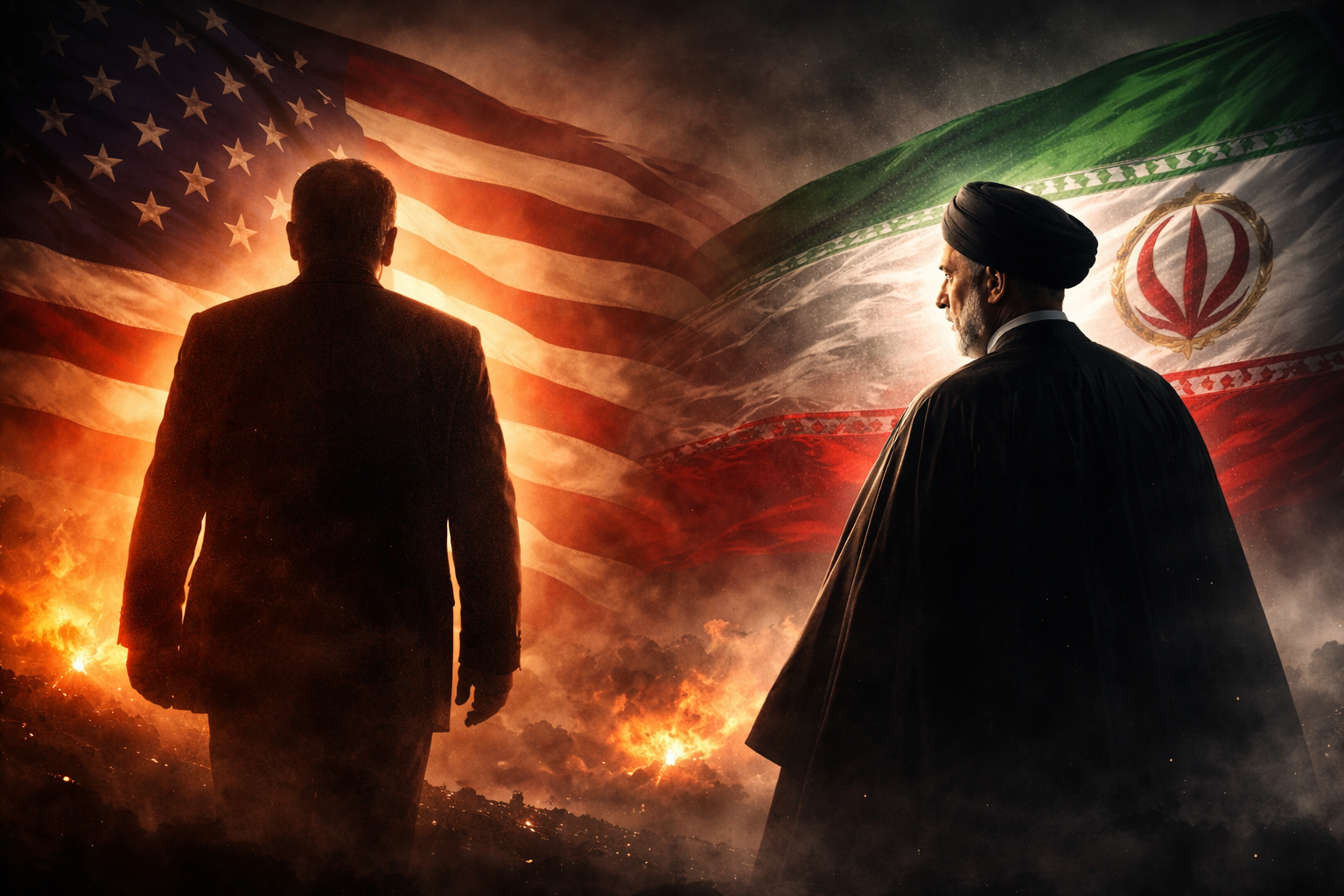
Iran Targets Trump in Escalating War After Leader’s Assassination
Iranian Leadership Issues Direct Threat Against Trump as War Escalates and Oil Routes Come Under Fire
The war between the United States, Israel, and Iran has taken a sharper personal turn.
Senior Iranian officials have issued direct warnings aimed at U.S. President Donald Trump, with one top security figure warning him to “watch out for yourself—lest you be eliminated.”
The threat comes as fighting intensifies across the Middle East: shipping lanes are under attack, oil infrastructure has been targeted, and the political leadership of Iran has dramatically changed after the assassination of its supreme leader.
The war is now entering a dangerous phase where strategic escalation and personal deterrence are starting to blur, potentially leading to increased risks for political leaders and a shift in the nature of the conflict.
The story turns on whether the conflict remains a limited campaign or mutates into a leadership-targeting war between states.
Key Points
As the war escalates, Iranian officials have issued direct threats against Donald Trump, warning that he could become a personal target if attacks on Iran persist.
The conflict intensified after U.S. and Israeli strikes killed Iran’s supreme leader, Ali Khamenei, in February 2026, triggering a leadership transition.
Mojtaba Khamenei, the late leader’s son, was quickly elevated to become Iran’s new supreme leader amid the crisis.
Iran has retaliated with missile strikes, drone attacks, and disruption of shipping through the Strait of Hormuz, which is a key global oil chokepoint, meaning it is a narrow passage that is critical for the transportation of oil worldwide.
Global oil markets have already reacted, with prices surging and countries releasing emergency reserves.
The United States claims the campaign has severely degraded Iran’s military capabilities, but Tehran says the war will continue “as long as it takes.”
Where the Current War Actually Began
The current crisis did not erupt overnight. It grew out of the collapse of negotiations between Washington and Tehran over Iran’s nuclear program.
In early 2026, after diplomatic talks failed, the United States and Israel launched coordinated strikes against Iranian military and nuclear targets.
One of the most consequential attacks came on February 28, when an airstrike killed Iran’s longtime supreme leader, Ayatollah Ali Khamenei, in Tehran.
The killing was a classic “decapitation strike”—an attempt to disrupt command structures by eliminating top leadership. But in Iran’s case, the effect was the opposite of what planners may have hoped.
Within days, the political system moved quickly to fill the vacuum.
Mojtaba Khamenei, the late leader’s son, emerged as the new supreme leader on March 8, consolidating control of the state and rallying support from powerful institutions such as the Islamic Revolutionary Guard Corps.
The war that followed quickly spread beyond Iran’s borders.
The Escalation: Shipping Lanes, Oil, and Regional Strikes
The most immediate battlefield is not only on land but also at sea.
Iran has targeted commercial shipping and energy infrastructure across the Persian Gulf while threatening further attacks on financial centers and oil facilities in Gulf states.
A cargo vessel was struck near the Strait of Hormuz, and drone attacks have reached areas near Dubai’s airport.
The strategic significance is enormous.
Roughly a fifth of the world’s oil supply normally passes through the Strait of Hormuz. Any disruption instantly reverberates through global energy markets.
As the attacks mounted, several governments—including Germany, Austria, and Japan—released emergency oil reserves to stabilize markets.
Meanwhile, U.S. forces have moved aggressively to counter Iranian naval activity, including destroying mine-laying vessels in the Gulf.
The region now resembles a multi-front conflict involving maritime warfare, air strikes, proxy militias, and cyber threats.
The Personalization of the Conflict
The newest development is rhetorical but symbolically significant.
Iranian security officials have moved beyond general warnings to explicitly threaten Donald Trump himself, warning that he could be “eliminated” if hostilities continue.
Such statements serve several purposes:
First, they signal resolve to domestic audiences inside Iran, where the government must show strength after the assassination of its previous leader.
Second, they reinforce deterrence. By personalizing retaliation, Iranian officials attempt to raise the perceived cost of escalation for U.S. leadership.
Third, they reshape the narrative of the war. Instead of appearing as a purely defensive campaign against Iranian military capabilities, the conflict begins to resemble a struggle between regimes.
This is a dangerous shift.
Historically, wars between major states have rarely included explicit threats against the personal survival of opposing heads of state.
Once that threshold is crossed, the logic of escalation changes.
What Most Coverage Misses
Much reporting focuses on the dramatic events—the assassination of Iran’s leader, the missile strikes, and the threats against Trump.
But the real hinge of the conflict may be structural rather than rhetorical.
The war is happening during a leadership transition inside Iran.
When Ali Khamenei was killed, many outside observers assumed the Iranian system might fracture. Instead, the opposite occurred: institutions quickly consolidated around Mojtaba Khamenei.
That consolidation changes the strategic picture.
If the Iranian regime had been politically unstable, external pressure might have forced negotiations or internal reform. But a newly installed leader facing an external war often gains legitimacy from resistance.
In other words, the assassination that was supposed to weaken Iran may have temporarily strengthened regime cohesion.
That dynamic helps explain why Tehran is willing to escalate rhetorically and militarily rather than seek a quick settlement.
What Comes Next in the Iran War
Despite the dramatic rhetoric, the war’s trajectory remains uncertain.
Donald Trump has suggested the conflict could end soon, arguing that most strategic targets in Iran have already been hit.
Iranian officials reject that narrative and say the fight will continue indefinitely if attacks persist.
Several paths now appear possible.
One scenario is a limited end to the campaign: the United States and Israel claim strategic success and reduce operations, allowing both sides to declare partial victory.
Another is regional escalation. Continued attacks on shipping or Gulf infrastructure could draw additional states directly into the conflict.
The most dangerous scenario is a cycle of leadership targeting—where threats against political figures turn into real attempts on their lives.
History suggests that wars rarely end cleanly once they reach that stage.
For now, the world’s most important oil chokepoint remains under threat, the Middle East’s strategic balance is shifting, and a conflict that began with a decapitation strike could still spiral into something far larger.
