The Talks That Won’t Die: US and Iran Circle Each Other in Islamabad
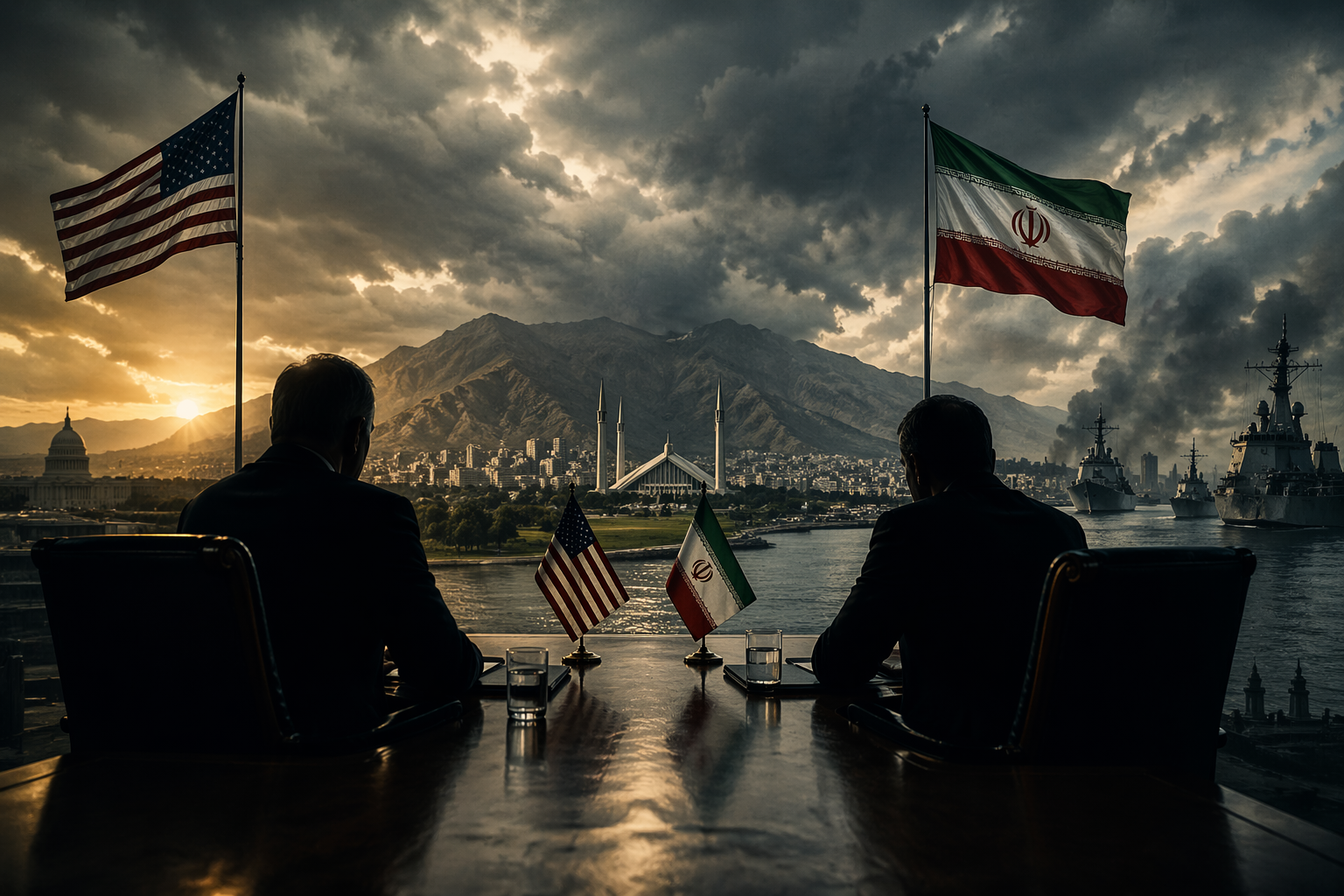
War Pressure, Diplomatic Theatre: The Strange Survival of US–Iran Talks
US–Iran Talks Edge Toward Collapse — Yet Both Sides Still Prepare to Sit Down
Ceasefire pressure, naval escalation, and strategic posturing are pushing negotiations to the edge—but neither side is ready to walk away
The paradox at the heart of the US–Iran standoff is becoming impossible to ignore: the closer the two sides move toward confrontation, the harder it becomes for them to abandon talks.
Even now, with threats escalating, ships seized, and a fragile ceasefire nearing its end, officials on both sides are still preparing for negotiations in Islamabad.
That tension is the story.
Not collapse. Not breakthrough. But it is a high-risk stalemate in which diplomacy survives precisely because everything else is failing.
The Immediate Reality: Talks in Doubt, But Not Dead
A new round of talks is expected in Islamabad, with senior figures from both sides positioned to attend. Yet Iran has not formally committed to participating, signaling hesitation amid rising tensions.
At the same time, Washington is acting as though negotiations will go ahead regardless, dispatching officials and maintaining that a deal remains within reach.
This creates a strange dual reality:
Diplomacy is being prepared
Diplomacy is being threatened
Diplomacy is being used as leverage
All at once
Iran’s reluctance is not necessarily a rejection of talks. It is a negotiation tactic — a way to shape the terms before entering the room.
What Changed: From Negotiation to Confrontation
The current instability did not arise in isolation.
The first round of talks in Islamabad ended without agreement, leaving core issues unresolved—especially Iran’s nuclear program and control over the Strait of Hormuz.
What followed was escalation:
A US naval blockade targeting Iranian-linked shipping
Seizure of vessels tied to Iranian trade routes
Iranian threats to retaliate and disrupt maritime traffic
These moves have pushed the situation to the brink.
Recent seizures of Iranian-linked vessels have intensified the crisis and cast doubt over whether talks can proceed at all.
From Tehran’s perspective, negotiating under these conditions risks appearing weak.
Washington believes that applying pressure is the best course of action.
The Core Conflict: Pressure vs Leverage
At its core, this conflict is not just a disagreement over policy.
It is a clash of negotiating philosophies.
The United States is attempting to force concessions through the following:
Economic and naval pressure
Military signalling
Hard deadlines tied to the ceasefire
Iran, by contrast, is signaling that it:
Can withstand prolonged pressure
Retains leverage through regional influence
Is willing to delay rather than concede quickly
This explains the contradiction:
Talks continue not because trust exists—but because neither side believes it can win outright without them.
Why Islamabad Still Matters
Pakistan’s role as mediator has become unexpectedly central.
It offers:
A neutral diplomatic venue
Back-channel communication
A face-saving environment for both sides
The original Islamabad talks were the first direct high-level engagement between the US and Iran in decades — a signal of how serious the moment has become.
Even after failure, both sides returned to the same location.
That alone tells you something important:
There are very few places left where these conversations can happen.
The Hidden Logic: Why Talks Continue Despite Escalation
On the surface, it makes no sense.
Why prepare for negotiations while escalating militarily?
Because escalation increases the need for negotiation.
Three forces are now locking both sides into talks:
1. The Ceasefire Deadline
The current truce is expiring, creating a challenging decision point — extend diplomacy or risk renewed conflict.
2. Global Economic Pressure
Disruption around the Strait of Hormuz is already affecting oil markets, amplifying international pressure for de-escalation.
3. Strategic Risk
Both sides understand that miscalculation could trigger a broader regional conflict that is difficult to control
The result: neither side trusts the other—but both still show up
What Happens Next
Three paths are now visible:
Most Likely
Talks proceed in some form—even if delayed or downgraded—with both sides seeking a temporary extension rather than a full agreement
Most Dangerous
The ceasefire expires without talks, triggering rapid escalation in the Gulf and wider regional instability
Most Underestimated
A limited interim deal emerges—not a full resolution, but enough to stabilise shipping routes and buy time for further negotiations
Earlier discussions already hinted at a shift toward temporary arrangements rather than comprehensive deals.
The Real Story Most People Miss
This is not a peace process.
It is a containment process.
Neither side is trying to solve the conflict immediately.
They are trying to manage it.
Manage escalation
Manage perception
Manage risk
That is why talks continue even as tensions rise.
Because the alternative is not victory.
It is uncertainty—at a scale neither side fully controls.
The Hard Landing
The most revealing detail is not that talks may fail.
It is that they cannot fully stop.
Even now—with threats, seizures, and deadlines converging—both sides are still moving toward the table.
Not out of trust.
Not out of optimism.
But because the cost of not talking has become too high to ignore.
