The UK Faces A New Era Of Russian Hybrid Warfare And Officials Say The Threat Is Growing
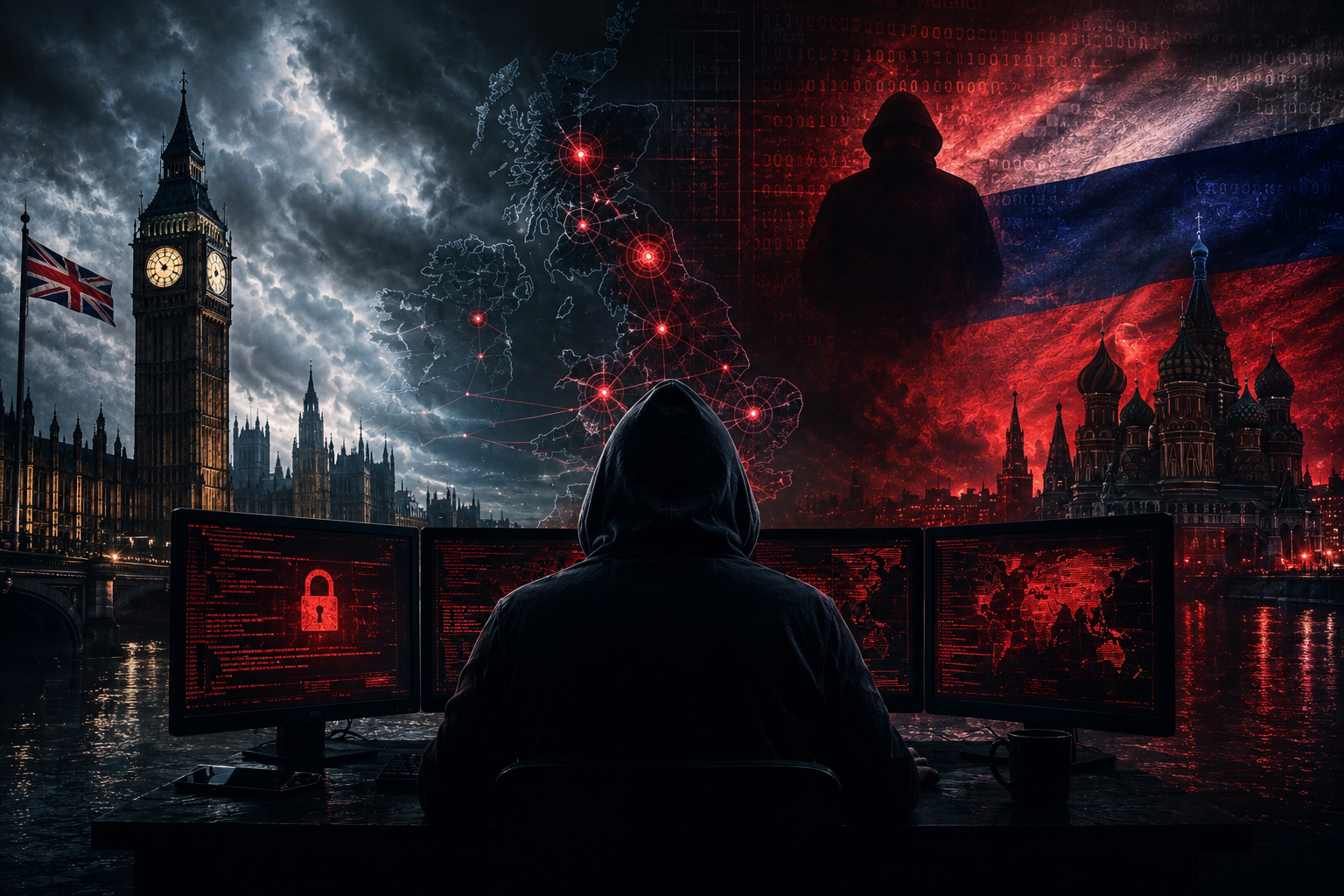
Russia Accused Of Targeting Britain’s Infrastructure And Democracy As Cyber War Fears Escalate
Britain’s Warning Suddenly Feels Much More Serious
The language coming from Britain’s intelligence and cybersecurity leadership has become noticeably darker. Officials are now openly describing Russia as “relentlessly” targeting UK infrastructure, democratic systems, supply chains and public confidence through a growing campaign of cyber attacks, disruption operations and hybrid warfare activity.
The warning matters because it signals a shift in how the UK establishment now sees the threat landscape. This is no longer being framed as isolated hacking incidents or occasional acts of espionage. The concern is that Britain and other Western states may already be operating in a prolonged grey-zone conflict where hostile states attempt to weaken societies without triggering outright war.
GCHQ director Anne Keast-Butler used unusually direct language when describing the situation, warning that the UK faces a “moment of consequence” shaped by escalating aggression, cyber warfare and rapidly evolving technology.
The Real Fear Is Bigger Than Cyber Attacks
The deeper concern underneath these warnings is not simply that hackers could disrupt systems. It is that modern hybrid warfare aims to slowly erode a country’s sense of stability, confidence and cohesion over time.
British officials say Russia has increasingly targeted infrastructure, logistics, political systems and public trust itself. That matters because modern societies depend heavily on interconnected digital systems that ordinary people rarely think about until they fail.
Energy systems, transport networks, financial systems, logistics chains, hospitals, communications infrastructure and democratic institutions all now exist inside an environment where cyber pressure can become a strategic weapon. The concern is not always immediate catastrophic collapse. Sometimes the objective may simply be persistent disruption, uncertainty and psychological pressure.
That broader pattern is already visible across Europe. Security analysts and government agencies have repeatedly linked Russia to sabotage attempts, infrastructure incidents, disinformation campaigns and coordinated cyber operations since the invasion of Ukraine dramatically intensified tensions with the West.
The Line Between Peace And Conflict Is Becoming Harder To See
One of the most striking elements of the UK warning is how often officials now describe the current environment as existing somewhere between peace and war.
That reflects a growing belief among Western security services that adversarial states increasingly prefer forms of conflict designed to stay below the threshold of direct military confrontation. Cyber attacks, infrastructure disruption, online influence campaigns, sabotage operations and information warfare all create pressure without necessarily triggering a conventional military response.
Several recent European incidents have intensified those fears. Investigations across Europe have examined suspected Russian-linked sabotage plots involving logistics systems, parcel networks and infrastructure vulnerabilities. Officials across NATO countries have also warned about increasing attacks targeting communications systems, underwater cables and transportation networks.
The strategic logic behind this type of activity is deeply unsettling. If hostile actors can create enough instability, distrust or disruption without triggering a formal military escalation, they can weaken rivals while avoiding the risks of open war.
That is one reason intelligence officials increasingly talk about resilience rather than simply defence. The challenge is no longer just stopping attacks. It is ensuring societies remain functional, calm and politically stable while under sustained pressure.
Democracy Has Become Part Of The Battlefield
One of the most politically sensitive elements of the warning involves democracy itself. British officials have increasingly warned about foreign attempts to influence political systems, shape public opinion and exploit divisions inside democratic societies.
That concern stretches far beyond election hacking in the traditional sense. Modern information warfare can involve fake personas, coordinated narratives, cloned websites, AI-generated content, cyber leaks, manipulated media and highly targeted influence campaigns designed to undermine trust in institutions and deepen social division.
The UK government recently announced sanctions against multiple entities linked to Russian information warfare operations, including networks accused of impersonating trusted media brands and spreading coordinated propaganda campaigns.
The fear is that technology is making these operations cheaper, faster and harder to detect. Artificial intelligence may dramatically accelerate that problem by enabling convincing fake content at massive scale while reducing the cost of manipulation campaigns.
This is partly why British intelligence leaders increasingly link cybersecurity with democratic stability itself. Once public trust collapses, even accurate information struggles to regain authority.
Why The Russia Warning Feels Different Now
Western officials have warned about Russian cyber activity for years. What makes the current moment feel different is the combination of geopolitical tension, technological acceleration and rising uncertainty across Europe.
The Ukraine war fundamentally changed the security environment. Since then, European governments have repeatedly accused Russia of expanding sabotage, cyber and influence operations across the continent.
At the same time, AI and advanced digital technologies are transforming both offensive and defensive capabilities at extraordinary speed. British officials now openly acknowledge that Western technological advantages are narrowing as rivals rapidly develop their own capabilities.
That creates a far more volatile environment where cyber conflict, espionage, infrastructure pressure and information warfare may become increasingly normal features of geopolitical competition.
The UK warning therefore feels less like a temporary alert and more like an attempt to prepare the public for a prolonged era of instability beneath the surface of everyday life.
The Bigger Problem Beneath The Surface
The most uncomfortable part of this story is that hybrid warfare works best when people underestimate it. Modern societies are built on invisible systems most citizens rarely notice until something goes wrong.
That creates an enormous strategic vulnerability. Cyber attacks do not need to destroy a country to create serious consequences. Persistent disruption, confusion, distrust and fear can gradually damage confidence in institutions, politics, business and even basic social stability.
British officials are effectively warning that hostile states increasingly understand this reality — and are actively exploiting it.
The real battle may not simply be over infrastructure or computer systems. It may be over whether democratic societies can remain psychologically resilient while operating inside a permanent environment of digital pressure, manipulation and uncertainty.
That is why the language coming from Britain’s security leadership suddenly feels so much more urgent than before.
