The U.S. Wants to Buy Gaza’s Guns—And That’s Where the Plan Gets Dangerous
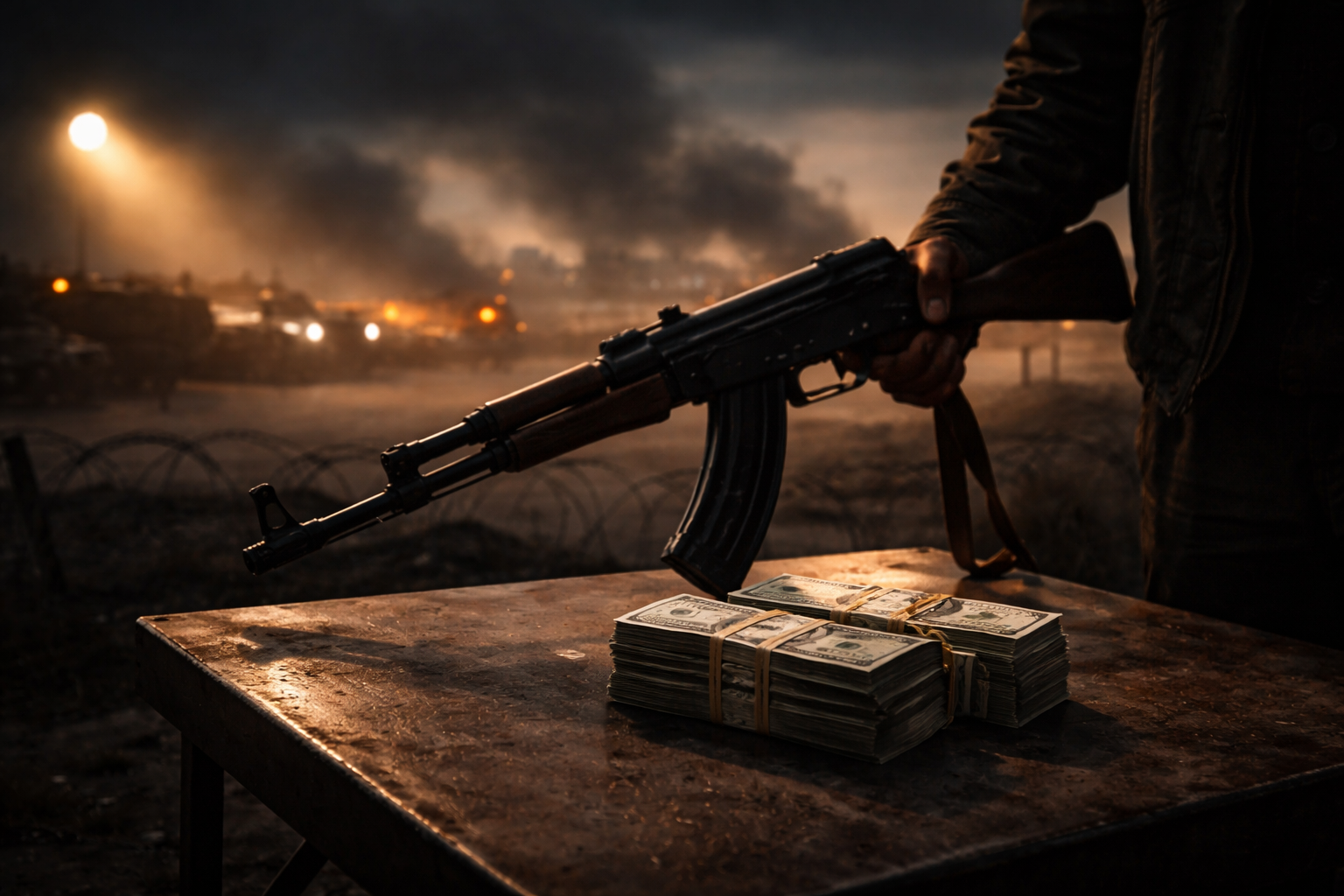
U.S. pitches a Gaza weapons buyback at the UN. Here’s what must be true for verification, incentives, and enforcement to actually work—now.
Inside the U.S. Plan to Buy Back Gaza’s Weapons—and the Fragile Bet Behind It
The United States has told the UN Security Council that Gaza’s demilitarization would include an internationally funded weapons buyback and “reintegration” program, overseen by independent international monitors. The language is unusually concrete for this conflict: not just a demand to disarm, but a proposed mechanism for how.
On paper, buybacks sound clean: pay people to hand in guns, melt the weapons down, move fighters into civilian jobs, and let reconstruction start. In practice, the hard part is not collecting metal. It is building a credible monopoly on force in shattered territory where armed groups have reasons to keep, hide, or sell weapons.
Underneath the "buyback" headline, there is an overlooked pivot: governance, which controls crossings, pays salaries, and oversees policing, is inextricably linked to verification, even as disarmament remains incomplete.
The story turns on whether a buyback can be made safer than staying armed.
Key Points
The U.S. told the Security Council that demilitarization would include decommissioning weapons backed by an internationally funded buyback and reintegration program, under independent monitoring.
The plan links security steps and governance: monitors, a transitional administration structure, and security arrangements are designed to move alongside reconstruction.
A buyback only works if the program can answer four questions: who verifies, who pays, who enforces, and what happens to spoilers.
The biggest feasibility risk is selective compliance: visible handovers of low-value weapons while high-value systems remain hidden or move to splinter groups.
The strongest path to success is a sequenced bargain: cash and amnesty-like off-ramps only alongside tight border control, credible policing, and durable enforcement against rearmament.
The immediate tell will be whether implementation details emerge fast: monitor identity and mandate, funding architecture, eligibility rules, and enforcement triggers.
Background
The demilitarization concept being discussed is not a standalone “gun amnesty.” It sits inside a wider postwar architecture that ties security, governance, and reconstruction together.
Core elements, as described in public language around the framework:
A transitional administration model is intended to coordinate redevelopment and funding while local day-to-day services are run by a technocratic Palestinian structure. A temporary international security presence is described as supporting stabilization tasks: border security, civilian protection, and support for vetted policing—while demilitarization is pursued.
The demilitarization clause itself matters because it moves beyond slogans. It outlines a supervised process to put weapons “permanently beyond use,” backed by funding (the buyback) and a pathway for people to re-enter civilian life (reintegration). That is a recognizable disarmament-demobilization-reintegration (DDR) logic—just dropped into one of the hardest theaters on Earth.
But the gap between a clause and a functioning system is where most such efforts fail.
Analysis
Verification Is the Whole Ballgame
Stakeholders want verification for different reasons. Israel wants proof that capabilities are not merely relocated. Palestinians want proof that weapons handed over won’t return through corruption or informal channels. Donors want proof their money isn’t financing a revolving arms market.
The constraint is simple: you cannot verify what you cannot reach. Monitors need physical access, protection, and a mandate that actually allows inspections, storage oversight, and credible reporting.
The incentive shift created by a buyback is double-edged. It can pull weapons out of circulation—but it can also raise the market value of weapons if cash is plentiful and rules are porous.
Plausible scenarios:
One path is a “photogenic compliance” phase: rifles and older stock get turned in, while high-end systems stay cached. A sign this is happening would be frequent handover events with no measurable reduction in attacks, smuggling, or armed intimidation.
Another path is a genuine audit culture: serial-number logging where possible, controlled storage, witnessed destruction, and transparent milestones. A sign would be consistent third-party reporting and enforcement actions against noncompliance that actually stick.
Incentives: Cash, Amnesty, and the Problem of Price
A buyback is a negotiation over risk. Fighters hold weapons because weapons reduce personal risk. To swap a gun for cash, the program must reduce risk more than the gun does.
The constraint: cash alone rarely beats fear. If a person believes they will be targeted after disarming—by rivals, criminal networks, or factions inside their own group—no price is high enough.
Incentives will also collide with politics. If “reintegration” includes jobs, training, or amnesty-like protections, every eligibility rule becomes a battlefield: who qualifies, who is excluded, and who is deemed “too dangerous to buy out.”
Plausible scenarios:
A narrow buyback that targets only a slice of combatants may look clean but fails strategically if hardcore cells remain armed. Signs: ongoing “shadow policing” by armed actors and persistent parallel governance.
A broad buyback with real reintegration pathways may pull more people in—but risks importing armed networks into the new security and civil-service structure. Signs: disputes over vetting, public resignations, or a rapid rise in intimidation complaints.
Enforcement: What Happens When Someone Refuses?
Demilitarization programs die when refusal carries no cost. If rejection merely slows the process, spoilers win by waiting. If refusal triggers credible enforcement—sanctions, arrests, exclusion from governance, and operational pressure—compliance becomes rational.
The constraint is legitimacy. Heavy enforcement without local legitimacy can generate new recruitment and turn “monitors” into another armed faction in the public mind.
The plan’s architecture implies a sequence: stabilization forces and vetted policing create space; then weapons handover becomes safer; then further withdrawals and reconstruction scale up. But the chain is only as strong as the weakest link. If stabilization looks like occupation, the reintegration offer turns toxic.
Plausible scenarios:
A “conditional progress” approach: benefits flow only where demilitarization milestones are met. Signs: visible improvement in aid access and services in compliant zones, paired with tighter controls elsewhere.
A “deadlock” approach: political disagreements over enforcement rules stall everything. Signs: meetings, statements, and drift—without operational changes on the ground.
Spoilers and Splinters: The Arms Market Never Sleeps
Buybacks don’t happen in a vacuum. Weapons circulate through smuggling routes, criminal markets, and factional splits. A buyback can accidentally subsidize rearmament if new weapons keep arriving.
The constraint: border control and internal policing must work simultaneously. If crossings leak, disarmament is a temporary photo op. If internal policing is weak, “voluntary” disarmament becomes coercive disarmament—by the strongest local gunman.
Plausible scenarios:
A splinter problem: factions that reject the deal break away, armed and unbound. Signs: new brand names, new communiqués, and attacks aimed specifically at derailing monitoring.
A criminalization problem: weapons flow into gangs as “political” structures weaken. Signs: rising kidnapping, extortion, and black-market control of aid distribution.
What Most Coverage Misses
The hinge is that a weapons buyback is not a weapons policy—it is a state-building test.
The mechanism is straightforward: people disarm when they believe a new authority will reliably protect them, pay them, and punish anyone who tries to rearm. Without that, the gun remains the only insurance policy available.
Two signposts would confirm whether this is becoming real over the next days and weeks: first, the rapid publication of monitor mandates, access rights, and reporting triggers; second, clear evidence that a transitional authority can actually perform basic state functions—payroll, policing, border control, and courts—without being captured by armed networks.
What Happens Next
In the next 24–72 hours, the key question is whether the plan gains operational detail: who funds the buyback, what “reintegration” means in practice, what the monitors can inspect, and what the consequences are for refusal.
Over the next few weeks, the real contest will be sequencing. Security cannot wait for reconstruction, and reconstruction cannot wait for perfect security. The plan only works if it creates a credible ladder: partial demilitarization unlocks stability measures, which unlock economic normalcy, which lowers the value of staying armed—because daily life becomes more predictable than the gun.
Over the next months, the program’s fate will depend on whether enforcement and legitimacy can coexist. If enforcement is strong but legitimacy is weak, spoilers recruit. If legitimacy is strong but enforcement is weak, spoilers wait.
Real-World Impact
A small contractor deciding whether to bid on rebuilding projects will look at one thing: can staff travel without paying “fees” at informal checkpoints, and will equipment survive the night.
A displaced family weighing whether to return will ask a simpler question: will there be a single police force that answers to rules, or multiple armed actors that answer to nobody?
A young man offered “reintegration” support will judge the offer against his own risk: will disarming make him safer tomorrow, or simply poorer and exposed?
An aid logistics team will live inside the enforcement reality: if monitors cannot secure predictable corridors, the entire buyback becomes theater—guns stay, and so does the fear.
The Demilitarization Trapdoor
Weapons buybacks succeed when they are boring: clear rules, predictable enforcement, steady economic alternatives, and a security environment that makes the gun unnecessary.
In Gaza, “boring” is the hardest outcome to manufacture. The plan’s novelty is its specificity—buyback, monitors, reintegration, and transitional administration. Its vulnerability is just as specific: every missing implementation detail is a gap that armed actors can exploit.
Watch for concrete releases on monitor powers, funding channels, eligibility rules, and enforcement triggers. If those arrive quickly—and if the early weeks show real control over borders and policing—this could become a rare case where the “how” matters more than the rhetoric. If not, the buyback risks becoming a well-funded illusion, and illusions do not disarm wars.
