The USS Abraham Lincoln Didn’t Retreat—It Entered a Bigger Kill Zone
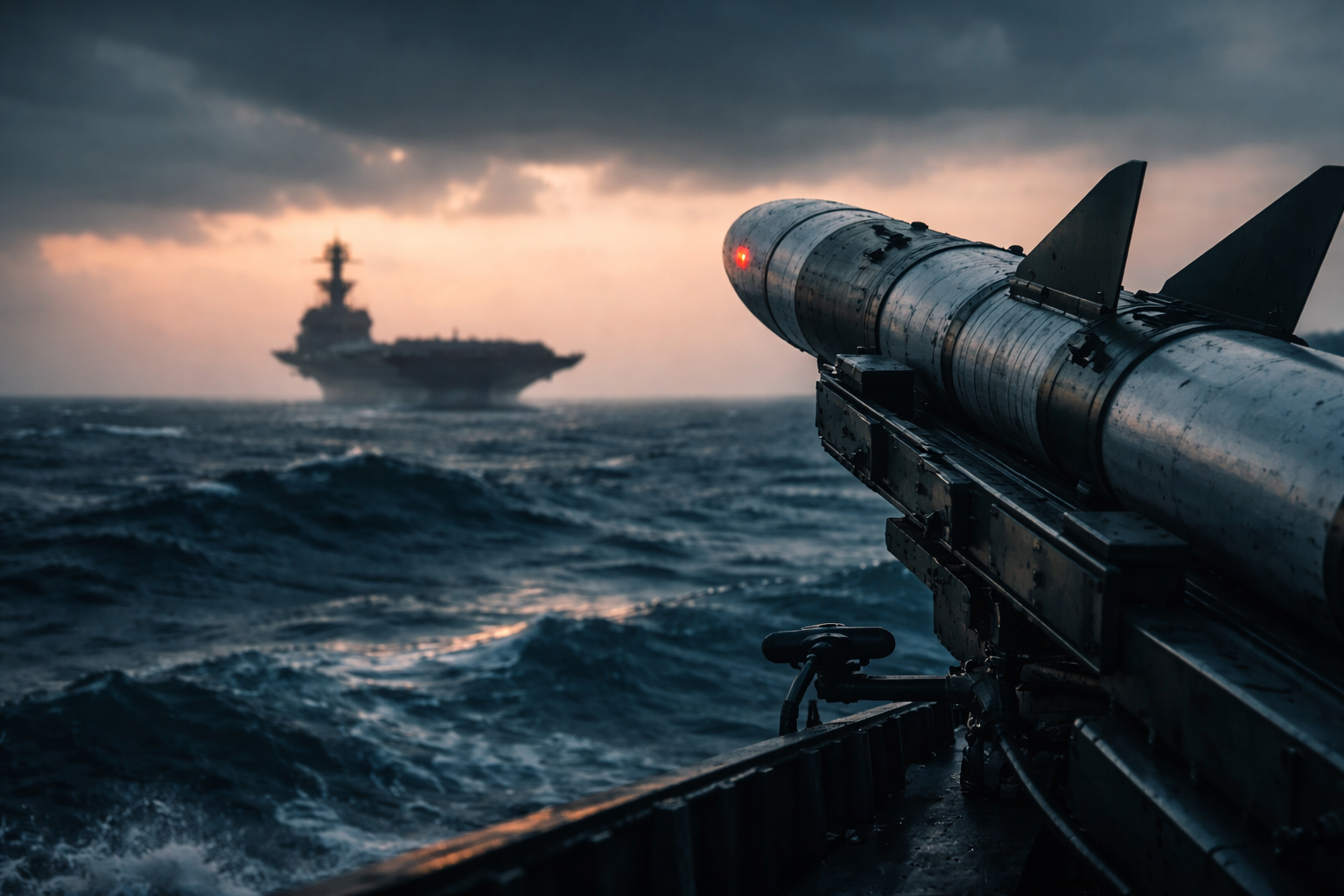
USS Abraham Lincoln Pulls Back From Iran—What Changes Now
USS Abraham Lincoln Pulls Back From Iran—But “Out of Range” Isn’t the Point
The USS Abraham Lincoln carrier strike group appears to be operating farther from Iran’s coastline than early open-source trackers suggested—amid a sharp rise in maritime and drone encounters in the region. The key detail is not the exact kilometer count. It’s what the movement signals: a shift from “show of force near the line” to “fight from depth,” while still keeping credible strike options on the table.
In the last 24 hours, tension has been visibly climbing at sea. U.S. officials said an Iranian drone approached the carrier “aggressively,” and the U.S. military shot it down in self-defense, describing the drone’s intent as unclear. This happened roughly 500 miles off Iran’s southern coast—close enough to matter, far enough to reveal something important: distance alone doesn’t equal safety, and proximity alone doesn’t equal control.
One claim now circulating is that the carrier has pulled back about 1,400 km. That figure is plausible but not confirmed by official U.S. statements. Even if it’s roughly right, it doesn’t mean the carrier is “out of danger.” Iran’s coastal strike complex is not one weapon; it’s a layered system of missiles, drones, sensors, and fast-moving maritime units—designed to make a contested zone feel bigger than it looks on a map.
The story turns on whether Iran can reliably find, track, and target a moving carrier at a distance faster than U.S. forces can disrupt that kill chain.
Key Points
The USS Abraham Lincoln is operating in a high-risk environment where close drone approaches and maritime encounters can escalate quickly, even without a deliberate decision for war.
Reports of a ~1,400 km pullback are circulating, but the precise distance is unclear in official public reporting; the strategic intent matters more than the headline number.
Iran fields and claims long-range anti-ship cruise missile capabilities; reputable defense reporting has described an Iranian anti-ship missile “said to have a range of more than 1,000 km,” while Iranian state-linked reporting and defense outlets have also referenced 2,000 km-range claims that are harder to independently verify.
A carrier “being in range” is not the same as a carrier being targetable—the harder problem is sustaining real-time targeting against a fast-moving fleet in a contested electronic environment.
Pulling back can reduce risk while preserving options, because it forces Iran to extend its sensing and targeting further—where disruption is easier and mistakes are more likely.
The most dangerous pathway is not a planned first strike; it’s a tempo accident—a drone, a boarding attempt, a warning shot, a misread maneuver—followed by a “must respond” loop.
Background
The USS Abraham Lincoln is a U.S. Navy aircraft carrier that functions as a mobile airbase: it brings strike aircraft, surveillance, electronic warfare, and defensive layers—plus escorts—into a region without relying entirely on fixed bases.
That matters because fixed bases are politically and operationally constrained. In recent days, regional dynamics have included public sensitivity about being seen as a launchpad for strikes and the risk of the Gulf becoming the primary arena of escalation.
At the same time, Iranian maritime strategy has long focused on making chokepoints and near-coastal waters feel unpredictable: drones, fast boats, mines, shore-based missiles, and intimidation of commercial shipping all create a background pressure that can spike quickly.
The drone shootdown reported today is a clean illustration: even in open water, a single unmanned system can produce a fast decision point with major strategic consequences.
Analysis
Why the “1,400 km” headline is strategically plausible—even if the number is fuzzy
The logic for moving a carrier farther out is straightforward: it widens decision space.
Closer in, the encounter cycle compresses. A drone appears; radar picks it up; commanders interpret intent; defensive action happens; political messaging follows. When you’re operating nearer to a coastline bristling with sensors and launchers, that whole sequence happens faster—and the chance of misinterpretation rises.
Farther out, the carrier buys time: more warning, more room for maneuver, and more opportunities to disrupt an incoming threat before it becomes a crisis.
This doesn’t mean “safe.” It means “less brittle.”
Iran’s range claims vs. Iran’s real constraint: turning range into a hit
Iran—and outlets close to its security establishment—has repeatedly highlighted long-range missile development. Credible defense reporting has described an Iranian anti-ship missile “said to have a range of more than 1,000 km.” Iran-linked reporting and defense outlets have also discussed 2,000 km cruise missile claims.
But range is only one part of the equation. To hit a moving carrier at long distances, Iran must solve four difficult problems at once:
Find the carrier (wide-area detection).
Track it continuously (persistent surveillance).
Target it accurately (real-time position and course).
Guide weapons through jamming, decoys, and interception (terminal resilience).
A missile with theoretical range becomes strategically decisive only if the kill chain is reliable under pressure.
What U.S. forces are signalling: “fight from depth” with layered defence
A carrier strike group isn’t just the flattop. It’s escorts, aircraft, airborne early warning, electronic warfare, and defensive layers that are designed to complicate any attacker’s targeting and reduce the probability of a clean hit.
Operating farther out can also shift reliance toward:
Standoff air operations (strikes launched from farther away).
Distributed presence (multiple ships and aircraft creating uncertainty).
Electronic attack (making sensors and links lie, not merely go dark).
Interception depth (more time and space to engage incoming threats).
This posture is about reducing “single-point failure.” It’s also about making sure any Iranian decision to escalate becomes more expensive and less predictable.
The escalation risk isn’t intent—it’s tempo
When leaders are negotiating, posturing, or threatening, the most dangerous moments often happen below the level of grand strategy.
A drone flies “too close.” A gunboat shadows a merchant vessel. A crew fires a warning shot. Another unit misreads it. Suddenly, the political requirement becomes: respond.
Today’s drone shootdown is the kind of incident that can sit inside a broader political narrative—pressure, deterrence, “self-defense”—even if neither side wants a full war.
That’s why distance changes the risk profile: it slows the tempo of forced decisions.
What Most Coverage Misses
The hinge is that moving the carrier back is less about “missile range” and more about breaking Iran’s targeting loop.
Mechanism: Iran can claim very long ranges, but a carrier is not a fixed target. By operating farther out, the U.S. forces Iran to push its sensing and targeting deeper into contested space—where surveillance is easier to spoof, jam, disrupt, or misdirect. The contest becomes who controls the data, not who has the longest missile brochure.
What would confirm it in the next days:
Evidence of intensified Iranian ISR activity (drones, maritime patrols, attempted tracking) farther from the coast than usual.
U.S. emphasis on force protection and electronic warfare posture, alongside continued strike-capable positioning rather than a full withdrawal.
What Happens Next
In the next 24–72 hours, the most affected groups are
Commercial shipping transiting nearby sea lanes (risk of harassment, delays, and higher insurance pricing).
Regional militaries operating in crowded waters (higher chance of miscalculation).
Energy markets are watching for any sign that maritime routes are becoming operationally risky, not just politically tense.
Short-term (days): expect more signalling—drone activity, naval shadowing, and public statements about self-defense and deterrence. The key risk is a threshold event: casualties, a damaged vessel, or an incident that leaders cannot politically ignore.
Longer-term (weeks to months): the posture could harden into a new normal where the carrier and escorts operate at depth, with episodic “forward surges” when Washington wants to remind Tehran that the strike option is real.
The main consequence is that the region becomes more sensitive to small incidents because the U.S. and Iran are simultaneously trying to deter each other while preventing loss of face—because neither side wants to look weak in a moment of high visibility.
Real-World Impact
A tanker operator reroutes slightly to reduce risk exposure, adding time and fuel costs that ripple into freight pricing within days.
A manufacturer with time-sensitive imports sees delays as shipping schedules become less reliable, then passes those costs through in the next billing cycle.
A regional airline or logistics firm adjusts routing and contingency plans because air and sea risk perceptions tighten at the same time.
An energy trader prices a bigger “risk premium” into near-term contracts when maritime incidents feel repeatable rather than isolated.
The Strait’s New Geometry: Why Distance Still Doesn’t Mean Safety
This moment isn’t defined by a single drone or a single movement on a map. It’s defined by a tightening loop: surveillance, signalling, interception, retaliation narratives, and the constant possibility of an incident that becomes a policy.
If the carrier has indeed pulled back significantly, it’s best read as a shift in geometry, not a retreat: less time spent near the sharp edge, more capacity to strike from depth, and a stronger attempt to keep escalation under managerial control.
Watch for three signposts: whether maritime encounters continue to cluster, whether tracking attempts push outward, and whether diplomatic language is paired with operational restraint. If those signposts diverge—calmer words, hotter seas—then we’re not watching de-escalation. We’re watching a wider fuse being laid.
