The World Cup Hasn’t Started Yet — But The Pressure Is Already Exploding
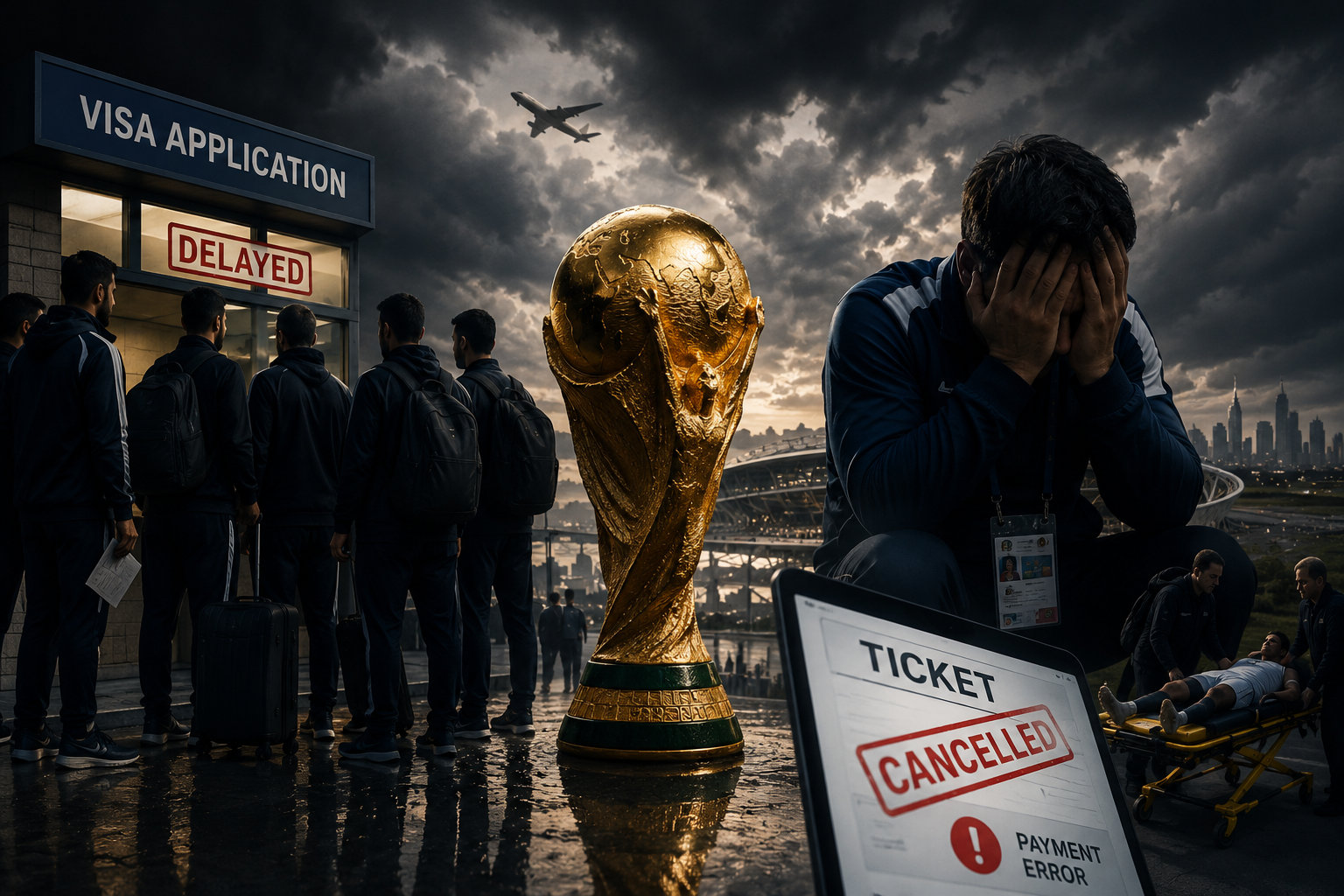
World Cup 2026 Faces Growing Turbulence Before A Ball Is Kicked
Visa Battles, Ticket Chaos And Injury Fears: Why World Cup 2026 Is Entering Its Most Volatile Phase Yet
The World Cup has always reflected the wider world around it. Politics, diplomacy, economics and public opinion inevitably find their way into the sport's biggest event. The difference in 2026 is the sheer scale of the tournament and the number of moving parts involved.
With 48 teams, three host nations and unprecedented travel requirements, the competition was always going to face logistical challenges. What is becoming increasingly clear, however, is that some of those challenges are evolving into headline stories of their own.
As global attention intensifies, every disruption is amplified. Every administrative issue becomes a talking point. Every controversy risks becoming part of the wider narrative surrounding the tournament.
Visa Disputes Are Creating Diplomatic Pressure
Perhaps the most significant issue emerging involves visa complications affecting national delegations.
Iran has been forced to adjust its preparation plans after several football officials reportedly experienced difficulties obtaining entry visas, even though players and essential football staff have largely been approved for travel. The situation has created tensions between sporting requirements and broader geopolitical realities. Iran has shifted part of its preparation operation into Mexico while discussions continue over remaining visa issues.
Questions have also surrounded Iraqi football personnel and travel arrangements. Reports indicate that members of the Iraqi delegation have faced entry complications, adding further attention to the administrative side of tournament preparation.
For FIFA, these issues strike at a sensitive point. The World Cup is designed to bring nations together. When participation becomes entangled with border controls, international conflicts or diplomatic disputes, the event inevitably becomes about more than football.
Ticketing Controversies Are Fueling Fan Frustration
Large sporting events rarely escape ticketing complaints, but World Cup 2026 is already experiencing unwanted attention in this area.
FIFA recently acknowledged a ticketing error that reportedly resulted in some fans receiving tickets without being charged before those allocations were later cancelled. While relatively small in scale compared with overall tournament demand, the incident has added to growing scrutiny around access, pricing and fairness.
At the same time, broader discussions continue around travel costs, accommodation prices and the overall financial burden facing supporters hoping to attend matches across the United States, Canada and Mexico.
The danger for organisers is not necessarily the size of any single issue. It is the cumulative effect. Small controversies can combine to create a wider perception that the tournament experience is becoming increasingly difficult for ordinary fans.
Injury Concerns Could Reshape The Competition
Every World Cup has its injury stories. Every national manager fears losing key players at precisely the wrong moment.
This year is proving no different.
Several nations are monitoring important fitness situations during the final stages of preparation, while some squads have already suffered significant setbacks. Germany, for example, has reportedly lost highly rated young player Lennart Karl to injury before the tournament begins. Other countries continue to await updates on the condition of influential players.
These concerns matter because modern football is increasingly dependent on a small number of elite performers. A single injury can alter a nation's tactical approach, reduce squad depth and potentially change the trajectory of an entire tournament.
History shows that World Cups are often defined not only by the stars who arrive healthy, but by the stars who never make it onto the pitch.
FIFA Faces A Delicate Balancing Act
Tournament organisers are also managing concerns beyond visas and injuries.
Recent debates have emerged around stadium policies, including restrictions on reusable bottles at venues. Officials argue the measures are designed to improve safety, while critics have questioned how such policies will interact with summer temperatures and fan welfare. FIFA says cooling and hydration measures will be available across host locations.
Meanwhile, rights organisations have raised concerns surrounding travel policies, border procedures and the broader experience of international visitors attending matches. Tournament organisers maintain that fans will be welcomed and that preparations remain on track.
The challenge for FIFA is straightforward in theory but difficult in practice: keep the focus on football.
The Attention Phase Has Officially Begun
Every World Cup experiences a moment when preparation stories stop being background noise and start becoming major headlines.
World Cup 2026 appears to have reached that point.
The combination of geopolitical tension, visa disputes, ticketing controversies, venue policies and injury concerns does not necessarily threaten the tournament itself. Most of these issues will likely be managed, resolved or forgotten once the matches begin.
But they reveal something important. This is no longer simply a sporting event preparing quietly behind the scenes. The world's attention has arrived.
From this point forward, every development will be magnified. Every setback will generate discussion. Every controversy will attract global coverage.
And when the first whistle finally blows, the tournament will already have a story long before a champion is crowned.
