Trump and Xi Are Heading Toward a Crucial Trade Collision and Markets Are Watching
Why This Trump-Xi Trade Meeting Could Trigger the Next Global Market Shock
Why This Meeting Matters More Than Anyone Admits
US and Chinese trade chiefs are expected to meet in Paris in mid-March, ahead of a planned summit between President Donald Trump and President Xi Jinping later this month. On the surface, it looks like another pre-summit diplomatic warm-up. In reality, it may be the clearest sign yet that both sides still think limited economic deals are possible even as wider strategic distrust deepens.
What makes this moment more important than it first appears is that the talks come after a major legal and political shock to Trump’s tariff strategy. That changes the balance at the table. It means Beijing is not just weighing what it wants to buy but also how much leverage Washington still has when the legal foundations of earlier tariffs have been weakened.
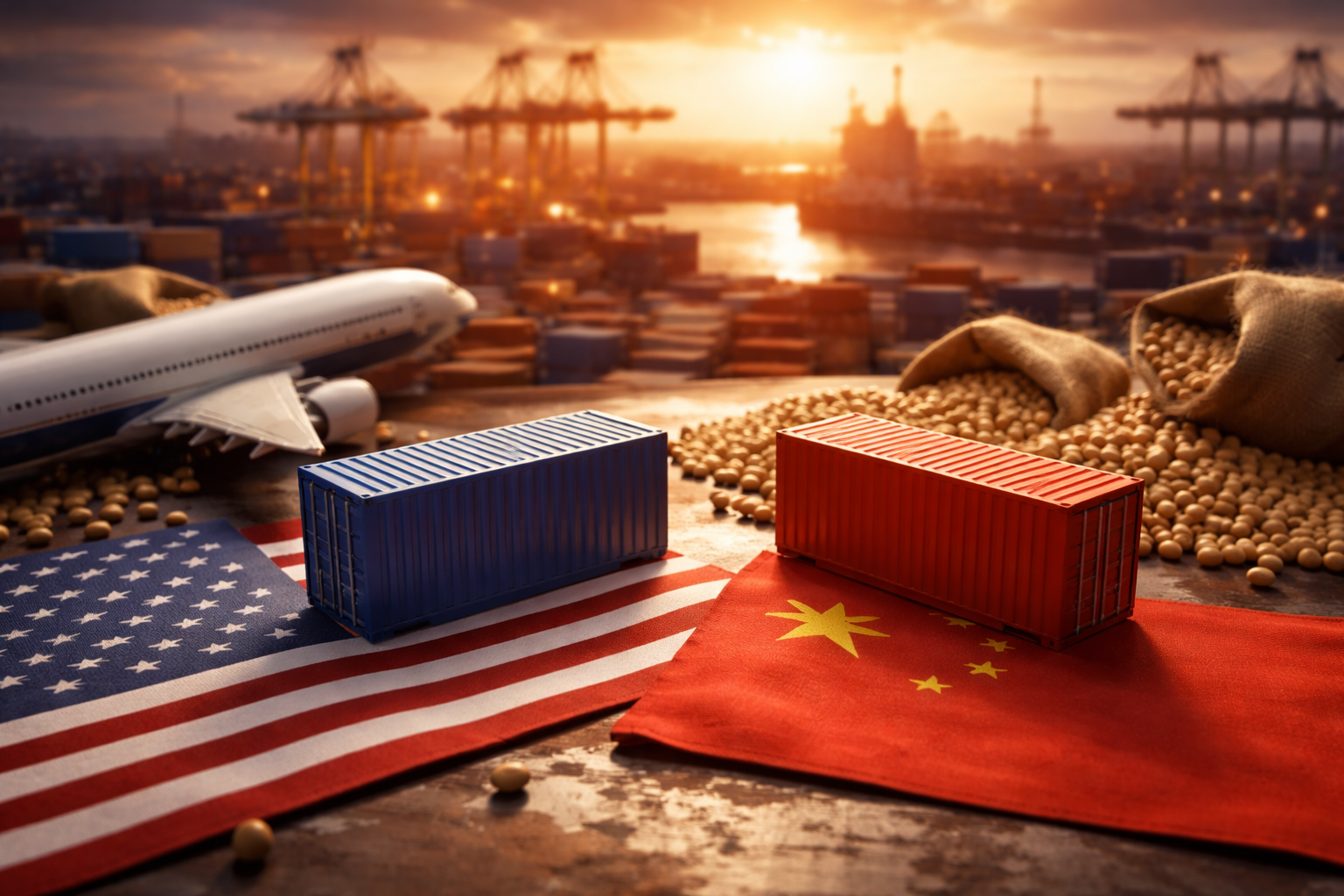
The likely agenda is unusually concrete for a relationship often buried under slogans. Boeing aircraft, US soybeans, tariffs linked to fentanyl, and broader investment ties are all reportedly in play. Those are not symbolic items. They sit at the point where politics, jobs, supply chains, and national power meet.
The story turns on whether both sides still see controlled trade deals as useful even when the larger rivalry is getting harder, not easier.
Key Points
US Treasury Secretary Scott Bessent and Chinese Vice Premier He Lifeng are expected to meet in Paris in mid-March before a planned Trump-Xi summit in Beijing from March 31 to April 2. That alone signals both governments still want a channel for deal-making.
Reported discussion items include possible Chinese purchases of Boeing planes, new commitments on US soybeans, and tariff questions. These are politically sensitive sectors with direct economic consequences in both countries.
The legal backdrop matters. The US Supreme Court struck down Trump’s broad emergency tariffs on February 20, and courts are now dealing with how more than $130 billion to $175 billion in tariff refunds could be handled. That weakens the old playbook and raises the value of negotiated outcomes.
China has signaled it wants communication with Washington but has also stressed that it will defend its red lines. That means the meeting may produce narrow economic progress without any real strategic thaw.
The wider backdrop is unstable. Tensions linked to Iran, Taiwan, and US-China strategic competition could still narrow the room for a deal or reshape what either side is willing to offer.
The US-China trade relationship has never fully recovered from the first Trump-era tariff war.
Tariffs are taxes on imports. They can protect domestic industries or pressure rivals, but they also raise costs, distort supply chains, and invite retaliation. For years, both governments have mixed confrontation with selective bargain-making.
That is why Boeing and soybeans matter so much. Boeing represents high-value US manufacturing, export prestige, and leverage in aviation. Soybeans represent the American farm belt and one of the most visible barometers of whether China is willing to channel demand toward US producers. Both have long carried political weight far beyond their commercial value.
The timing is also sharp. Reuters reported that China said it seeks communication with the United States while insisting it will protect core interests. At the same time, reporting on the expected Paris meeting suggests both governments are still building toward a leaders’ summit despite rising geopolitical strain.
Political and Geopolitical Dimensions
For Washington, the immediate goal appears twofold: show that Trump can still extract visible wins from China, and stabilize the economic side of the relationship enough to keep a summit viable. For Beijing, the goal is different. China wants predictable access, less pressure, and space to avoid looking cornered while larger disputes over Taiwan, security, and global influence continue.
That creates three plausible paths. One is a transactional truce, where both sides package commercial deals as proof that relations are manageable. A second is a narrower holding pattern, where the meeting succeeds only in preventing deterioration. A third is a breakdown, where geopolitical events crowd out the trade agenda. Signposts will include whether officials confirm the Paris talks, whether Beijing signals purchase commitments, and whether summit preparations continue on schedule.
Economic and Market Impact
If China moves on Boeing or soybeans, the headline will be larger than the immediate numbers. Boeing would gain not just orders but a symbolic reopening of a market shaped by years of political turbulence. US soybean exporters would gain a badly needed signal after a weak period in sales to China.
The farm angle is especially important. The Peterson Institute for International Economics said US soybean exports to China fell to $3 billion in 2025, the lowest since 2018. Even a modest movement now would signal a political shift, not just a change in commodity trade.
Markets will also watch the tariff issue closely. After the Supreme Court struck down Trump’s broad emergency tariffs, the courts were left to sort out refunds and process them. That does not end tariff politics, but it complicates the threat model that once drove negotiations.
Technological and Security Implications
This issue is not just a trade story. Aviation touches industrial capability, certification, maintenance, and long-term dependence. Agriculture, meanwhile, is about food security and strategic supply resilience. Both sides know that what looks like commerce can quickly turn into leverage.
That is why the meeting may stay tightly focused. It is easier to agree on tangible purchases than on the harder questions around technology controls, Taiwan, or military signaling. If the talks produce anything, it will likely be in sectors where both sides can claim practical gain without conceding principle.
What Most Coverage Misses
Most immediate coverage treats this meeting as a pre-summit scene-setter. The deeper issue is that the legal shock to Trump’s tariff architecture may have changed the negotiating mechanics more than the summit calendar itself. If sweeping emergency tariffs are no longer a reliable instrument, Washington has stronger incentives to pursue visible, negotiable wins rather than broad coercive pressure.
That matters because it shifts the meaning of Boeing and soybeans. These are not random trade items. They are sectors where the White House can still point to jobs, exports, and leverage without needing a fully intact tariff weapon. Beijing, in turn, can assess whether limited purchases provide breathing room without necessitating a broader strategic concession.
In other words, the negotiation may be less about a grand reset than about a new style of managed rivalry. The risk is that people mistake a narrow economic deal for a broader thaw. The opportunity is that even limited deals can reduce pressure at a moment when the geopolitical backdrop is getting rougher.
Why This Matters
In the short term, the people most affected are exporters, importers, manufacturers, shippers, and investors trying to judge whether US-China tensions are about to worsen or stabilize. A Boeing order, a soybean commitment, or a new tariff signal, which is a tax imposed on imported goods, would all move expectations quickly.
Over the longer term, the issue is about whether the world’s two biggest powers can keep parts of their economic relationship functional while competing more aggressively elsewhere. That question matters for inflation, investment, supply chains, food trade, and industrial planning far beyond Washington and Beijing.
The dates to watch are clear. The first question to consider is whether the Paris meeting will take place as anticipated in mid-March. The Trump-Xi summit is still scheduled to take place from March 31 to April 2. Between these two events, signals regarding tariffs, aircraft, soybeans, and official rhetoric will reveal the true narrative.
Real-World Impact
A soybean grower in the American Midwest does not need a full trade reset to feel this story. A renewed Chinese buying commitment could support demand and improve sentiment after a period of weaker sales.
A supplier tied to Boeing does not need a diplomatic breakthrough either. Even the prospect of restored Chinese orders can change hiring plans, production assumptions, and investor mood.
A US importer fighting over tariff refunds is watching a different part of the same drama. If the courts keep reshaping tariff policy, boardrooms may start treating legal uncertainty, not just politics, as the real trade risk.
A global company with factories in both countries may read the meeting as a test of whether selective stabilization is still possible. That matters for contracts, stockpiling, and where the next tranche of investment goes.
The Narrow Deal That Could Set the Tone
This meeting may not deliver a dramatic breakthrough. It may not even produce a formal deal. But it could still define the terms of the next phase in US-China relations: less faith in sweeping tariff shock, more reliance on tactical bargaining, and a growing divide between economic pragmatism and strategic mistrust.
This is the crucial decision point. If Paris produces even a modest framework, the Trump-Xi summit may look like a controlled exercise in managed competition. If it fails, the story hardens into something darker: two powers still talking, but with fewer tools, less trust, and a shrinking space for compromise. The significance of this moment lies in whether practical trade can still slow a rivalry that is otherwise accelerating
