Trump Says Ukraine Deal Could Finally Happen — But The Hardest Part May Be About To Begin
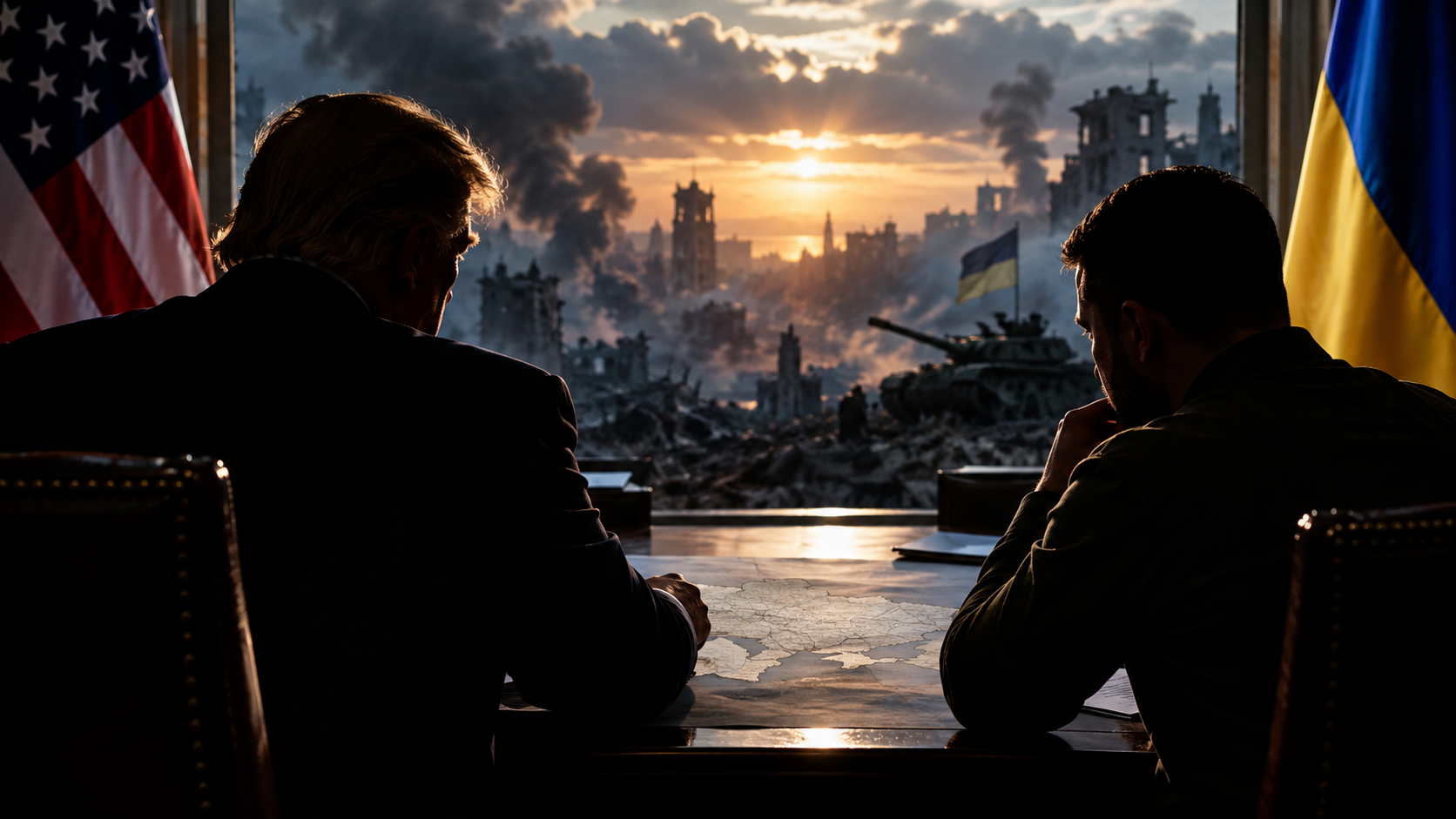
Ukraine Endgame? Trump Says A Deal Is Coming After Crucial Zelenskyy Meeting
Trump And Zelenskyy Meet As Ukraine Peace Talks Accelerate
Donald Trump has delivered one of his clearest expressions of confidence yet that Russia’s war in Ukraine could move towards a negotiated settlement. Meeting Ukrainian President Volodymyr Zelenskyy on the sidelines of the United Nations General Assembly in New York on September 22, Trump said the pair were trying to find a solution and that he believed one would emerge.
Trump stopped short of revealing what such an agreement would contain. Asked whether he still believed Ukraine could reclaim all of its territory, he instead said he expected Russia and Ukraine to make a deal and declined to describe what that deal might look like. That distinction matters enormously: confidence that diplomacy will produce an agreement is very different from evidence that Moscow and Kyiv have agreed its terms.
Zelenskyy also struck a deliberately hopeful note. He said he hoped Trump could help bring the war to an end and stressed the urgency of reaching an agreement before another winter places Ukraine’s people and infrastructure under renewed pressure.
The extraordinary possibility is now impossible to ignore. After more than four years of full-scale war, diplomacy is moving again — and both Washington and Kyiv are publicly talking about an ending rather than merely managing the next phase of fighting.
The Language Has Changed — But There Is Still No Peace Deal
The temptation is to interpret Trump’s confidence as evidence that the final pieces are falling into place. The public record does not support going that far yet.
There is no confirmed comprehensive ceasefire. There is no published final territorial settlement. There is no publicly agreed architecture for Ukraine’s long-term security. Russian and Ukrainian forces remain engaged in active combat, while long-range attacks continue to shape both the military and diplomatic calculations surrounding the conflict.
That is why Zelenskyy’s earlier acknowledgement that American envoys had brought ideas worth considering was significant without constituting a breakthrough. Washington has succeeded in restarting a serious negotiating process. It has not yet publicly demonstrated that the fundamental disagreement between Russia and Ukraine has been solved.
Ukraine’s presidency said earlier this month that territorial questions remain unresolved and that issues of that magnitude ultimately require decisions at leader level. Security guarantees, reconstruction, Ukraine’s future military strength and the economic structure of a post-war settlement are also part of the negotiations.
The negotiations are therefore approaching the point where optimistic rhetoric becomes much harder to sustain unless it produces concrete agreements.
Territory Could Still Decide Whether The Talks Live Or Die
The most explosive problem remains territory.
Russia continues to occupy substantial Ukrainian territory, while Kyiv has consistently rejected the idea that military occupation automatically gives Moscow legitimate sovereignty over land taken during the conflict. Any settlement therefore faces a brutal question: does an agreement attempt to settle permanent sovereignty immediately, or does it freeze military control while postponing the ultimate legal status of disputed areas?
That distinction could become one of the most important in the entire peace process.
Trump’s refusal during the September 22 meeting to publicly specify what the prospective deal would contain may reflect the sensitivity of precisely these negotiations. His statement that the two sides would reach a deal was an expression of confidence, not disclosure of agreed borders.
Taylor Tailored has previously examined how Russia’s willingness to return to three-way negotiations reopened the diplomatic route without resolving the territorial dispute. That remains the critical distinction now.
Getting leaders into a negotiating process is difficult.
Getting them to accept what the map looks like after the shooting stops is vastly harder.
Security Guarantees May Be Even Harder Than Drawing The Map
Even a territorial formula would not automatically end the danger.
Ukraine wants an agreement that prevents Russia from simply using a ceasefire to regroup before attacking again. Zelenskyy has repeatedly stressed that Ukraine needs strong security guarantees and a capable military after the war, while discussions with the United States and European partners have continued to focus heavily on air defence and long-term protection.
That helps explain why Patriot systems surfaced during Trump and Zelenskyy’s New York discussions. Trump said the United States and Ukraine were discussing Ukrainian production capacity connected to the system, while praising Ukraine’s industrial capabilities.
The apparent contradiction is actually central to the peace process. Ukraine is negotiating how to stop the war while simultaneously trying to strengthen its ability to fight one.
For Kyiv, those goals are connected.
A settlement that leaves Ukraine incapable of deterring another invasion could be viewed as little more than an extended pause. A security arrangement Moscow considers equivalent to an unacceptable military threat could, meanwhile, make Russian acceptance substantially harder.
The difficult part is designing guarantees strong enough to reassure Ukraine without creating conditions Russia refuses to accept.
That issue could prove just as consequential as territory.
Winter Has Suddenly Become Part Of The Negotiating Clock
Zelenskyy’s reference to reaching an agreement before winter is not simply diplomatic theatre.
Ukraine has spent successive winters protecting its electricity network, cities and civilian infrastructure from Russian attack. Kyiv is again seeking additional air-defence support, with Zelenskyy discussing ballistic missile interceptors and further protection during meetings in New York on September 22.
Ukraine has also signalled willingness to support limited de-escalation if Russia reciprocates. Zelenskyy said on September 14 that Kyiv could support a mutual halt to attacks on critical infrastructure if Washington could ensure genuine Russian participation.
That possibility could become one of the most realistic stepping stones towards something bigger.
A full peace agreement requires decisions about territory, security, sanctions, economic reconstruction and Ukraine’s long-term strategic position. A narrower agreement protecting energy infrastructure would not solve those disputes, but it could provide an immediate test of whether Russia and Ukraine can implement and sustain reciprocal restraint.
It would also matter directly to civilians.
The question is whether the diplomatic process can produce that kind of measurable result before another winter turns energy infrastructure back into one of the war’s most vulnerable fronts.
Trump Is Betting That Both Sides Now Want An Exit
Trump’s central claim is that both Vladimir Putin and Zelenskyy want the war to end.
That is a significant assertion, but wanting a war to stop and agreeing on the conditions under which it stops are different things.
Russia can want an agreement while demanding terms Ukraine considers unacceptable. Ukraine can want peace while refusing a settlement it believes would make another invasion more likely. Both governments can simultaneously negotiate and continue fighting because battlefield leverage affects negotiating leverage.
That dynamic has defined much of the recent diplomacy.
Taylor Tailored previously explored how Putin’s public openness to negotiations coincided with continuing combat and attempts by both sides to improve their military position.
The renewed American effort is attempting to break that cycle by moving Washington repeatedly between the parties, narrowing the areas of disagreement and eventually bringing the most difficult decisions to leader level.
Trump clearly believes that process can work.
The next evidence will come not from another optimistic statement, but from whether the negotiations produce concessions both Moscow and Kyiv can actually live with.
The Next Breakthrough May Look Much Smaller Than A Peace Treaty
The end of the Ukraine war may not arrive in one dramatic announcement.
It could emerge through a sequence of smaller agreements: restrictions on attacks against energy infrastructure, prisoner exchanges, arrangements affecting shipping or food routes, a wider ceasefire, verification mechanisms and only later a political framework addressing territory and long-term security.
Ukraine has already demonstrated willingness to experiment with limited reciprocal restraint. Earlier in September, Zelenskyy said Kyiv was prepared temporarily to halt certain airstrikes if Russia reciprocated, while American envoys continued talks aimed at restarting the broader negotiating process.
That may be the detail to watch most closely now.
The dramatic headline is that Trump
