Turkey Braces for Iran–US War—and the First Moves Could Redraw the Region
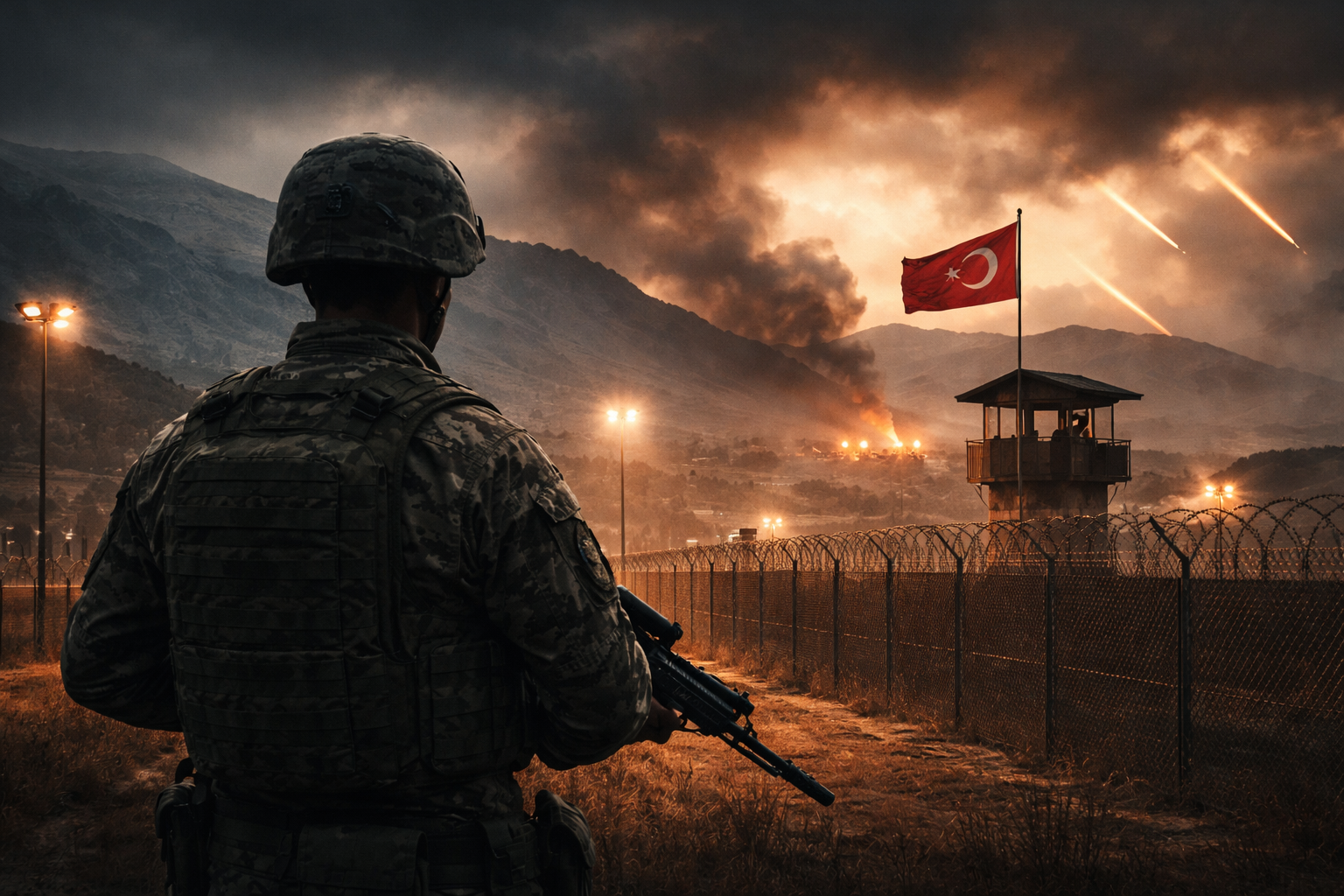
Turkey’s Border Could Decide How Fast an Iran–US War Spreads
If Iran and the US Clash, Turkey Becomes the Fault Line
Turkey is signaling that it is weighing “potential measures” if a conflict between Iran and the United States erupts.
Turkish diplomatic sourcing described contingency thinking without naming specifics while emphasizing citizen safety and a red line against violating Iran’s sovereignty.
That vagueness is the point. In a fast-moving crisis, Turkey wants room to maneuver—enough to reduce spillover risk without locking itself into steps that could look like escalation.
The story turns on whether Turkey can slow the spillover timeline faster than the conflict accelerates.
Key Points
Turkey is evaluating contingency measures tied to a possible Iran–US conflict while publicly opposing military action that destabilizes the region.
“Measures” can span border posture, airspace control, sanctions compliance, and energy/transit risk management—each with distinct legal and political constraints.
Ankara’s tightrope is credibility: reassure allies and markets, deter disorder, and avoid actions that appear to infringe on Iranian sovereignty.
Migration planning is sensitive: Turkey has pushed back on reporting about entering Iranian territory to manage refugee flows, showing how politically explosive that option is.
Watch concrete signals, not rhetoric: border deployments, airspace notices, banking/compliance guidance, and disruptions in regional transit patterns.
Turkey shares a long land border with Iran and sits on key corridors that connect the Middle East to Europe.
That geography turns regional conflict into immediate questions about refugees, trade, energy logistics, and security.
Ankara has positioned itself as pro-diplomacy and anti-destabilization, including messaging that it is communicating with both sides to reduce tensions.
At the same time, the broader environment is volatile: Iran and the U.S. have been in negotiations while Washington increases military posture in the region, and Iran has warned of retaliation against U.S. bases if attacked.
The pressure trap: every “defensive” move can look like escalation
Turkey’s first problem is signaling. If Ankara hardens the border, closes airspace, or tightens financial channels, it may be read in Tehran as alignment with Washington. If it does too little, it may be read in Washington and NATO capitals as complacency.
So the messaging tends to sound bland: “evaluating measures,” “prioritizing citizen safety,” “not infringing sovereignty.”
That language is designed to preserve ambiguity while buying decision time.
The option set: border walls, airspace switches, and quiet financial compliance
“Measures” is a wide umbrella. In practice, Turkey’s menu looks like this:
Border posture can mean visible steps (more patrols, surveillance, checkpoints, rapid-reaction units) and less visible ones (rules for entry, temporary holding capacity, and coordination with local governors). Reporting in recent weeks has pointed to enhanced security measures along the Iran border as part of contingency thinking.
Airspace control can range from routing changes to restrictions in defined corridors. In a crisis, airspace choices become both security policy and economic policy because they affect insurers, airlines, and shipping confidence even before the first strike.
Sanctions and financial compliance often happen quietly through risk advisories and stricter enforcement. Turkey can tighten practical access to services and payments without dramatic public announcements—reducing exposure to secondary sanctions risk while avoiding a public political rupture.
Energy transit posture is less about turning valves and more about contingency planning: inventory, alternative routing, physical security for infrastructure, and market communication to prevent panic pricing.
The hard limit: Turkey can’t pick a side without paying a price
Turkey is a NATO member but also a regional power with its own balancing strategy. Any open alignment risks retaliation, trade loss, or domestic political blowback. Any perceived neutrality risks friction with allies and markets.
There is also an internal constraint: migration politics. Turkey already carries heavy political sensitivity around refugees, making it hard to publicly prepare without triggering domestic backlash or signaling panic.
That is why Turkey’s presidency pushed back on claims about entering Iranian territory to handle a refugee crisis. Even discussing that option can ignite controversy.
What Most Coverage Misses
The hinge is that Turkey’s most valuable “measure” is delay: slowing the crisis’ spillover speed rather than trying to control the crisis itself.
Mechanism: delay buys Ankara optionality—time to coordinate with allies, pre-position humanitarian capacity, calm markets, and shape perceptions so that practical steps (border enforcement, airspace routing, compliance tightening) are interpreted as stabilization rather than escalation.
Signposts to watch in the coming days:
A shift from generic statements to operational language (specific border protocols, civil defense guidance, or sectoral advisories).
Observable surveillance and posture changes—especially NATO-linked air activity or monitoring patterns that suggest heightened alert.
What Changes Now
In the next 24–72 hours of any sharp escalation, Turkey’s first moves are likely to be reversible ones—because reversibility lowers the risk of misinterpretation.
In the short term, the key consequence is confidence, because markets and migration networks react to perceived control. If Turkey looks unprepared, risk premia rise quickly across transport and energy expectations.
Long term, Turkey’s stance could reshape its regional leverage. If Ankara can demonstrate it prevented spillover while keeping channels open, it strengthens its claim to be an indispensable mediator—especially if talks remain a live option.
Real-World Impact
A logistics firm sees higher insurance quotes for routes that touch the region, even if shipments keep moving. The cost hits first; the delays come later.
Air travelers experience rerouted flights, longer travel times, and sudden cancellations if risk models change overnight.
Border provinces see temporary strain: more security checks, more patrol presence, and pressure on local services if crossings rise.
Banks and exporters face “soft frictions”: extra compliance checks, slower payments, and more scrutiny on counterparties.
The fork ahead: containment posture vs regional bargaining
Turkey’s dilemma is not whether it has tools. It does.
The dilemma is whether using those tools stabilizes the perimeter or invites new pressure from one side or the other. The trade-off is between visible containment (credible, but provocative) and quiet management (less provocative, but easier to overwhelm).
Watch the signposts that cannot be faked: operational notices, border posture shifts, and changes in transit rhythms. If these indicators shift sharply, Ankara has determined that the spillover clock is rapidly accelerating.
This moment matters because it will show whether Turkey can convert geography from vulnerability into leverage without turning a regional crisis into a domestic one
