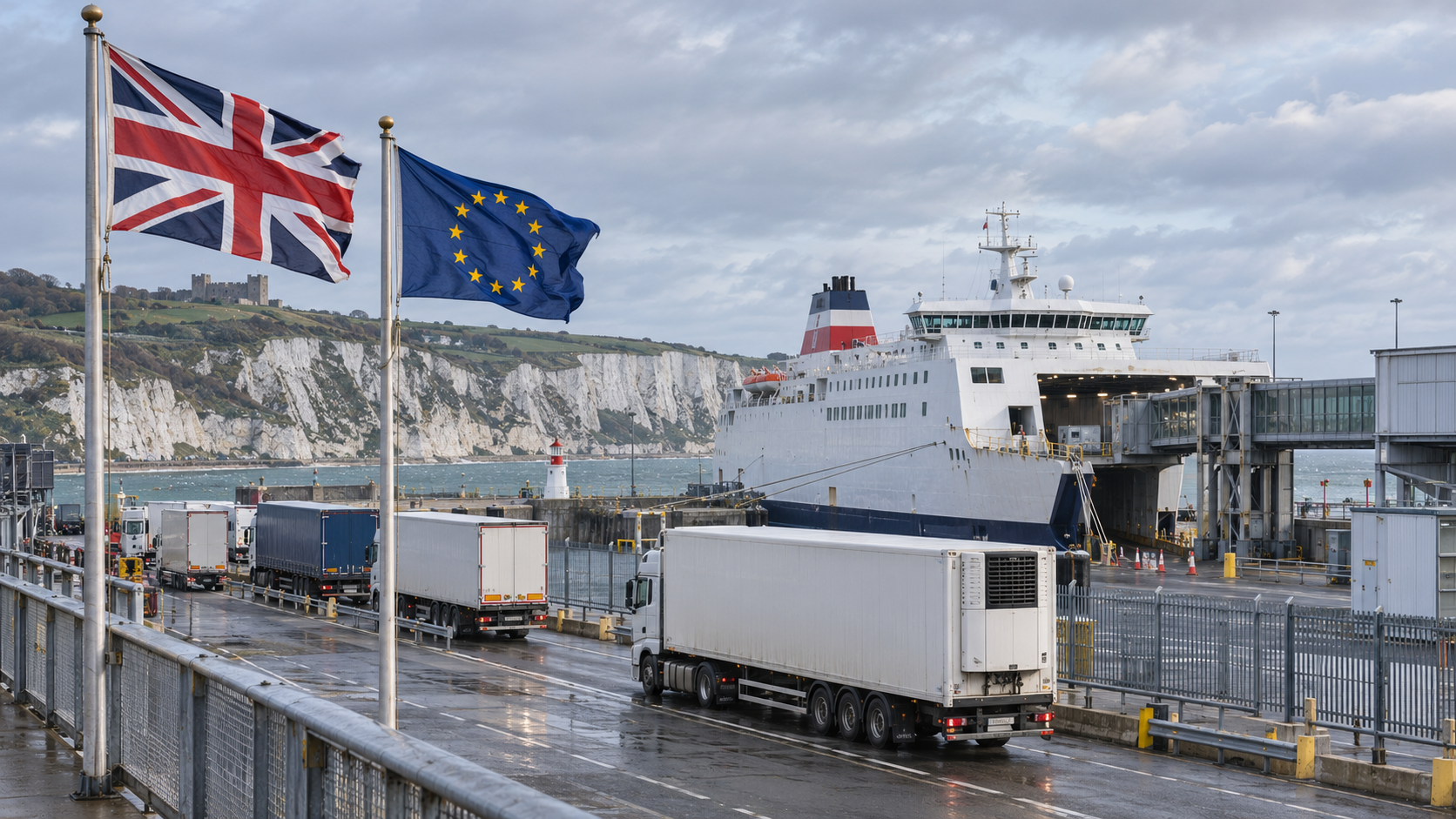
What Does the Brexit Reset Mean for Your Food Shop, Your Job or a Year in Europe?
Why Could A University Tuition Bill Delay A Deal On British Food?
Britain and the European Union have agreed terms on three parts of their Brexit reset. One would cut checks on food crossing the border. A second would give young people the chance to live and work on the other side of the Channel for up to three years. A third would link the carbon markets that affect the cost of selling British steel and other industrial goods in Europe.
None of those changes took effect at the Brussels summit on 20 November 2026. The reported target for the food agreement is 1 March 2028. The youth scheme has a wider expected launch window, between 2028 and 2030. And although London and Brussels agree on much of the substance, they have given different answers to a question that matters to anyone relying on those dates. What happens if they cannot agree how much an EU student should pay to attend a British university?
What Would Change for Shoppers and Food Producers?
One of the clearest examples is already on British supermarket shelves. Some food sent from Great Britain to Northern Ireland carries the words “Not for EU”. The label helps distinguish goods intended to stay in the UK from those that could enter the EU market across the Irish land border. The Cabinet Office says the food agreement would remove the vast majority of those labels once fully implemented.
Behind that small change is a larger one. Britain and the EU intend to operate a common area for animal and plant health rules. These are the safeguards that govern trade in goods ranging from meat and dairy to plants and seeds. When the authorities on both sides can rely on the same standards, exporters can dispense with much of the certification and inspection that now accompanies consignments.
For a grower selling plants across the Channel, the benefit is partly time. A shipment that spends less time waiting for clearance can reach a customer in better condition. For a supermarket supplying Northern Ireland, the gain could come from putting the same product in the same packaging on more of its shelves. Customs formalities are a separate matter, so businesses would still need to know which requirements apply to their goods.
Would groceries get cheaper? The Cabinet Office estimates the food deal could add up to £5.1 billion a year to the UK economy. That figure covers economic activity across the country. It cannot tell a family how much it will save on its weekly shop. An importer might pass on lower costs, use the savings to absorb a rise elsewhere or start stocking something that was previously too expensive to bring in. A wider choice on the shelf may be easier to spot than a fall on the receipt.
What Would the Youth Scheme Mean for British and EU Citizens?
For a young British adult, the biggest personal gain would be permission to spend a meaningful stretch of time in an EU country and earn money while there. That opens possibilities a short visit cannot offer, such as taking a job for a season, learning a language through work or supporting yourself during a longer stay. Young EU citizens would have a corresponding route into the UK.
The terms described at the summit provide for stays of up to three years. EU diplomats put the cap on the UK side at 100,000 places for young Europeans under 31. Before the summit, the British government told Parliament that the scheme would require a visa and would give participants neither access to benefits nor a right to bring dependants. Anyone planning a move will need the final eligibility rules and application dates.
That distinction matters even within one family. A young adult hoping to work abroad could gain a route that suits them. Their parent hoping to retire to the same country gains no residence entitlement through this agreement. For someone simply booking a holiday, the summit announcement itself changes nothing about the trip.
Permission to study also answers only half of a prospective student’s question. The other half is what the university can charge.
Why Are University Fees Holding Up the Reset?
The EU wants its students at British universities to qualify for the tuition rate charged to domestic students. Britain has favoured offering a substantial discount on international fees while stopping short of guaranteeing the domestic rate. The difference, multiplied across several years of a degree, could determine whether a student can afford to accept a place.
The choice also matters to the university offering that place. An institution that recruits EU students at international rates could receive less for each student under a home-fee agreement. Lower fees might also attract applicants who would otherwise study elsewhere. The financial outcome depends on both the rate and how enrolment responds.
London and Brussels have allowed six months for further talks. EU officials say the fee settlement and the three sector agreements form a package. British officials say the food arrangements can proceed on schedule even if the fee negotiations run on. That disagreement explains how Downing Street can say the deal is done while a food exporter still has good reason to wait for formal implementation before changing its paperwork.
Why Does a Carbon Deal Matter to British Industry?
A British steelworks and an EU steelworks both face a cost for the carbon they emit. They currently operate in separate markets, where the price of an emissions allowance can differ. The EU also applies a carbon border mechanism to certain imports. For a British producer selling into Europe, the carbon cost attached to the shipment can affect the price it can offer a customer.
Linking the markets would allow a business to use an allowance issued by either system to meet its obligations. Once the link is fully operational, covered goods could qualify for exemption from the other side’s carbon border levy. The UK government puts the value of exports it wants to shield at approximately £6.5 billion. That is the value of the trade concerned. The tax saving would be a fraction of it.
There is a trade-off for industry itself. British allowances have recently traded below their EU equivalents. If the prices converge, a UK manufacturer could gain from simpler treatment at the border while facing a higher price for some emissions at home. The balance will differ between a plant that sells heavily into Europe and one that serves mainly British customers.
What Does Britain Give Up, and How Have People Reacted?
The most consequential concession concerns who writes the next food rule. Great Britain would keep pace with relevant EU standards in the areas covered. Britain would be consulted, but it has no member-state vote when the EU adopts a change. A grower who sells entirely within Britain could therefore have to adapt to a new rule even if they gain little directly from faster exports. That is the practical consequence of dynamic alignment.
Prime Minister Andy Burnham has defended the agreement on the grounds that lower trade costs and opportunities for young people offer benefits British households can recognise. Ahead of the summit, Conservative leader Kemi Badenoch challenged him to explain what Britain would concede and when the benefits would arrive. On carbon, the disagreement goes further. Badenoch has argued for removing carbon levies altogether. The industry group Energy UK supports linking the markets and estimates the change could save UK industry around £800 million a year.
Those positions reflect different priorities. An exporter wants to know what it will cost to reach its biggest nearby market. A farmer wants to know who can change the conditions under which they produce. A young worker wants to know whether they qualify and can afford to go. The same deal can give each of them a different answer.
When Does the Brexit Reset Deal Come Into Effect?
Food and agricultural trade: 1 March 2028 is the reported implementation target. Until the arrangements take effect, producers and retailers should continue using the rules that apply to their shipments.
Youth mobility: The reported launch window is 2028 to 2030. The summit did not open applications. A young person considering a job or course abroad still needs the opening date, the visa conditions and the rules for their destination.
Carbon trading: Downing Street says the two sides have agreed a timetable. As of midday on 20 November 2026, a precise operational date could not be independently confirmed. Ratification and technical work are required before companies can use allowances across both markets and secure the associated border exemption.
University fees: The six-month negotiating period points to May 2027 as the next milestone. It gives negotiators a deadline to work towards. It gives a prospective student no guarantee of a lower bill for a particular academic year.
For a family comparing university offers, the figure that matters will be the fee the institution can actually quote. For a business preparing a March 2028 delivery, it will be the certificate the border authority says it can leave out. Those are the points at which the Brussels agreement starts changing decisions people have to make.
Sources
Cabinet Office — UK-EU Summit Package: Factsheet and Mythbuster — Government estimates, Northern Ireland labelling and the scope of the proposed changes.
Reuters — Britain and EU Launch Reset With Food and Youth Mobility Deals — Summit terms, the three-year youth route, the reported cap and the competing tuition proposals.
The Guardian — UK-EU Summit Live Coverage, 20 November 2026 — Implementation windows and the UK and EU accounts of what happens if fee talks remain unresolved.
House of Commons Business and Trade Committee — UK-EU Relations a Decade On: Government Response — The government’s stated position on visas, benefits and dependants.
Reuters — What Are the UK and EU Carbon Markets and What Does Linking Them Mean? — How allowances would work, industry and opposition reaction, and the steps before the border exemption applies.
Next Reads
Can Britain Get a Better Brexit Deal? — The three tests Burnham set before Brussels and the questions Badenoch wanted answered.
UK Brexit Reset Bill Explained: What “Dynamic Alignment” Means — How a future EU rule could affect a business operating solely in Britain.
Burnham Pushes Britain Back Towards Europe — Is Brexit Being Reversed by Stealth? — The earlier talks with France that signalled Britain’s change of direction.
