UK Scrambles to Reopen Hormuz as Global Energy Crisis Deepens
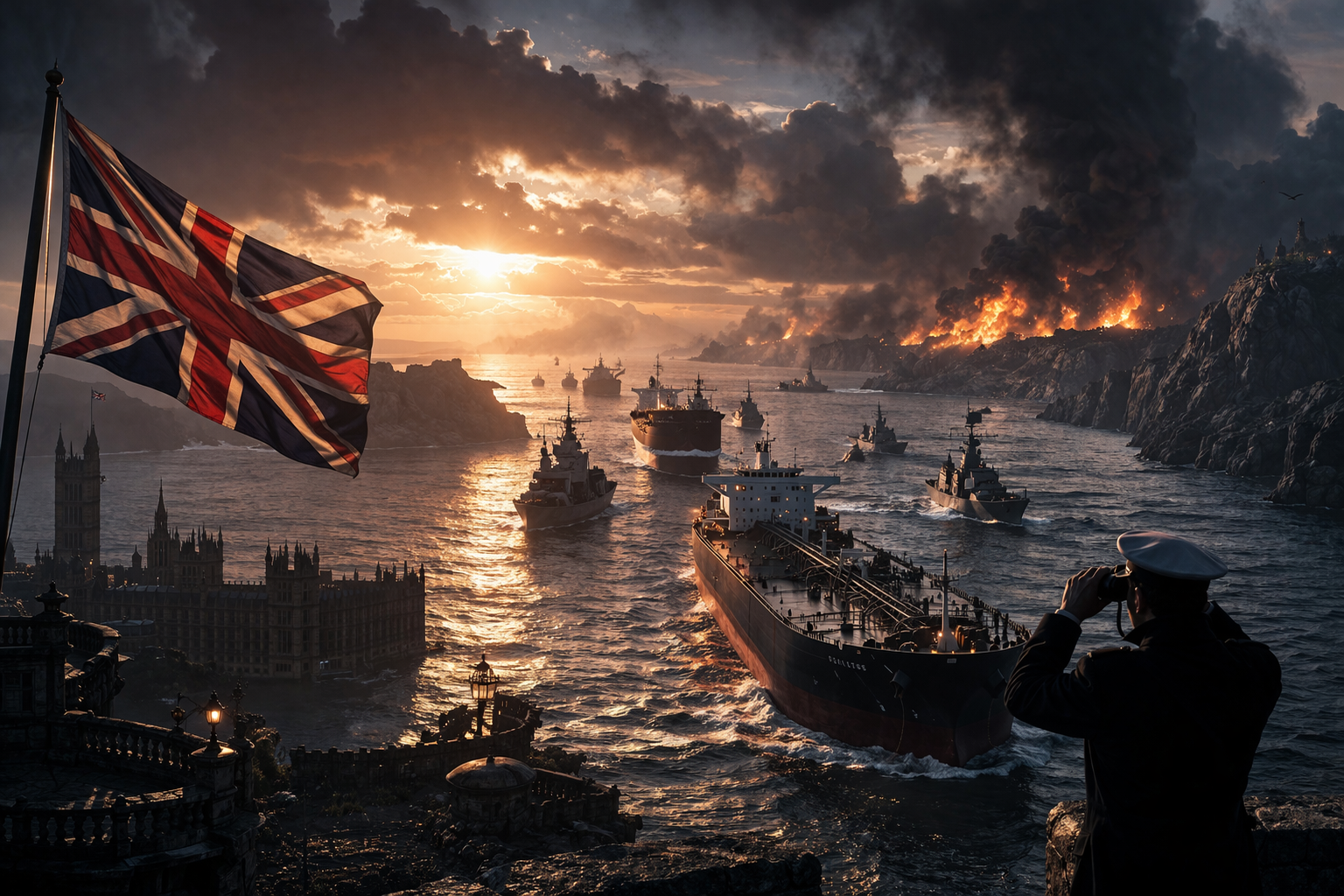
No US, No Easy Fix: The World Faces a Hormuz Breakdown
UK-Led Talks to Reopen Strait of Hormuz Signal a New Phase in the Global Oil Crisis
The United Kingdom is hosting emergency talks with more than 30 countries to explore how to reopen the Strait of Hormuz—a waterway that carries roughly a fifth of the global oil supply and is now effectively shut.
The immediate question is simple: can global powers restore one of the world’s most critical trade routes without triggering a wider war?
The answer is far less straightforward.
The talks come after Iran restricted traffic through the strait in response to US-Israeli military strikes, sending energy prices sharply higher and disrupting global supply chains.
But the deeper tension is this: the United States—historically the dominant naval power in the region—is not leading this effort.
Instead, Washington is stepping back.
The story turns on whether a fragmented coalition can reopen a strategic chokepoint without US leadership or direct confrontation with Iran.
Key Points
The UK is convening around 35 countries to coordinate reopening the Strait of Hormuz
The strait carries about 20% of global oil, making disruption a global economic shock
Iran has effectively blocked or restricted passage following US-Israeli strikes
The United States is not participating in the talks and has pushed responsibility onto allies
Initial plans focus on mine clearance and tanker protection, not immediate military escalation
Energy prices and global inflation risks are already rising as a result
The situation exposes fractures in Western alliances and raises the risk of prolonged instability
The Waterway That Powers the Global Economy
The Strait of Hormuz is not just another shipping lane. It is the narrow maritime artery connecting the Persian Gulf to global markets.
At peak flow, around one in every five barrels of oil traded globally passes through it.
That concentration creates a structural vulnerability.
The disruption of the strait has immediate and global consequences:
oil prices surge
shipping insurance costs spike
energy-importing economies face inflation shocks
This situation is not theoretical. It is already happening.
What Changed: From Regional Conflict to Global Crisis
The closure did not emerge in isolation.
It followed a sharp escalation:
US and Israeli strikes targeting Iran
Iranian retaliation targeting shipping and maritime access
a collapse in safe passage through the strait
Iran has reportedly reduced tanker traffic to a fraction of normal levels, effectively turning the waterway into a controlled or denied zone.
That shift transformed a regional conflict into a global economic crisis almost overnight.
And it forced countries far beyond the Middle East to respond.
A Coalition Without Its Strongest Military Power
The UK-led talks bring together European states, Gulf countries, and partners like Canada, Japan, and Australia.
But one absence stands out: the United States.
President Donald Trump has explicitly argued that countries dependent on the strait should take responsibility for securing it.
That is a major departure from decades of US policy.
For years, the US Navy effectively guaranteed freedom of navigation in the Gulf. Now, that role is uncertain.
This situation creates a coordination problem:
Europe lacks unified naval command
Gulf states have exposure but limited independent capability
coalition rules of engagement remain unclear
The result is a coalition that exists politically—but not yet operationally.
The Plan Taking Shape: Mines First, Then Protection
Early discussions suggest a phased approach.
Phase one: clearing mines and hazards from the waterway.
Phase two: protecting commercial shipping with military escort.
This sequencing matters.
Mine clearance is slow, technical, and vulnerable to disruption. It also requires:
specialized vessels
coordination across multiple navies
sustained presence in a hostile environment
Only after that can tanker traffic resume at scale.
Even then, risk remains.
The Economic Shock Is Already Here
Markets are reacting faster than governments.
Oil prices have already jumped sharply, with knock-on effects:
fuel costs rising globally
supply chains tightening
inflation pressure increasing
For energy-importing countries—especially in Europe and Asia—the impact is immediate.
For producers outside the Gulf, it creates windfall opportunities.
This is a classic supply shock—but one tied directly to geopolitical risk.
What Most Coverage Misses
The key constraint is not political will.
It is operational reality.
Reopening the Strait of Hormuz is not simply a diplomatic decision. It is a military and logistical challenge under contested conditions.
Even if countries agree on a plan, execution requires:
safe access to mined waters
suppression or deterrence of further attacks
continuous protection of shipping lanes
Without US leadership, coordination becomes slower and riskier.
That delay matters.
Because every additional day of disruption compounds economic damage—and increases incentives for escalation elsewhere.
The Strategic Shift Beneath the Headlines
This moment signals something larger than a shipping crisis.
It reflects a shift in how global security is organized.
For decades, the implicit model was
the US provides security
allies support politically and economically
That model is now under strain.
The Hormuz crisis could serve as a test case for "shared responsibility," potentially redefining future conflict management.
Or mismanaged.
The Next Moves That Matter Most
Several signals will determine how the situation unfolds:
whether a ceasefire holds long enough to allow mine clearance
whether coalition naval forces deploy in meaningful numbers
whether Iran escalates or de-escalates its maritime posture
whether the US re-engages if the situation deteriorates
Each of these shifts the risk calculus.
Where This Crisis Ultimately Turns
At its core, this is a test of coordination under pressure.
Can a multi-country coalition restore a critical global system without triggering direct confrontation?
Or does the absence of a single dominant enforcer make escalation more likely?
The answer will shape not just the fate of the Strait of Hormuz — but the future of global trade security in an increasingly fragmented world.
