US–Iran War Rhetoric Explodes: ‘Stone Age’ Threats Meet Direct Warnings of Total Ground War
Why This US–Iran Exchange Is More Dangerous Than It Sounds
The Hidden Risk Behind the US ‘Stone Age’ Threat to Iran
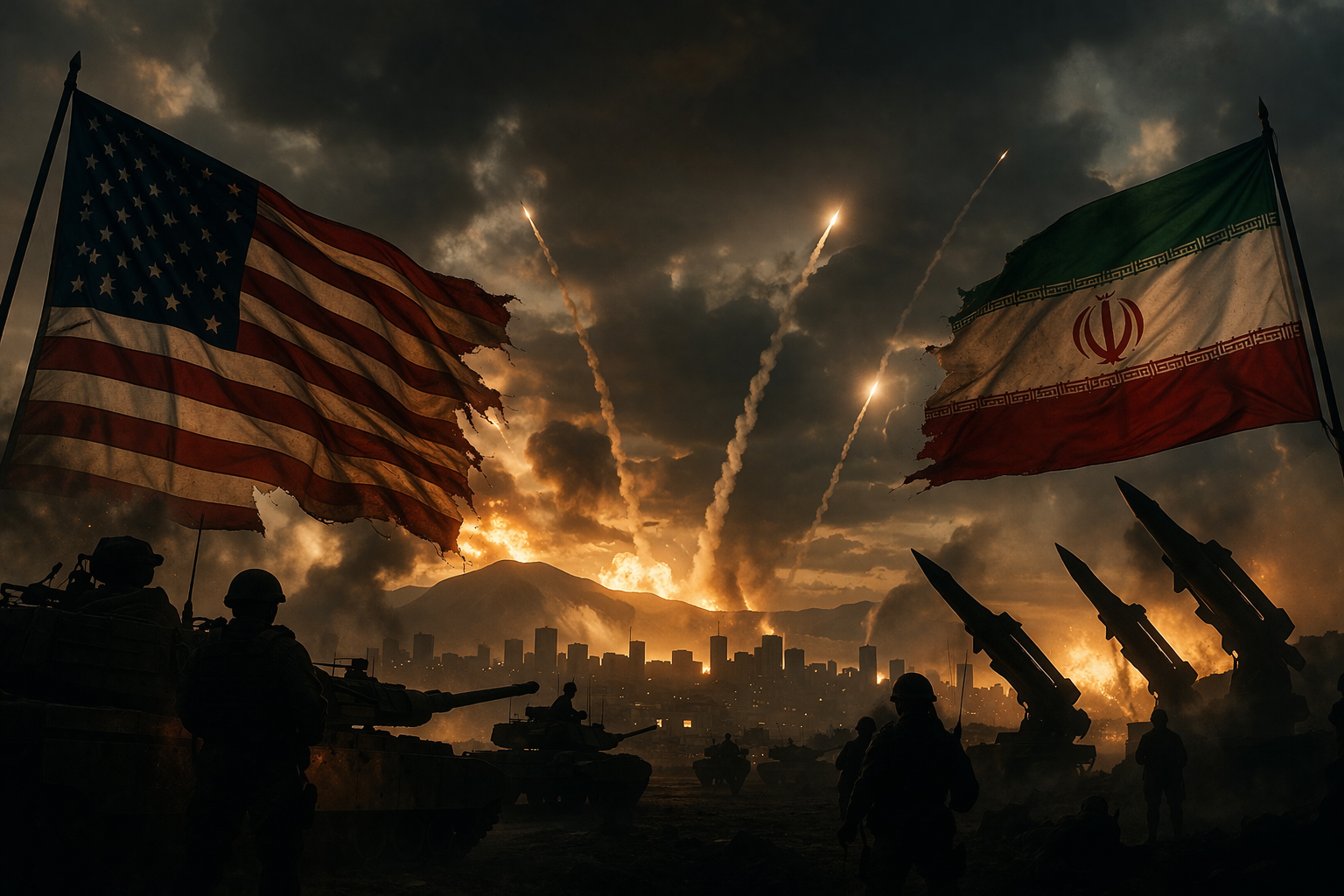
Rhetoric between the United States and Iran has escalated to one of the most aggressive exchanges seen in decades—and it is happening alongside active military conflict.
US Defense Secretary Pete Hegseth has echoed language about overwhelming force, including references to sending Iran “back to the Stone Age.” Iranian commanders have responded with direct, explicit warnings that any US ground invasion would result in the total destruction of the invading forces.
This is not just political theater. It is messaging happening in parallel with real strikes, real casualties, and real strategic decisions.
The key question is not whether tensions are high. It is whether this rhetoric signals a shift toward a fundamentally different phase of the war—one where deterrence fails and escalation becomes unavoidable.
The story turns on whether the conflict remains psychological warfare or becomes a precursor to ground escalation.
Key Points
US officials, including Pete Hegseth, have used extreme language suggesting overwhelming military destruction of Iran
Iranian military figures have responded with direct threats against US ground forces, signaling readiness for full-scale conflict
The exchange comes amid an already active war involving US, Israel, and Iran with ongoing strikes and casualties
Rhetoric on both sides is escalating faster than formal policy announcements
A major strategic divide is emerging: air dominance vs ground war risk
The biggest unknown is whether either side crosses into sustained ground operations
The Escalation Is Real—But It’s Not Symmetrical
The “stone age” language attributed to US leadership reflects a doctrine of overwhelming air and technological superiority.
That’s not new. It’s rooted in decades of US military strategy—shock, precision strikes, and infrastructure degradation.
What is new is how openly that language is being used in real time, during an active conflict.
Iran’s response is fundamentally different.
Rather than countering with equivalent threats of destruction, Iranian commanders are focusing on one specific scenario:
ground invasion.
Their message is simple and consistent:
Air war → survivable
Ground war → existential fight
This is a deliberate framing. And it matters.
Why Iran Keeps Talking About Ground War
Iran knows it cannot match the US in conventional airpower.
But it does not need to.
Iran’s military doctrine is built around the following:
asymmetric warfare
terrain advantage
militia networks
prolonged conflict
In a ground scenario, the situation changes.
Urban warfare, mountainous terrain, and decentralized resistance all work in Iran’s favor.
That is why Iranian responses are so specific:
Not, “we will destroy you.”
But:
“Come closer.”
That is not bravado. That is positioning.
What Has Actually Happened So Far
Israeli and US-linked strikes have hit targets inside Iran and across the region
Iran and allied groups have retaliated with missile and proxy attacks
Civilian casualties are mounting across multiple countries
Global energy flows—especially through the Strait of Hormuz—have been severely disrupted
At the same time:
US officials suggest Iran’s military capability is being degraded
Iran denies defeat and signals long-term resistance
And critically:
There is still no confirmed US ground invasion.
The Strategic Reality Behind the Language
The US position, as reflected in statements by Pete Hegseth, is that Iran is being weakened rapidly and has limited ability to respond conventionally
Iran’s position is that
It can absorb air strikes
It can escalate through proxies
It can turn any ground war into a prolonged, costly conflict
Both of these can be true at the same time.
And that’s where the danger lies.
What Most Coverage Misses
The key hinge is not the rhetoric.
It’s the type of war each side is preparing for.
The US is signaling dominance in:
airspace
precision strikes
infrastructure targeting
Iran is signaling readiness for:
attrition
insurgency-style resistance
high-casualty ground engagement
These are not competing strategies.
They are orthogonal strategies—meaning both can succeed in their domain while still leading to escalation.
That’s the trap.
Air superiority does not guarantee strategic victory if it triggers a ground conflict the US would rather not fight.
And Iran does not need to win outright.
It only needs to make the cost unacceptable.
The Risk of Miscalculation Is Rising
Rhetoric like “stone age” is not just messaging.
It does three things:
Signals intent to escalate
Tests opponent reaction
Locks in public expectations
Iran’s response does the same.
But with a critical difference:
It raises the cost of one specific next step—ground invasion—to extreme levels.
That creates a narrowing path:
Continue air war → ongoing escalation
Move to ground war → major casualties
De-escalate → perceived loss of leverage
None of these are clean options.
Where This Could Go Next
There are three realistic paths from here:
1. Contained Air War (Most Likely Short-Term)
Continued strikes
Proxy retaliation
Economic disruption
No ground invasion
2. Escalation Through Proxy Expansion
Hezbollah, Houthis, and others intensify attacks
Regional war spreads without direct US invasion
3. Ground Conflict Trigger (High Impact, Lower Probability)
Limited US ground operations
Rapid escalation into high-casualty conflict
Iran shifts fully into asymmetric warfare mode
The Real Strategic Fork Ahead
This moment is not defined by what was said.
It is defined by what each side is trying to make the other believe.
The US is trying to project inevitability.
Iran is trying to project cost.
If the US believes Iran is weaker than it actually is, escalation becomes more likely.
If Iran believes the US is bluffing, escalation also becomes more likely.
That is the instability.
The next phase of this conflict will not be decided by who shouts louder, but by who correctly reads the limits of the other side’s strategy.
