

What If China Blockaded Taiwan for 30 Days
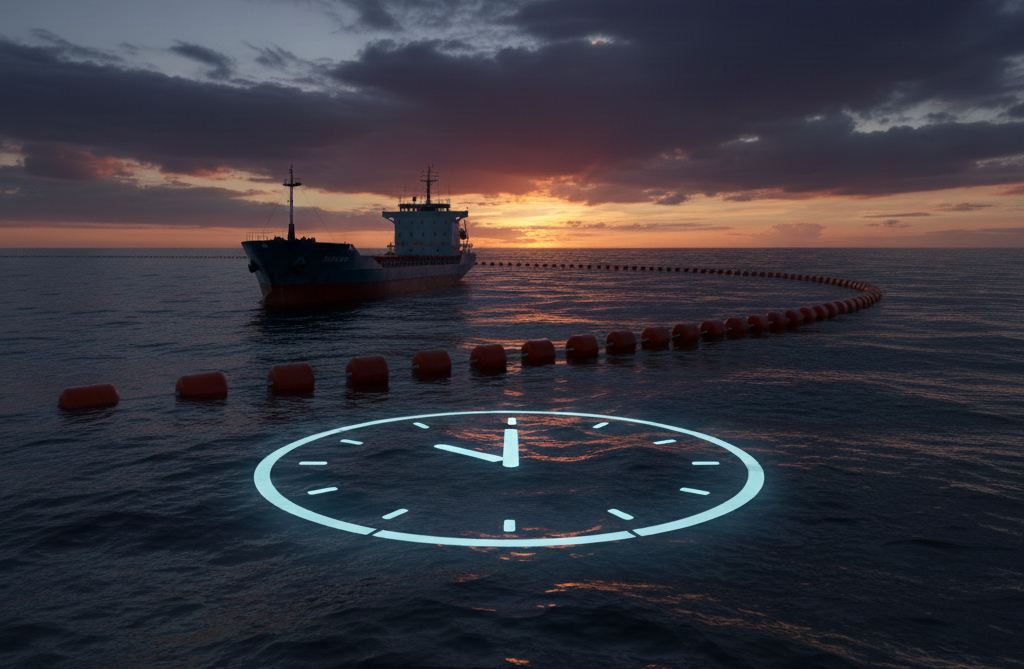
Picture a 30-day blockade of Taiwan. Not a single dramatic missile strike. Not an invasion. Just a sustained effort to control what goes in and out by sea and air, for one month.
That premise matters because Taiwan is not just a place on a map. It sits on shipping and aviation routes that link North Asia to the wider world. It also produces components that quietly sit inside everything from phones to cars.
The tension is simple and brutal. A blockade is meant to pressure without triggering total war. But the act of enforcing it creates daily moments where a mistake, a collision, or a single shot can spin the whole thing into something larger.
This piece walks through how a 30-day blockade could work in practice, how different governments and markets might respond, and where the real points of failure sit. By the end, you should have a clear sense of the mechanisms, the likely choke points, and the scenarios that decide whether it ends as a scare or becomes a turning point.
The story turns on whether enforcement can stay “limited” once millions of tonnes of trade are forced to stop, reroute, or ask permission.
Key Points
A 30-day blockade would be a logistics and finance shock before it becomes a battlefield event. Insurance, routing, and risk pricing would move first, sometimes within hours.
The biggest early constraint for Taiwan would be energy and critical imports by sea, not food scarcity. The speed of strain depends on stockpiles and how “porous” enforcement is.
For China, the challenge is sustaining control without creating a clear trigger for external military escorts or wider sanctions. The more coercive the inspections and seizures, the higher the escalation risk.
For the United States and partners, the dilemma is how to keep lanes open without being seen as starting a naval confrontation. Convoys reduce risk for shipping, but raise the stakes at sea.
Markets would treat a blockade like a rolling crisis: each day brings a new question about duration, enforcement, and whether the next incident forces a political decision.
The aftershock may matter more than the 30 days: even if it ends cleanly, firms may redesign supply chains around the idea that access can be switched off again.
Background
A blockade is not one single action. It is a system: declared zones, patrol patterns, inspection rules, and penalties that make shipping and aviation feel unsafe or unaffordable.
In modern terms, it can be “hard” or “soft.” A hard blockade tries to physically stop traffic. A soft blockade can achieve many of the same effects by making insurers refuse cover, ports refuse entry, and carriers reroute to avoid detention.
Taiwan is an island economy. Much of what it imports and exports moves by ship, including energy supplies such as liquefied natural gas and oil. That matters because energy is not just about electricity. It keeps transport running, keeps factories producing, and keeps basic services stable.
The region is also already crowded with military and coast guard activity. Any real attempt to control access would play out in contested waters and airspace, under constant surveillance, with very little room for misreading intent.
In this what-if, the point of divergence is a decision to enforce a 30-day access control regime around Taiwan, framed as inspections, exclusion zones, or “temporary controls” that effectively function as a blockade.
Analysis
Political and Geopolitical Dimensions
A 30-day blockade is political theatre backed by coercion. It tests nerve, alliances, and thresholds.
For Beijing, the incentive is leverage without occupation. Control the flow, apply pressure, and watch for fractures: business lobbies demanding de-escalation, politicians arguing over risk, partners hesitating to act without clear legal footing. The constraint is that enforcement itself is an act. Detaining civilian ships, redirecting flights, or closing sea lanes is visible and difficult to walk back without looking weak.
For Taipei, the incentive is to avoid panic while proving state competence. The constraint is geography. You cannot “move” an island’s ports and airports. You can only keep society calm, keep supplies moving, and persuade the outside world to treat access as an international issue, not a domestic one.
For Washington and other partners, the incentive is deterrence: avoid a new normal where access to Taiwan depends on Chinese permission. The constraint is escalation. A naval escort that protects commerce can also be read as a military challenge. And once warships are shadowing each other near civilian traffic, the space for error shrinks.
Three plausible branches emerge.
In a best-case branch, enforcement is selective and largely symbolic. Some shipping continues under tight risk management. Airlines reroute. Governments trade statements and limited measures. After 30 days, controls end with face-saving language. The trigger for this branch is restraint: inspections that are brief, predictable, and designed to avoid detention.
In a messy-middle branch, the blockade becomes a grinding contest. Some ships are held “for paperwork.” Some turn away. A few try to run through. External escorts appear for selected voyages. Every day becomes a headline. The trigger here is ambiguity: rules that change, uneven enforcement, and incidents that stop short of bloodshed but keep raising costs.
In a worst-case branch, a single incident forces decisions that were being avoided. A collision. A warning shot that hits. A civilian aircraft emergency. Or a seizure that is filmed in a way that humiliates a government. The trigger is not ideology. It is miscalculation under pressure.
Economic and Market Impact
The first shock is not empty shelves. It is pricing.
The moment a blockade looks credible, insurers reassess risk. Premiums climb. Some carriers decide the route is not worth it. Banks tighten trade finance. Contracts are re-written around “force majeure” and delivery uncertainty. These are quiet levers, but they can throttle commerce faster than a frigate.
For Taiwan’s manufacturers, time becomes the enemy. High-value exports can move by air, but air cargo capacity is limited and flight paths may be constrained. Bulky imports like fuel cannot be replaced by planes. If energy deliveries slip, factories face rationing decisions long before households do.
For the wider world, the impact travels through three channels.
First, semiconductors and electronics components. Taiwan is central to advanced chip manufacturing. Even if factories keep running, delays in shipping finished goods and inputs create ripples across consumer tech, telecoms, and industrial systems.
Second, shipping lanes and container availability. A blockade does not have to trap ships in port to cause a crunch. If carriers reroute, schedules break. Containers pile up in the wrong places. Spot rates jump. “Just in time” turns into “maybe next month.”
Third, confidence. Markets hate timelines without endings. A 30-day window sounds finite, but traders will price the risk it becomes 60 days, or returns again later. That uncertainty can hit equities, currencies, and commodity prices in waves.
The scenarios hinge on enforcement intensity.
If the blockade is porous, markets whipsaw but adapt. Firms pay more, reroute, and keep going.
If detention becomes common, the disruption spreads into quarterly earnings, inflation readings, and political pressure inside multiple countries.
If the blockade escalates into a security crisis, even briefly, the cost of capital rises for the region. That effect can persist long after ships start moving again.
Social and Cultural Fallout
A blockade compresses society into the present tense.
In Taiwan, the early social test is trust. People watch whether government communication is calm and credible, whether supermarkets are stable, whether power stays reliable, and whether the sense of control remains intact. Panic buying is less about hunger than about fear of losing agency.
There is also the stress of constant alert. Aircraft diversions, naval movements, cyber disruptions, and rumours blend into one nervous atmosphere. Social media becomes a battlefield of anxiety, misinformation, and performance patriotism.
In China, domestic messaging matters too. A blockade framed as a show of control creates expectations. If the month ends with no visible gain, critics can argue it was costly theatre. If it escalates, the public absorbs risk that leaders may not have wanted to normalise.
Outside the region, the cultural impact often looks like fatigue and polarisation. Some people treat the blockade as a distant chess match. Others experience it as a moral crisis or a reminder that globalisation is fragile. Public opinion can swing quickly after a single dramatic image.
The key variable is duration. A week feels like a scare. A month feels like a new world where contingency planning becomes everyday language.
Technological and Security Implications
A blockade is enforced through sensors, data, and denial as much as ships.
Expect heavy use of maritime tracking, aircraft monitoring, and selective disruption. Cyber operations could target ports, customs systems, logistics firms, and public communications. The aim would be friction: slow processes, create uncertainty, and force delays that look “administrative” rather than military.
Taiwan and partners would respond in kind, hardening networks, building redundancy, and pushing information operations of their own. The contest becomes partly about credibility: whose alerts are trusted, whose claims are believed, whose incident reports look most verifiable.
On the military side, the danger is the crowded middle space. Coast guard vessels, maritime militia-style craft, fishing fleets, and commercial ships all mingle. Warships operate nearby. The line between law enforcement and military action blurs.
That blur creates the worst kind of crisis: one where everyone insists they are acting defensively while the operational reality keeps pushing them into closer contact.
Here, the triggers are technical as much as political.
A radar misread. A spoofed signal. A jammed communications link during a storm. A ship with an engine fault drifting into a restricted zone. These are mundane problems that become existential under blockade conditions.
What Most Coverage Misses
Most attention goes to the dramatic question: “Will it become a war?”
The more overlooked question is: “Who can still do business, and under what paperwork?”
A blockade can shift power without firing a shot if it creates a system where access depends on permissions, inspections, and compliance rules that can be tightened or relaxed at will. Once companies adapt to that system, it becomes a lever that can be pulled again.
The second overlooked bottleneck is insurance and finance. Ships do not sail on courage alone. They sail on contracts, coverage, and credit. If those break, you can “stop” traffic without physically stopping it.
The third overlooked effect is memory. Even if the 30 days end quietly, boards and governments may treat it as proof that continuity is a fantasy. That can accelerate decoupling, re-shoring, and redundancy planning in ways that reshape the next decade.
Why This Matters
A 30-day blockade would hit people far beyond East Asia.
In the short term, the most exposed are industries that rely on tight delivery cycles: consumer electronics, automotive supply chains, industrial automation, and logistics itself. Regions tied closely to Asian manufacturing and shipping would feel it quickly, including parts of Europe and North America.
Households may notice effects through prices and availability rather than immediate shortages. Delivery delays, higher shipping costs, and volatile energy markets can filter into everyday spending.
In the long term, the bigger impact is strategic. A successful blockade, even if temporary, teaches a lesson: coercion can be applied through access control, not just invasion. That lesson would shape defence planning, trade policy, and corporate investment decisions.
What to watch, in practical terms, is not rhetoric. It is operational signals: whether commercial insurers keep covering transits, whether major carriers suspend routes, whether detentions become routine, whether external naval escorts appear, and whether air routes tighten into a de facto closure.
Real-World Impact
A procurement manager in Hsinchu watches fuel deliveries like a hawk. The factory can keep producing for now, but every shipment delay forces uncomfortable choices: which lines run, which customers get priority, and which contracts trigger penalties.
A shipping broker in Singapore spends days reworking routes. Clients ask the same question in different forms: “Can you guarantee arrival?” The honest answer becomes a menu of risk options with rising costs and longer timelines.
A consumer electronics retailer in California sees a familiar pattern, but sharper. Stock is not gone overnight. It becomes inconsistent. One product arrives early, another vanishes for weeks, and customer trust starts to fray.
A manufacturing planner in the Midlands faces a slow squeeze. A small component, usually unremarkable, becomes the thing that halts output. The crisis does not look like drama. It looks like spreadsheets turning red.
Conclusion
A 30-day blockade of Taiwan is a test of control, restraint, and stamina.
The core tension is whether access can be restricted without forcing an answering move that changes the conflict’s scale. The fork in the road is clear: a limited regime that creates costs but avoids incidents, or a tightening spiral where enforcement produces the very confrontation it was meant to avoid.
Even if it ends on day thirty, it does not end cleanly. The world would learn, again, that trade routes are not just economics. They are leverage.
The signs that reveal which way it’s breaking are practical: whether commerce keeps moving under new rules, whether detentions and near-misses pile up, and whether governments start acting as if the next 30 days are only the rehearsal.
