

What If the UK Had a 72-Hour Power Outage?
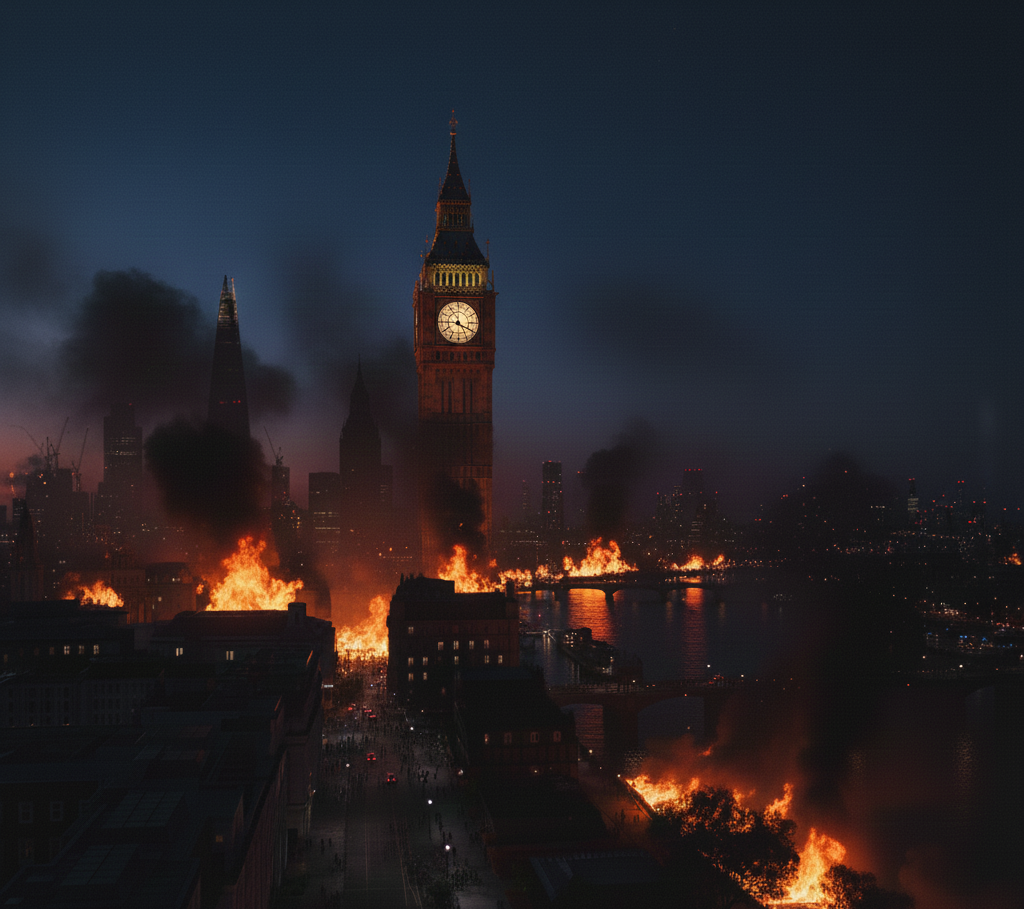
A 72-hour power outage is not just “lights out.” It is a fast, physical stress test of everything the UK treats as normal: tap water, phone signal, card payments, refrigeration, traffic control, health care, fuel, and public order.
This is a counterfactual, but the dependencies are real. When mains electricity goes, backup systems take over. Some last hours. Some last days. Some fail quietly because a single missing link—fuel delivery, staffing, communications—breaks the chain.
This piece walks through what would likely happen in the first 72 hours, what the government and operators would try to do, and where the real bottlenecks appear.
“The story turns on whether the country can keep fuel, communications, and public trust intact long enough to restart the system safely.”
Key Points
A national-scale outage would spill into telecoms, water, sewage, payments, transport, and fuel within hours, because most systems assume the grid is there.
The first crisis is not darkness. It is information: patchy signal, dead routers, drained batteries, and rumors filling the gaps.
The second crisis is fuel logistics. Generators work until diesel deliveries don’t.
Cities feel it differently than rural areas: density, elevators, high-rise water pumps, and traffic systems become chokepoints.
Restarting a transmission system is not a switch flip. Restoration would likely be staged, uneven, and confusing to the public.
The UK’s resilience tools exist, but the human factors—fear, patience, neighborliness, opportunism—decide whether the response feels orderly or chaotic.
Background
Start with a simple distinction. “The UK” is not one electrical island in the same way everywhere. Great Britain’s transmission system moves power across England, Scotland, and Wales. Northern Ireland’s power system is tied into an all-island market and operation with the Republic of Ireland, so a failure that takes down Great Britain does not automatically mean Northern Ireland goes dark too. In this scenario, assume the outage hits Great Britain nationwide, while Northern Ireland faces knock-on disruption through fuel, supply chains, and communications rather than an identical grid failure.
Next, define the point of divergence.
Assume a cold winter weekday. Demand is high. Earlier that day, a routine operational change has been made on part of the high-voltage system. Later, a physical fault hits a critical node. Protection systems do what they are designed to do: they isolate danger fast. But fast isolation can also trigger fast imbalance. The system starts shedding load to protect itself. Then it trips wider. Within minutes, much of Great Britain loses mains electricity.
What is known: a complete failure of the national transmission system is treated as a low-likelihood but high-impact risk, precisely because electricity loss can cascade into other critical services.
What is uncertain: the exact trigger, the exact sequence of trips, and how cleanly the system can be restarted depend on the cause, the weather, the state of infrastructure, and what fails next.
Finally, note what people can realistically rely on. Many households have no cash, limited bottled water, and a fridge full of food that assumes uninterrupted power. Many essential services have backup generators, but those generators run on fuel and maintenance, not optimism. Public guidance exists for power cuts, including the UK-wide power cut reporting number and support registers for vulnerable customers, but a nationwide outage changes the communications game because the internet and mobile networks may degrade alongside the grid.
Analysis
Political and Geopolitical Dimensions
The immediate political problem is legitimacy under uncertainty. The public wants two things fast: a clear explanation and a credible timeline. In a nationwide outage, both are hard. Early messaging would be cautious because operators will not promise a restoration time until they understand what broke and whether restarting will re-break it.
The UK’s response machinery is designed to coordinate across central government, devolved administrations, emergency services, local authorities, and infrastructure operators. In practice, a 72-hour outage pressures the seams between them. Scotland, Wales, and regions of England will have different local conditions, different critical sites, and different restoration progress. Northern Ireland becomes a special case: it may have power but still face shortages of fuel, cash access, and supplies if Great Britain is disrupted. That unevenness becomes political fuel of its own.
Internationally, the outage is not “geopolitics” in the classic war sense, but it has geopolitical consequences. The UK would likely seek technical support, spare parts, or specialist engineering capacity where available. If the trigger looked malicious, the government would also have to manage attribution risk: saying too much too early can be wrong, and saying too little can look like concealment. Either way, hostile actors—state or non-state—would exploit the information vacuum with fabricated screenshots, fake advisories, and claims of sabotage.
The most destabilizing political dynamic is simple: if people believe the system is fair, they wait. If they believe it is arbitrary or biased, they improvise in ways that make recovery harder.
Economic and Market Impact
The first economic hit is transactions. When card terminals die and ATMs stop, commerce snaps back to cash overnight. Many people do not have enough. Businesses that can open cannot always sell. Businesses that can sell cannot always restock. Even where power returns intermittently, payment systems may lag.
The second hit is spoilage and cold chains. Supermarkets and distribution centers are built around refrigeration and just-in-time logistics. A few hours is inconvenience. A full day is triage. By day two, stores that open will likely ration, not because they want to, but because resupply and payment are unstable.
Fuel becomes the enabling commodity. Without power, fuel stations cannot pump. Without fuel, generators stop. Without generators, critical services shrink to the narrowest core. A well-managed response will prioritize fuel for emergency services, hospitals, water and wastewater operations, and critical logistics. That is rational. It also looks brutal to anyone stuck in an apartment with no elevator and a family member who needs powered medical equipment.
Markets themselves are a question mark. Some parts of finance can operate from redundant sites and generators. But if telecoms are degraded and staff cannot travel safely, trading and settlement may be curtailed. The practical point is not whether a specific exchange closes. The practical point is that complex modern finance assumes clean power and clean connectivity, and in a nationwide outage the priority shifts from profit to continuity.
The third-order effect is business confidence. Even if the lights return on hour 60, the memory of fragility lingers. Firms review business continuity plans. Insurers review exposure. Data centers, factories, and retailers re-price risk. Some investment decisions pause, not forever, but long enough to matter.
Social and Cultural Fallout
The first night feels like novelty in some places. Candles come out. Neighbors check on each other. The sky is darker. In many streets, it is almost peaceful.
By morning, novelty drains away. People wake to dead phones, no hot water, and no easy news. Elevators are still stuck. Electric-only heating and cooking become daily hardship. In high-rise buildings, water pressure may drop if pumps cannot run. People with limited mobility become trapped by stairs. Care routines break.
Social behavior splits into three patterns.
One: quiet mutual aid. People share batteries, food, and information. They look after the elderly. They form queues. They keep things calm.
Two: anxious self-protection. People hoard fuel, bottled water, and cash. They drive to find signal. They overwhelm the few places that are open. They call emergency lines for non-emergencies because there is no other channel.
Three: opportunism. Most people do not riot. But a small fraction will exploit the situation: theft from closed shops, scams, fake “official” messages, price gouging, and intimidation in queues.
Culturally, the outage becomes a story about competence. Not just government competence—system competence. The UK is used to high reliability. When a basic utility fails nationwide, people do not just feel uncomfortable. They feel betrayed. That emotional texture affects compliance, patience, and the risk of disorder.
Technological and Security Implications
A national-scale outage is a reminder that “digital” is still physical. Fiber cabinets need power. Mobile masts need power. Data centers have generators, but they also need fuel and staff. Home broadband dies quickly because routers die and street cabinets lose power.
Water and sewage are the next quiet cliff. Treatment works and pumping stations often have backup, but they are not designed to run indefinitely without resupply. If pressure drops, sanitation becomes a public health issue fast. The first public health priority is preventing dehydration and disease, not saving frozen food.
The grid restart is the hardest technical task in the story. You cannot simply energize everything at once. You need generation online, frequency controlled, and load added carefully. Operators aim to rebuild a stable “skeletal” network first, then expand. That means restoration can look unfair: one area gets intermittent power while another stays dark, not because anyone is punishing anyone, but because stability and safety dictate the order.
Security has two faces here.
One is classic public safety: dark streets, non-functioning alarms, and a stretched police presence.
The other is cyber and misinformation: as systems come back online, they are vulnerable to rushed changes and human error. If the original trigger involved cyber disruption, the restart itself becomes a crime scene, and every decision slows because evidence matters. Even if the trigger was purely technical, bad actors will still exploit the confusion with fake advisories and impersonation.
What Most Coverage Misses
The outage is not primarily an electricity story. It is a fuel story.
A generator is a machine that turns fuel into time. Hospitals, telecom networks, water systems, and emergency coordination centers can run—until the fuel schedule breaks. The hard part is not owning generators. The hard part is delivering diesel through dark junctions, disrupted supply chains, and overwhelmed roads, while also protecting the deliveries.
The second overlooked factor is “restoration psychology.” Staged restoration is technically sensible but socially explosive. People do not experience “grid stabilization.” They experience “my house is still dark.” If messaging is unclear, people fill the gap with theories. Those theories change behavior, and behavior changes the load profile, which can make restoration harder.
The third is that resilience is local before it is national. The UK’s formal structures matter, but what decides comfort and safety is often hyperlocal: which community center has a working generator, which pharmacy can open, which neighborhood has a volunteer network, and which streets have a fragile population behind closed doors.
Why This Matters
The people most affected are not a vague “everyone.” They cluster.
Urban high-rises with electric-only systems face fast hardship: elevators, water pumps, and heating all become problems at once. People with medical equipment powered at home face risk within hours if backup plans are weak. Rural areas can be isolated if fuel and supplies cannot reach them, even if restoration arrives earlier.
Short term, the key risks are dehydration, cold exposure in winter, food safety failures, and delayed emergency response because communications and transport are degraded.
Long term, the risks are trust and investment. A 72-hour outage would trigger reviews of infrastructure resilience, backup fuel policy, telecom standards, and emergency communications. It would also change household behavior, at least for a while, in the same way major storms change how people think about preparedness.
In the next 72 hours of this scenario, the concrete things to watch are operational, not political theater: whether broadcast radio remains stable, whether water pressure holds, whether fuel deliveries stay organized, and whether restoration begins as an expanding island of stable power rather than flickering chaos.
Real-World Impact
A nurse in South London finishes a night shift and finds the lift out of service. Her phone is at 12%. She cannot call her child’s school. The stairwell is crowded and dim. On the street, traffic lights are dead and drivers are inching forward by eye contact. Her hospital is running on backup, but she has no way to know whether her neighborhood will get power tonight or in two days.
A warehouse manager in the Midlands has stock, forklifts, and staff ready. But the loading bays are dark, the security shutters are stuck, and the payment terminals are dead. The first day is paperwork and waiting. The second day becomes a choice: send people home or keep them onsite to protect inventory and coordinate by radio like it is 1993.
A dairy farmer in Cumbria can keep milking for a short time on generator power, but refrigeration is the choke point. If the cooling system can’t run, the milk becomes waste. The farmer’s fuel tank becomes a countdown clock. If the local roads are blocked by accidents at unlit junctions, the fuel delivery may not arrive even if it exists on paper.
A couple in Belfast still has mains power, but their normal life still degrades. A relative in Liverpool cannot be reached. Online banking is patchy. Supermarket deliveries from Great Britain are delayed. Cash withdrawals become harder. The grid might be fine, but the UK’s economic bloodstream is not.
What If?
A 72-hour power outage in Great Britain would not be a single disaster. It would be a cascade of small failures that compound: batteries dying, pumps stalling, payments freezing, fuel schedules slipping, and trust thinning out.
The central tension is not whether the country has the technical skill to restore electricity. It does. The tension is whether the response can keep critical services supplied and the public informed well enough to avoid panic behavior that makes restoration slower and more dangerous.
The signs that reveal which way it’s breaking are practical and visible: stable radio updates, orderly fuel prioritization, functioning water pressure, and a restoration pattern that expands steadily instead of flickering unpredictably.
