

US Marines Surge Toward Iran as 10,000-Troop Option Looms: The Moment the War Could Turn on the Ground
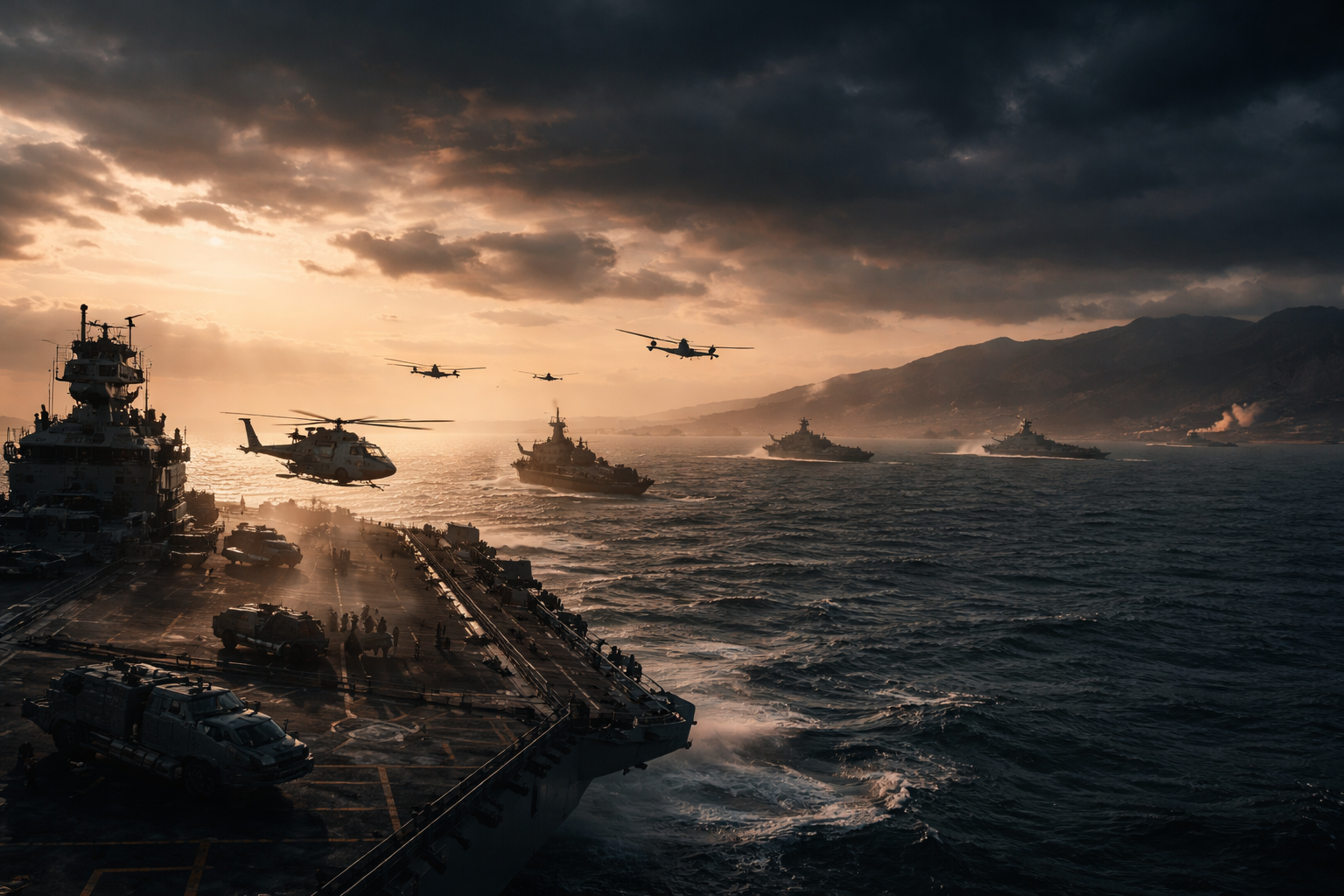
From Airstrikes to Boots on the Ground: Is the US Crossing the Line?
10,000 Troops on Standby: The Moment the Iran War Could Turn
The United States is rapidly increasing its military presence in the Middle East, with thousands of Marines already deployed and plans under consideration to send up to 10,000 additional troops.
This is not just reinforcement. It signals preparation for a possible shift from an air war into limited ground operations inside Iran—a move that would fundamentally change the conflict’s scale, risk, and global impact.
The buildup includes Marine Expeditionary Units, airborne infantry, and amphibious assault capabilities—forces specifically designed for rapid entry and short, high-impact ground missions.
The key question now is no longer whether the US can escalate. It is whether it chooses to.
The story turns on whether Washington crosses the line from pressure to occupation.
Key Points
Thousands of US Marines are already in or moving toward the Middle East, with additional airborne troops on standby.
The Pentagon is actively preparing for “weeks of ground operations,” though no final approval has been given.
Up to 10,000 additional troops could be deployed, dramatically increasing US combat capability in the region.
Current deployments include rapid-response forces designed for coastal assaults and targeted strikes—not full occupation.
Iran has already retaliated with missile and drone strikes, including attacks on US bases.
Analysts suggest a full-scale invasion remains unlikely—but limited ground incursions are now firmly on the table.
The Build-Up That Changes the Equation
The US has been steadily increasing its military footprint since late January, deploying carrier strike groups, air assets, and expeditionary forces across the region.
Now, the composition of forces is shifting.
Marine Expeditionary Units—like those arriving aboard amphibious assault ships—are not defensive assets. They are designed for:
Seizing coastal territory
Conducting raids
Holding strategic positions briefly
Elements of the 82nd Airborne Division—America’s rapid-response infantry—are positioned alongside them for potential insertion into contested zones.
This combination matters. It signals preparation for short-duration, high-intensity ground operations, not just air dominance.
From Air Campaign to Ground Reality
The conflict began with overwhelming airpower—precision strikes on Iranian infrastructure, military sites, and leadership targets.
That phase achieved two things:
Degraded Iran’s conventional capabilities
Triggered asymmetric retaliation
Iran has responded with missile strikes, drone attacks, and pressure on global shipping routes, including disruption of the Strait of Hormuz. The narrative hinges on whether Washington transitions from exerting pressure to establishing an occupation.
Air campaigns can punish. They rarely end wars.
Ground forces, even limited ones, change the logic entirely:
They create physical control
They expose troops to sustained risk
They force escalation decisions in real time
Why 10,000 Troops Matters (And Why It Doesn’t)
On paper, 10,000 troops sounds like a major escalation.
In reality, it is not enough for a full-scale invasion of Iran.
For context:
Iraq 2003 invasion: ~150,000+ US troops
Afghanistan peak deployment: ~100,000
What 10,000 troops enable:
Raids on strategic targets (e.g., nuclear sites)
Seizure of key infrastructure (e.g., oil terminals, islands)
Limited territorial control for leverage
What it does not enable:
Regime change through occupation
Nationwide control
Long-term stabilization
This is the middle ground: escalation without full commitment.
The Strategic Targets Driving This
The troop positioning aligns with specific objectives already discussed in military planning circles:
Kharg Island — Iran’s primary oil export hub
Strait of Hormuz — a chokepoint for ~20% of global oil flows
Nuclear material recovery or containment operations
These are not symbolic targets. They are economic and strategic pressure points.
Seizing or disrupting them would:
Hit Iran’s revenue directly
Influence global energy markets
Force diplomatic concessions
But they also come with risk:
Missile saturation attacks
Drone swarms
Regional escalation involving proxy groups
What Most Coverage Misses
The real hinge is not troop numbers. It is mission design.
Most coverage frames the issue as a binary:
War vs no war
Ground invasion vs air campaign
That is outdated thinking.
Modern US doctrine increasingly favors limited ground operations integrated with airpower, designed to achieve specific objectives without long-term occupation.
This approach matters because the following:
It lowers the political threshold for deployment
It increases the likelihood of “just enough” escalation
It creates a path where war expands without formally becoming a full-scale invasion
In other words, the presence of Marines does not mean Iraq 2003.
It may mean something more surgical—and more unpredictable.
The Power Shift Now Underway
The deployment changes leverage on both sides.
For the US:
More credible threat of escalation
Greater flexibility in military options
Increased pressure on Iran to negotiate
For Iran:
Justification for broader retaliation
Opportunity to exploit US exposure
Ability to escalate through proxies across the region
The battlefield is no longer just Iran.
It now spans:
Gulf shipping lanes
Israel and Lebanon
Saudi Arabia and regional bases
The Real-World Stakes
This is not an abstract escalation.
If ground operations begin:
US casualties become far more likely
Oil prices could spike sharply
Global shipping disruptions could intensify
Regional conflict could widen rapidly
Even limited ground engagements carry disproportionate risk.
One miscalculation—one major loss—can trigger escalation chains that are difficult to contain.
What Happens Next Depends on One Decision
There are now three clear paths:
1. Limited Ground Raids
Short operations targeting infrastructure or materials
High risk, but controlled timeline
2. Sustained Ground Presence
Weeks-long operations with rotating forces
Increased exposure and escalation
3. Continued Air War Only
Pressure without occupation
Lower immediate risk, slower results
The signals to watch:
Deployment of armored units (not just Marines)
Forward positioning near Iranian coastline
Official authorization of ground operations
The scale of the next move will define the war’s trajectory.
Because once troops cross from staging to engagement, the conflict stops being a campaign and becomes a commitment.
