

Would a US Nuclear Strike on Iran Trigger World War III?
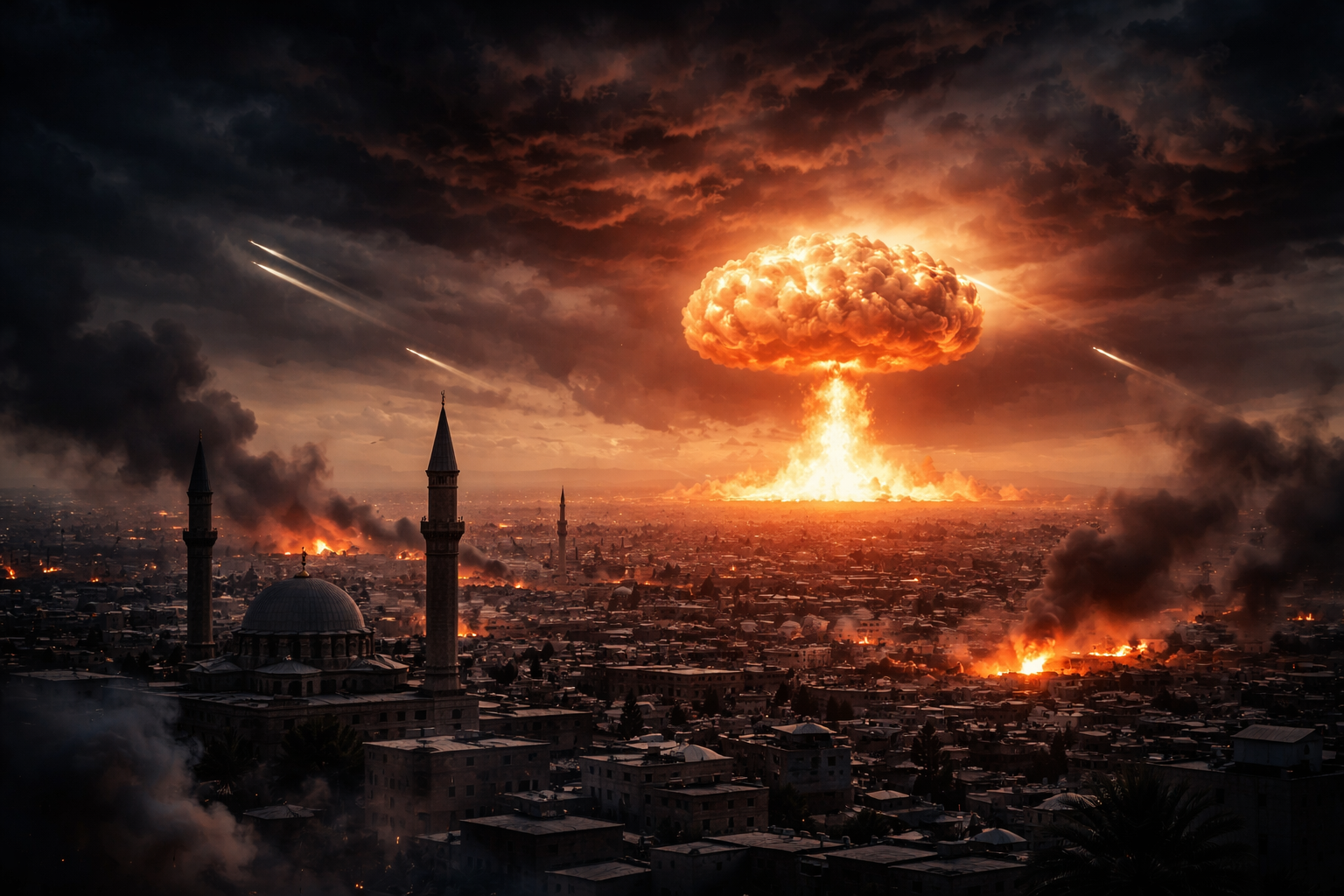
If America Nukes Iran, Here’s What Happens Next
Would the U.S. Ever Nuke Iran? The Real Scenario—and the Global Fallout
The United States is already in an escalating conventional conflict with Iran—airstrikes, proxy attacks, and regional spillover are happening now.
But the question you’re really asking is sharper: could this escalate to nuclear weapons—and what happens if it does?
Short answer: Yes, the U.S. could physically do it. But it is extremely unlikely—and the consequences would be catastrophic globally.
The overlooked hinge: a nuclear strike wouldn’t solve the problem—it would likely trigger a wider war the U.S. cannot control.
The story turns on whether decision-makers believe escalation can be contained once nuclear weapons are used.rrent War Isn’t Theoretical
The U.S. and Israel are already targeting Iran’s:
Nuclear infrastructure
Missile systems
Leadership and military assets
Iran and its allies—Houthis, Hezbollah, and others—are retaliating across the region.
This matters because:
Nuclear escalation doesn’t start from peace. It starts from wars like this.
Could the U.S. Actually Use Nuclear Weapons?
Technically, yes.
The U.S. maintains nuclear weapons designed for:
Deep underground targets (like Fordow)
Hardened military sites
Iran’s nuclear facilities are heavily fortified underground, and even advanced “bunker buster” bombs have limits.
That creates a theoretical military argument:
If conventional weapons can’t destroy the target, nuclear weapons can.
But here’s the reality:
The U.S. has never used nuclear weapons since 1945
Doing so would break a global taboo held for 80+ years
This is not just military—it’s civilizational-level decision-making
What Happens If the U.S. Nukes Iran? (Immediate Effects)
1. Mass Casualties + Shockwave Across the Region
Even a “tactical” nuclear strike would:
Kill tens to hundreds of thousands
Cause long-term radiation damage
Destroy infrastructure permanently
This is not a surgical strike—it’s irreversible.
2. Full Middle East War
Iran would not respond conventionally in a limited way.
Likely response:
Missile strikes on U.S. bases (Saudi Arabia, UAE, Iraq)
Attacks on Israel
Activation of proxies across the region
We’re already seeing early signs of this network mobilizing.
A nuclear strike turns that into total regional war.
3. Global Oil Shock (Immediate Economic Crisis)
The Strait of Hormuz handles a massive portion of global oil supply.
Already under threat in the current war.
If nuclear weapons are used:
Oil prices could spike dramatically
Shipping routes shut down
Global recession risk spikes within days
4. Nuclear Proliferation Explosion
This is the biggest long-term consequence.
Right now:
Iran may not have a nuclear weapon
But it has the material and knowledge to build one
If nuked, every country learns the same lesson:
“If you don’t have nukes, you’re vulnerable.”
Result:
Iran rushes to build nuclear weapons (if possible)
Saudi Arabia, Turkey, others follow
Global non-proliferation collapses
What Most Coverage Misses
The key mistake people make is thinking a nuclear strike would “end” the problem.
It doesn’t.
Even massive U.S. strikes in 2025–2026:
Damaged Iran’s nuclear program
But did not eliminate the knowledge or capability
And experts are clear:
Airstrikes alone don’t topple regimes
Iran would likely survive, battered but intact
Here’s the real mechanism:
A nuclear strike strengthens Iran’s incentive to become nuclear, not removes it.
So instead of stopping proliferation, it accelerates it.
That’s the strategic trap.
Would Russia or China Get Involved?
Not immediately with nuclear weapons—but escalation is guaranteed.
Likely moves:
Russia condemns and increases military support to Iran (already warning about nuclear risks)
China backs Iran economically and diplomatically
Both push against U.S. influence globally
This becomes:
A geopolitical fracture point—not just a regional war
What Happens Next: The Real Fork in the Road
There are three realistic paths from here:
1. Contained War (Most Likely)
Continued airstrikes
Proxy fighting
No nuclear use
2. Regional War Expansion
Gulf states drawn in
Shipping collapse
Global economic shock
3. Nuclear Escalation (Low Probability, Extreme Impact)
One nuclear strike
Rapid escalation risk
Long-term global instability
The Bottom Line
The U.S. can nuke Iran.
But doing so would
Not eliminate the threat
Not end the war
Likely trigger a wider, more dangerous conflict
And most critically:
It would break the nuclear taboo that has held the world together since World War II.
That’s why—even in a rapidly escalating war like now—
nuclear use remains the last line, not the next step.
