

Who Is Nicolás Maduro? And Why Trump Wanted Him Captured
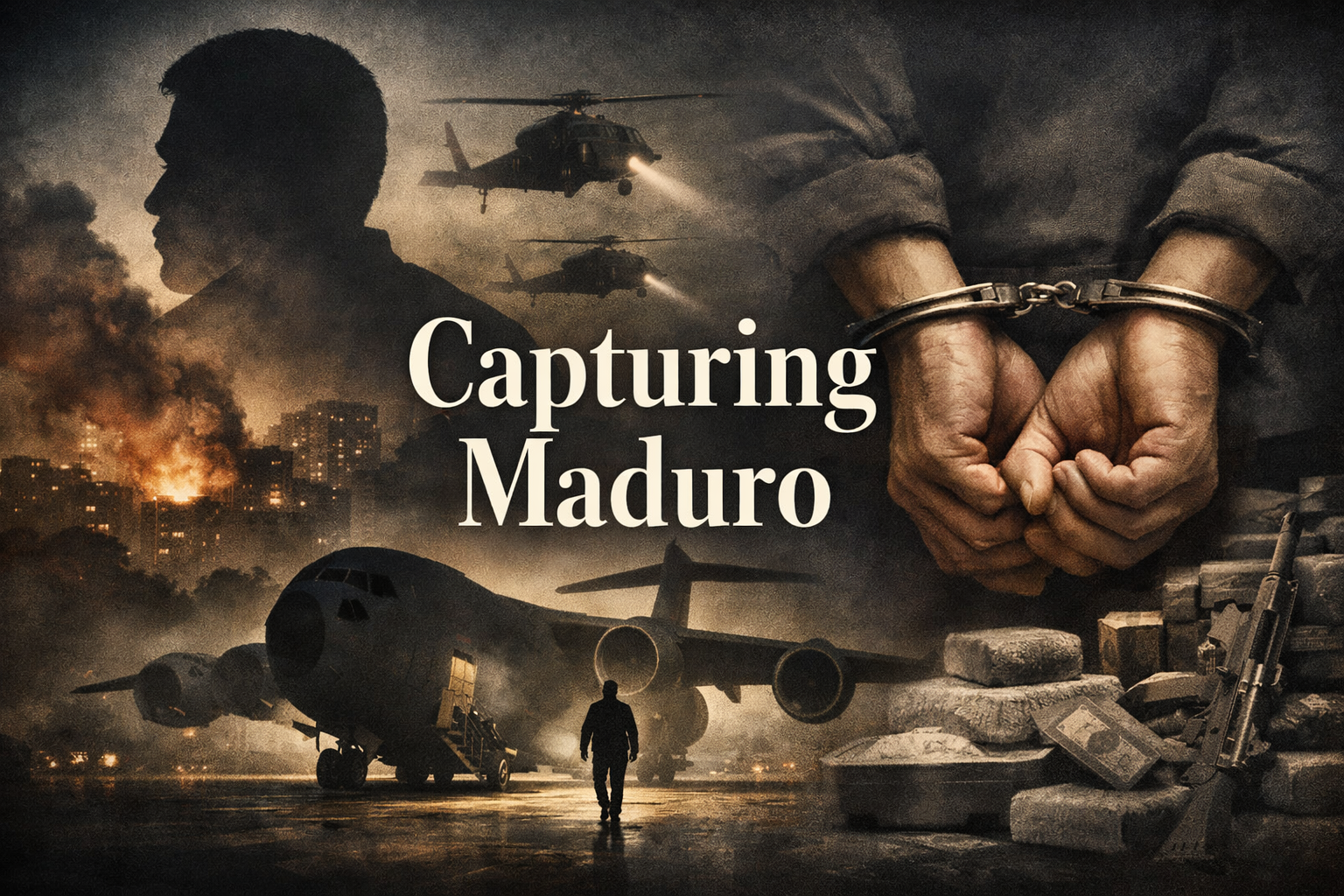
As of January 3, 2026, President Donald Trump says U.S. forces captured Venezuelan President Nicolás Maduro and flew him out of the country after overnight strikes and explosions in and around Caracas. Venezuela’s government has not publicly confirmed that Maduro is in U.S. custody, and senior officials have demanded proof of life and clarity on his location.
That uncertainty sits on top of a longer, clearer story: Maduro has been at the center of a U.S. law-enforcement and national-security campaign for years. Trump’s team has framed Maduro as the leader of a “narco-state”, accused him of protecting or partnering with transnational criminal groups, and backed those claims with U.S. indictments and a large reward tied to his arrest.
This piece explains who Maduro is, how he rose to power, what the U.S. says he did, and why “capture” became the chosen lever. By the end, the reader will understand the legal case, the geopolitical stakes, and the plausible next moves on all sides.
“The story turns on whether Maduro’s capture becomes a contained arrest—or the trigger for a wider regional crisis.”
Key Points
Nicolás Maduro has led Venezuela since 2013, inheriting power after Hugo Chávez and presiding over an era defined by political hardening, international isolation, and deep economic pain for ordinary Venezuelans.
The United States has pursued Maduro through criminal charges since 2020, accusing him and close allies of major drug-trafficking conspiracies and related offences.
Under Trump’s second-term pressure campaign, the U.S. raised a reward for information leading to Maduro’s arrest, making “capture” a central instrument rather than a rhetorical threat.
Trump’s stated rationale mixes law enforcement and national security: drugs, alleged links to violent gangs, and claims that Maduro’s state protects trafficking routes.
Critics argue that arresting a sitting head of state through force blurs the line between policing and intervention, risking blowback across Latin America and global markets.
What happens next depends on verification, succession dynamics inside Venezuela’s security apparatus, and whether Washington treats this as an endpoint or a first step.
Background
Nicolás Maduro is a Venezuelan politician and long-time Chávez loyalist who became president in 2013 after Chávez’s death. His personal origin story is unusually “everyday” for a head of state: a former bus driver and union organizer who climbed the political ladder through the movement that Chávez built. Under Chávez, Maduro became foreign minister, then vice president, and finally the chosen successor.
Two overlapping battles have defined Maduro's rule. The first is internal: maintaining control over a country with collapsing living standards, recurring protest waves, and a fractured opposition. The second is external: surviving sustained pressure from the United States and other governments that have challenged the legitimacy of Venezuelan elections and the conduct of the state.
The U.S. approach hardened into something unusually explicit in 2020, when American prosecutors unsealed criminal cases accusing Maduro and senior figures around him of narco-terrorism and drug-trafficking conspiracies. In that framing, Maduro is not simply an authoritarian rival; he is treated as the alleged head of a criminal enterprise that used state power to enable trafficking routes and protect partners.
Trump’s “capture” posture flows from that premise. If the U.S. defines Maduro as a criminal defendant rather than a normal counterpart head of state, then arrest becomes a logical endpoint of policy rather than a taboo. Raising rewards and publicizing indictments turns the policy into a manhunt with a legal wrapper—and a political message.
Analysis
Political and Geopolitical Dimensions
Maduro’s power has rested on loyalty inside the security services, control over key institutions, and an opposition that often struggles to turn electoral momentum into a transfer of power. Internationally, his survival has depended on a mix of allies, transactional relationships, and the difficulty of coordinating sustained pressure across many capitals with competing interests.
Trump’s approach—if it is truly moving from pressure to capture—changes the regional calculus. Latin American governments that dislike Maduro may still recoil from direct U.S. force on sovereign territory, especially given the region’s memory of past interventions. Even sympathetic leaders may worry about the precedent: today it is Venezuela; tomorrow, the logic could be applied elsewhere.
For Washington, the incentive is clarity and finality. Sanctions and recognition battles can grind on for years. An arrest, by contrast, is decisive—if it holds. But it is also combustible: if the capture is disputed or produces civilian harm, Maduro’s system can reframe itself as the victim of foreign aggression and rally fractured factions around survival.
Scenarios to watch:
A verified custody outcome, followed by rapid diplomatic efforts to stabilize Venezuela and press for a transitional path.
A contested custody outcome that fuels emergency rule in Caracas, crackdowns, and regional diplomatic rupture.
A leadership reshuffle inside Maduro’s coalition that preserves the system while cutting a deal to reduce pressure.
A longer, messier escalation cycle—tit-for-tat actions, economic disruption, and a new migration spike.
Economic and Market Impact
Venezuela’s oil and mineral wealth is the constant undertow in every crisis narrative around the country. Markets do not need a full-scale war to reprice risk; they just need uncertainty about production, shipping, insurance, and sanctions enforcement.
If Maduro is truly removed from command, some investors will immediately ask whether sanctions could loosen and whether production could rise. Others will price in the opposite: instability, sabotage, or a hardline successor who doubles down on confrontation. The same event can produce wildly different market expectations depending on who controls the oil apparatus the next morning.
For Venezuelans, the economics are more brutal and more direct. Any shock that disrupts electricity, transport, or imports hits daily life quickly. And any political crackdown tends to create a second-order economic effect: people self-restrict movement, small commerce slows, and families accelerate plans to leave.
Social and Cultural Fallout
The social impact of “capture politics” is not abstract. In Venezuela, fear and uncertainty change behavior fast: people stay home, queue for essentials, and move cash or goods if they can. In the diaspora, families abroad scramble for reliable information, worried about relatives, travel, and remittances.
A capture claim also polarizes narratives. Maduro’s supporters hear an argument about sovereignty and resistance. His opponents hear an argument about accountability and the end of impunity. In that environment, misinformation spreads easily, especially during internet disruptions or state messaging pushes.
The risk is that the country’s already-frayed social fabric absorbs another shock without any trusted institution left to arbitrate truth. That is how crises become self-perpetuating: not because people want chaos, but because they cannot coordinate on reality.
Technological and Security Implications
Modern power struggles are fought through logistics and information as much as weapons. Control of airports, ports, telecom infrastructure, and broadcast channels can matter more than a single battlefield outcome.
If Maduro’s location is unverified, Venezuela’s leaders will likely treat communications as a threat vector. Expect pressure on media, tighter control of networks, and an aggressive effort to shape the story domestically. On the U.S. side, the operational details will matter for legitimacy: whether this is presented as a narrowly targeted arrest tied to specific criminal cases or as a broader military action intended to break the regime.
A crucial technical constraint is continuity of command. If top-level leadership is removed or disrupted, the next layer down has to decide whether to cooperate, resist, or splinter. That decision is shaped by incentives: personal safety, asset exposure, fear of prosecution, and confidence that any deal will be honored.
What Most Coverage Misses
The overlooked hinge is that “capture” is not just about Maduro—it is about the incentives of everyone around him. A reward, an indictment, and a public manhunt change how insiders calculate loyalty. People become less sure that sticking with the leader is the safest option, and more sure that staying visible could make them next.
That dynamic can cut two ways. It can crack a coalition if elites begin to defect or negotiate. Or it can harden the coalition if insiders decide that surrender is impossible and the only rational move is to close ranks and fight.
The other missed factor is legal framing. Calling this law enforcement does not automatically make it feel like law enforcement to the region. If the U.S. wants this to end rather than escalate, it will need the next steps—detention, charges, hearings, diplomacy—to look predictable, bounded, and consistent with stated rules. Ambiguity is gasoline.
Why This Matters
In the short term, the most affected people are Venezuelans in and around Caracas and key coastal and industrial states—anywhere disruptions hit power, fuel distribution, and security checkpoints. The next most affected are neighboring countries managing migration flows and security spillover, plus firms exposed to Caribbean shipping, energy trading, and sanctions compliance.
In the long term, this matters because it tests whether major powers can treat a sitting head of state as an arrest target without detonating the wider system. If this becomes a template, it will shape how other governments harden security, restrict travel, and reduce exposure to U.S.-linked financial and legal tools.
Concrete events to watch next include official proof-of-life demands and responses, announcements about who commands Venezuela’s armed forces, any emergency decrees, and the first verified legal steps in the U.S. process if Maduro is indeed in custody (charges reiterated, initial appearance procedures, and detention arrangements).
Real-World Impact
A small shop owner in Maracaibo wakes up to patchy electricity and rumors of roadblocks. She cancels a supplier run, knowing one day of disruption can wipe out the week’s margin on perishable stock.
An energy risk analyst in Houston watches shipping alerts and insurance chatter. The question is not ideology; it is whether tankers can load, whether ports function, and whether sanctions rules change overnight.
A Venezuelan nurse in London checks her phone between patients, trying to reach family in Caracas. Uncertainty is the stressor: not knowing if relatives are safe, whether banks will process remittances, or whether travel will become impossible.
A compliance manager at a European shipping insurer reviews exposure and clauses. One misstep—covering the wrong cargo, paying the wrong counterparty—can become a legal nightmare, even if the business never set foot in Venezuela.
The Road Ahead
Maduro is not just a president; he is the node that holds together a system of security loyalty, political control, and international standoffs. That is why Trump’s team has treated him as a capture target: it compresses a sprawling policy problem into a single decisive act.
But decisive acts do not always produce decisive outcomes. If Maduro is truly in U.S. custody and that fact becomes undeniable, Venezuela’s power structure will face a succession test under pressure. If custody is disputed, or if the operation is perceived as open-ended intervention, the country could enter a more dangerous phase of emergency politics and retaliation.
The signs that will matter are simple and concrete: verified custody and location; who speaks for the armed forces; whether institutions keep functioning; whether new leadership offers concessions or crackdowns; and whether Washington signals an off-ramp that looks like an endpoint rather than a prelude.
