

Why 5,000 US Troops Leaving Germany Is Bigger Than It Looks
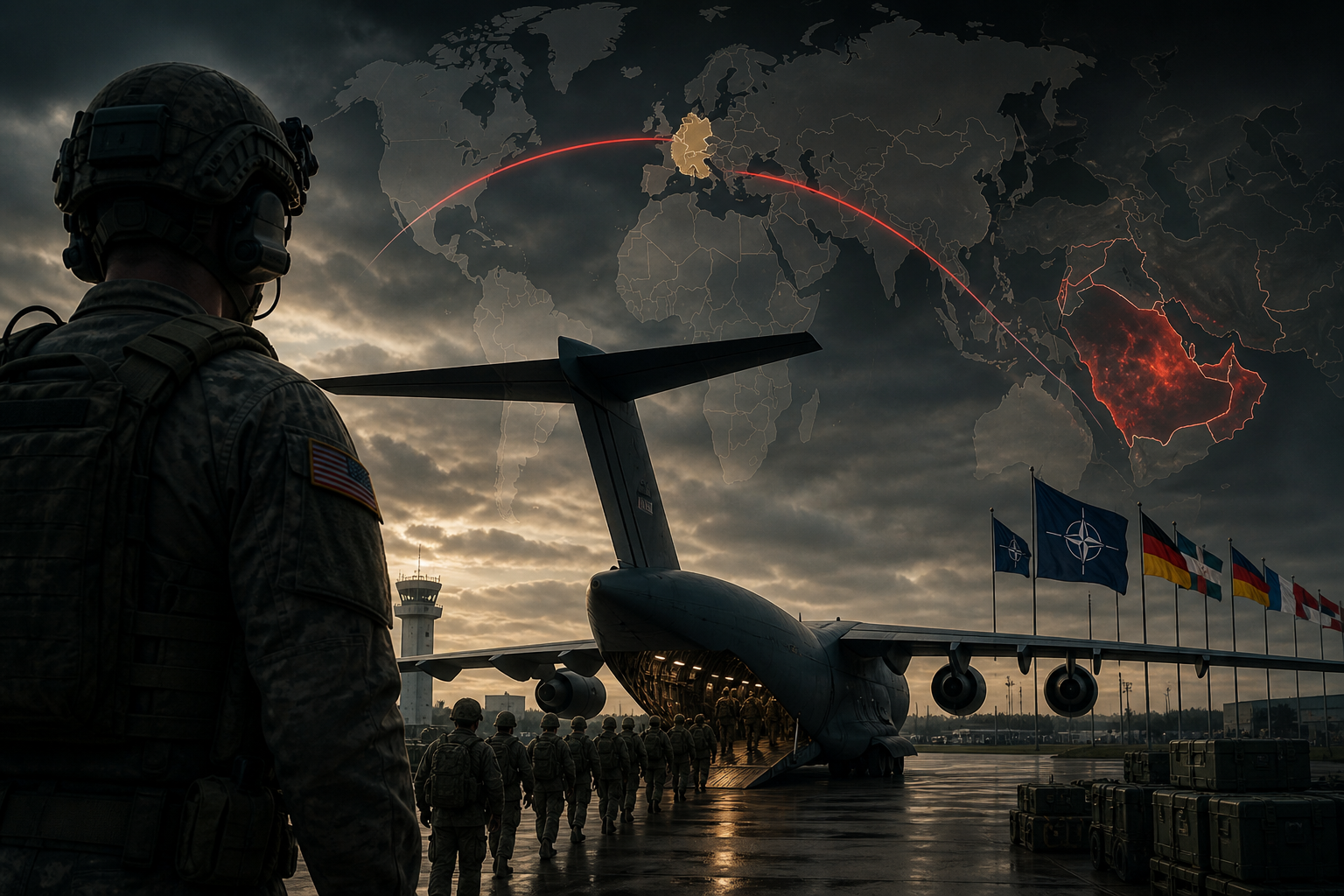
US Troop Withdrawal From Germany Exposes A Deepening NATO Rift
The Real Reason The US Is Pulling Troops From Germany—And What It Signals For NATO
The United States is pulling roughly 5,000 troops out of Germany — and on paper, it looks like a routine repositioning. In reality, it is something far more consequential. This is not simply about troop numbers. It is about trust, alignment, and the fragile balance inside NATO at a moment of rising global tension.
The Pentagon has confirmed the withdrawal will take place over the next six to twelve months, reducing the US military presence in Germany back toward pre-2022 levels. But the timing is what makes ththe Pentagon'sove impossible to ignore. It comes amid a widening rift between Washington and European allies over the ongoing conflict involving Iran.
What Has Actually Happened
Germany hosts the largest concentration of US forces in Europe — roughly 35,000 to 38,000 personnel before this decision. The withdrawal will remove a significant portion of that presence, including a brigade combat team, while also cancelling the planned deployments of additional capabilities.
The official explanation frames this as a “force posture review”—a standard reassessment of where troops are needed most. But that explanation only tells part of the story.
Behind the scenes, tensions between the US and key European allies have intensified sharply. German leadership has openly criticized US strategy in the Iran conflict, while Washington has accused European governments of failing to provide meaningful support.
This is not quiet diplomatic disagreement. It is public, strategic friction.
The Iran Factor — And Why It Matters More Than It Looks
At the center of this decision is the ongoing Iran crisis. The conflict has disrupted global energy routes, particularly through the Strait of Hormuz—a critical chokepoint for oil shipments.
The US has pushed NATO allies to contribute naval and logistical support to secure the region. Several European countries have resisted, either politically or operationally. That resistance has exposed a fundamental divide:
The US sees the conflict as a shared security issue
Some European nations see it as a US-led war they were not consulted on
This difference is not procedural — it is structural. It raises a more profound question about whether NATO still operates as a unified strategic alliance or as a coalition of increasingly divergent priorities.
Why Germany Matters More Than Any Other Country
Germany is not just another NATO member. It is the logistical backbone of US military operations across Europe, the Middle East, and parts of Africa.
Bases such as Ramstein function as critical hubs for command, transport, and coordination. Removing troops from Germany is not equivalent to moving forces from a peripheral location. It alters the infrastructure of US global power projection.
Even if the withdrawal returns troop levels to earlier baselines, the message is different now. The geopolitical environment has changed. Russia remains active in Eastern Europe. The Middle East is unstable. And NATO cohesion is under strain.
Reducing presence under these conditions is interpreted not as efficiency but as recalibration.
The Strategic Message Behind The Move
There are three overlapping signals embedded in this decision.
First, it is a pressure tactic. By reducing troop presence, the US is signaling dissatisfaction with allied contributions and attempting to force greater alignment.
Second, it reflects a broader shift in US military priorities. There is growing emphasis on flexibility, rapid deployment, and potential redeployment toward other theaters, including the Indo-Pacific.
Third, it suggests a more transactional approach to alliances. The traditional assumption — that US forces remain in Europe as a long-term guarantee — is quietly being tested.
What Most People Miss
The number “5,000” sounds large, but the deeper impact is psychological and strategic.
NATO has always relied not just on military capability but on credibility—the belief that member states will act together in a crisis. Moves like this introduce uncertainty into that equation.
If troop deployments can shift in response to political disagreements, then deterrence itself becomes less predictable. That matters not just for Europe but for adversaries watching closely.
The Risk For NATO
The immediate risk is fragmentation. Analysts warn that actions like this could accelerate European efforts to build independent defense capabilities, reducing reliance on the US.
In the long term, that could reshape NATO into something fundamentally different:
Less US-led
More regionally autonomous
Potentially less unified in crisis scenarios
At the same time, critics argue that reducing troop levels during ongoing geopolitical tensions, including instability in Eastern Europe, sends the wrong signal to rivals.
What Happens Next
The withdrawal will unfold gradually, giving both sides time to recalibrate. But the trajectory is clear. This is not an isolated decision. It sits within a wider pattern of strained relations, shifting priorities, and evolving military strategy.
There are already suggestions that further troop reductions in other European countries could follow if tensions persist.
That possibility transforms the situation from a single decision into a broader strategic pivot.
The Bottom Line
This issue is not just about Germany. It is about how the United States sees its role in Europe — and how Europe sees its relationship with the United States.
The withdrawal of 5,000 troops is a visible action. The real story is the invisible shift underneath it: a NATO alliance being tested, reshaped, and forced to redefine what unity actually means in a more volatile world.
