

Why The US Warning In Britain Signals A Deeper Security Shift
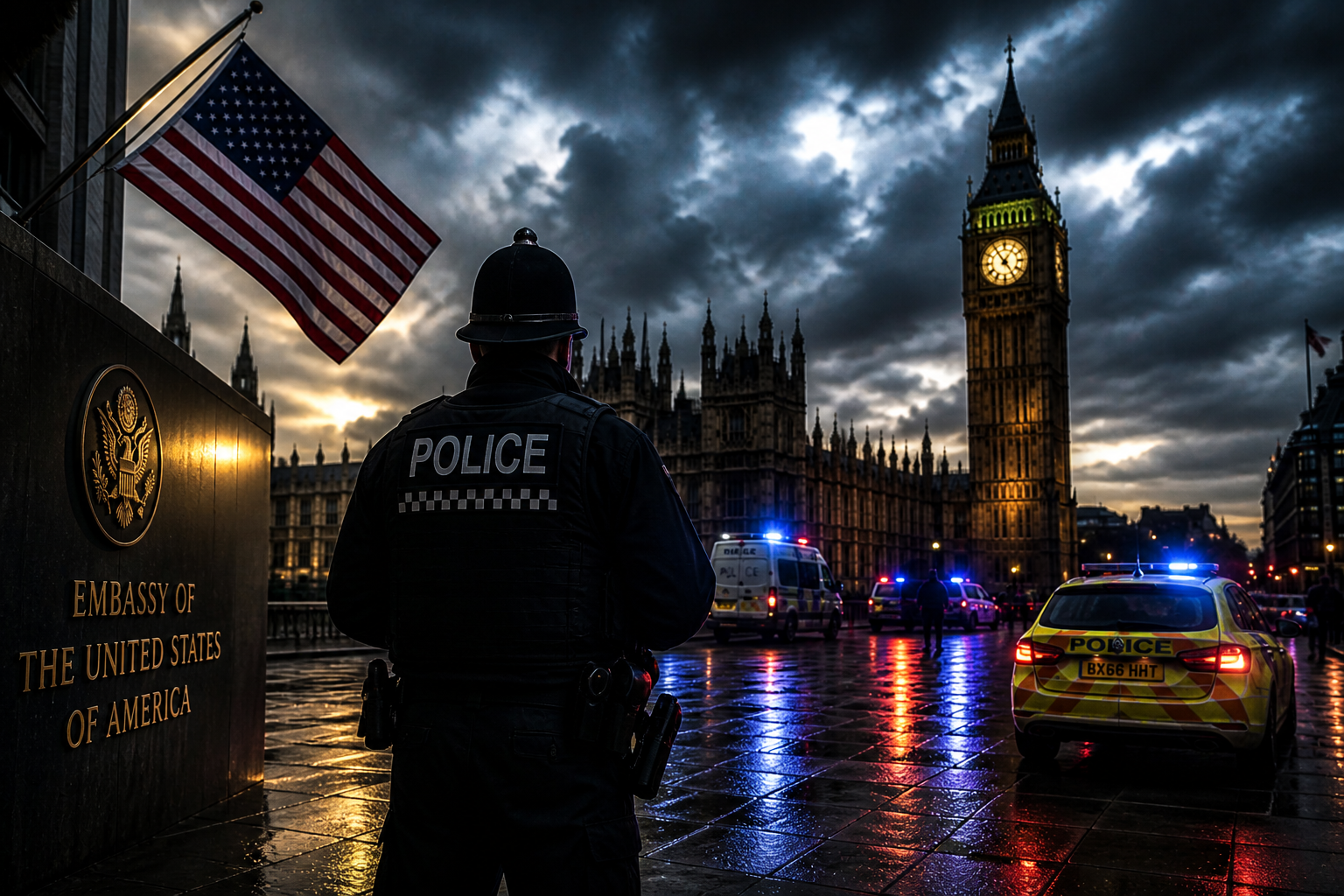
The Security Alert That Changed The Mood Overnight In The UK
The Warning Didn’t Come Out Of Nowhere—It Followed A Shift Britain Couldn’t Ignore
A single classification change has altered the way one of the world’s most stable countries is now being viewed. The United States has issued a security alert to its citizens in the United Kingdom, urging heightened vigilance after Britain raised its national terrorism threat level to “severe.”
That designation is not symbolic. It means an attack is considered highly likely.
The alert itself is measured in tone but sharp in implication. American citizens have been advised to stay alert in public places, avoid predictable routines, and remain cautious around locations such as schools, transport hubs, tourist sites, and places of worship.
This is not a warning about a specific imminent incident. It is something more subtle—and potentially more serious. It reflects a shift in the overall threat environment.
What Actually Changed
The UK’s Joint Terrorism Analysis Centre raised the national threat level from “substantial” to “severe,” marking the second-highest category in the country’s system.
In practical terms, that means intelligence agencies now assess that an attack is highly likely within the coming months, even if no exact target or timing has been confirmed.
This move was not triggered by a single event alone, but it followed a violent stabbing attack in north London that heightened concerns, particularly around targeted violence and antisemitic incidents.
Officials have also pointed to a broader pattern: rising threats from multiple ideological directions, including both Islamist extremism and far-right activity.
That dual-source threat profile is important. It signals a more complex risk landscape than the UK has faced in some previous periods.
Why The US Stepped In
The United States routinely issues security alerts for its citizens abroad, but the timing matters. This alert followed immediately after the UK’s threat level change, indicating alignment between British intelligence assessments and American risk evaluation.
The message is not that the UK is unsafe. It is that the risk baseline has shifted enough to justify behavioral caution.
The advice given—vary travel routes, avoid predictable patterns, and maintain a low profile—is standard counter-surveillance guidance. It is designed to reduce vulnerability in environments where attacks are possible but not specifically defined.
In effect, the alert is telling individuals to think like a security planner, not a tourist.
What “Severe” Really Means In Practice
The UK’s threat level system is designed to communicate risk without creating panic. “Severe” sits just below “critical,” which is reserved for situations where an attack is expected imminently.
Most people will not notice any immediate change in daily life. Shops remain open. Public transport continues. Cities operate as normal.
But behind the scenes, the shift is significant:
Increased police presence in key areas
Enhanced surveillance and intelligence monitoring
Greater scrutiny of events and public gatherings
Higher readiness across emergency services
For the public, the official guidance remains consistent: stay alert but not alarmed.
That phrasing is deliberate. It acknowledges risk without amplifying fear.
The Pattern Behind The Warning
The deeper story is not the alert itself. It is the trajectory that led to it.
Security agencies have indicated that the UK has been experiencing a gradual increase in terrorist threats over time, rather than a sudden spike.
That matters because gradual shifts are harder to detect in everyday life. There is no single moment when everything feels different. Instead, risk accumulates quietly until it crosses a threshold.
Recent tensions—both domestic and international—have contributed to that environment. These include:
Heightened geopolitical instability
Increased polarisation around global conflicts
A rise in targeted attacks linked to identity or ideology
Continued activity from both organised and lone actors
The result is a threat landscape that is broader, less predictable, and harder to contain through traditional methods alone.
What Most People Miss
It is straightforward to interpret a security alert as a reaction to one incident. That is rarely the complete picture.
Threat levels are based on intelligence assessments, not headlines. They reflect patterns, signals, and probabilities that are often invisible to the public.
The US alert is not saying an attack is imminent tomorrow. It is saying that the probability of an attack has moved high enough that behavior should adjust accordingly.
That distinction matters. It shifts the conversation from fear to preparedness.
It also explains why the guidance focuses on habits rather than locations. The emphasis is on unpredictability—because predictability is what attackers exploit.
The Human Reality Of A “High Likelihood” Threat
For most people living in or visiting the UK, daily life will not change dramatically. That is by design.
But the psychological impact is real. A “severe” threat level subtly alters how a country is perceived, both internally and internationally.
It affects how governments allocate resources.
It shapes how security agencies operate.
It influences how citizens consider routine decisions—where to go, how to travel, what to notice.
And it introduces a quiet tension: the need to stay aware without becoming constantly anxious.
What This Means Going Forward
The current situation is not static. Threat levels can rise or fall depending on intelligence, events, and broader global dynamics.
What is clear is that the UK is now operating in a higher-risk posture than it was just days ago. The US response confirms that this shift is being taken seriously beyond Britain’s borders.
For readers, the takeaway is not alarm. It is awareness.
Security alerts like these are not predictions. They are signals—indicating that the margin for complacency has narrowed.
The UK remains open, functioning, and active. But it is doing so under a different set of assumptions about risk.
And those assumptions, once changed, tend to linger longer than the headlines that first announce them.
Summary
The US security alert in the UK is not about a single threat. It is about a broader shift in risk perception. Britain’s move to a “severe” threat level reflects a complex and evolving security environment, shaped by multiple sources of extremism and rising tensions.
The real story is not panic or danger—it is preparedness. A reminder that even stable societies can move into higher-risk territory, often quietly, and often without a single defining moment.signals, indicating
