Why Does the Red Sea Loom Over Ethiopia’s Border Crisis?
The War In Tigray Has Reached The Town That Once Took Ethiopia And Eritrea To War.
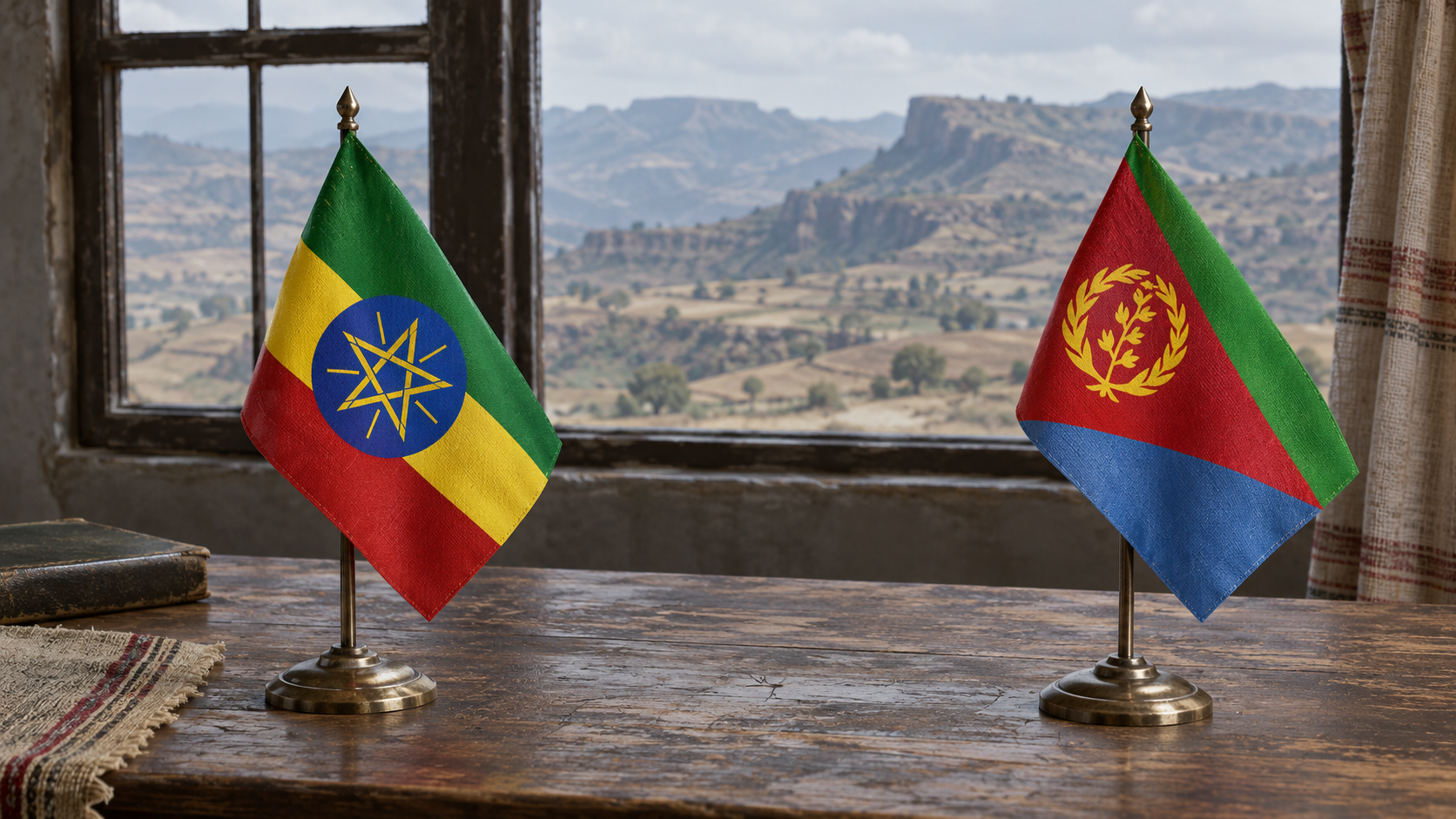
In 2018, Ethiopia accepted that Badme, the town at the heart of its last war with Eritrea, belonged to its neighbour. Eight years later, both countries have again brought forces close to the town. This time, the immediate explanation lies in a war inside Ethiopia. Federal troops pursuing Tigrayan rebels have reached the frontier, while conflict monitors report that Eritrean forces have returned to Badme.
As of 18 November 2026, sources with ties to opposing sides agree that the two national armies are close to one another. They disagree on whether Ethiopian and Eritrean troops have already exchanged fire in the latest fighting. That distinction matters. A government can pull troops back from a tense border relatively quietly. It is harder to do so once it has acknowledged that a neighbour attacked its soldiers.
What Happened Near Badme?
Fighting resumed in northern Ethiopia in September. Federal forces subsequently took Mekelle, the capital of Tigray, and the Ethiopian authorities installed a caretaker administration. Taking the regional capital left an important question unresolved. Tigrayan forces could continue fighting elsewhere, including in districts bordering Eritrea. As Ethiopian troops followed them north, an internal campaign brought the federal army closer to another country’s soldiers.
The conflict monitor ACLED reported fighting between Ethiopian and Tigrayan forces near the border on 10 and 11 November. On 15 November, it reported that Eritrean forces had regained control of Badme after withdrawing in October. Its account of the intervening days included possible Ethiopian drone strikes against Eritrean positions and an exchange involving the two national armies.
The accounts diverge over who fired at whom. A person close to the Tigrayan rebels told Reuters there had been sporadic clashes between Ethiopian and Eritrean troops. A source close to the Tigray Peace Force, a militia fighting alongside Ethiopia’s army, said federal troops were pursuing rebels and denied that the two national armies had clashed. Reuters could not independently establish which account was correct. Eritrea’s information minister criticised Ethiopian ruling-party messaging without directly addressing the reported build-up. The Ethiopian government did not immediately respond.
The distinction between the Tigrayan groups is important in its own right. There are Tigrayans fighting on the federal side as well as against it. Describing the conflict simply as Ethiopia against Tigray obscures who is fighting and why two people with local contacts can give such different accounts of the same stretch of border.
How Former Enemies Became Allies, Then Fell Out Again
Eritrea won independence in 1993. Five years later, a dispute over Badme helped trigger a border war that killed tens of thousands before fighting ended in 2000. An international boundary commission placed Badme on the Eritrean side in 2002. The ruling settled where the boundary lay on paper. It took another 16 years for an Ethiopian government to accept its implementation and make peace with Eritrea.
The rapprochement between Ethiopian Prime Minister Abiy Ahmed and Eritrean President Isaias Afwerki went much further than a settlement over land. When war broke out in Tigray in 2020, Eritrean forces fought alongside Ethiopia’s federal army against Tigrayan forces. That recent alliance makes the allegations surrounding Eritrea today particularly striking. Witnesses reported seeing Eritrean troops cross into Tigray in October 2026, and Ethiopia accused Eritrea of supporting the rebels. Eritrea denies the incursion and says Ethiopia is seeking a pretext to invade.
The peace agreement that ended the previous Tigray war helps explain how relations could change so quickly. In November 2022, Ethiopia’s federal government and the Tigray People’s Liberation Front signed an African Union-mediated agreement in Pretoria. It provided for an end to hostilities, disarmament, humanitarian access and the restoration of services. Eritrea had fought in the war but was outside the agreement.
That left two different diplomatic problems. Ethiopia and Tigrayan leaders had a framework they could return to when fighting resumed. A dispute between Ethiopia and Eritrea over what either army was doing at the frontier required a conversation with a government that had never signed the deal. A breakthrough in one negotiation could still leave the other border confrontation unresolved.
Why The Red Sea Enters A Dispute Over An Inland Town
Eritrean independence left Ethiopia landlocked. Ethiopian importers and exporters can reach the sea, overwhelmingly through neighbouring Djibouti. What Ethiopia lacks is a coastline of its own. For a business moving goods between Addis Ababa and an overseas customer, that distinction has a practical meaning. Its journey to the world market depends on transport links and port arrangements in another country.
Abiy has made more dependable sea access a national priority and says Ethiopia will pursue it peacefully. Eritrea hears a threat in the suggestion that its much larger neighbour must regain access to the coast. The same phrase can mean a commercial agreement to an Ethiopian exporter and a question about sovereignty to an Eritrean official.
Badme is inland. The evidence for Ethiopia’s latest troop movements points to fighting against Tigrayan rebels near the frontier. The Red Sea dispute matters because it shapes how Eritrea interprets those movements. Ethiopian officials may regard a deployment as part of a domestic campaign while Eritrean officials see reason to prepare for something larger. Either country can believe it is acting defensively while giving the other fresh cause for alarm.
What Could Happen Next?
The fighting could remain largely inside Ethiopia. If federal forces end their pursuit short of the frontier and Eritrean troops stay on their side, the immediate danger of sustained fighting between the two states would ease. For civilians in Tigray, that would still leave a war under way. An agreement that keeps two national armies apart offers little protection to a family whose road to the nearest clinic remains unsafe.
A local clash could trigger a wider exchange. The competing accounts near Badme show how this could happen. Addis Ababa might describe an attack as part of its campaign against a Tigrayan armed group. Asmara might say its own troops had been hit and respond on that basis. The clearest sign of escalation would be repeated, independently documented exchanges accompanied by government statements holding the other state responsible. A single disputed incident gives both governments more room to step back.
Diplomacy could address the two conflicts separately. The Pretoria framework gives Ethiopian and Tigrayan representatives an existing basis for talks on civilian protection, relief and a ceasefire. Direct contact between Addis Ababa and Asmara could address conduct at the frontier. Neither conversation would need to settle Ethiopia’s long-term access to the sea before delivering something valuable. An agreement that allowed food, fuel and medical staff to move safely would have an immediate effect in Tigray.
What A Wider War Would Mean For The Horn Of Africa
The first regional consequence is already visible in diplomacy. Ethiopia has accused Sudan and Egypt, as well as Eritrea, of backing the Tigrayan rebels. All three deny doing so. Sudan is itself at war. Treating those accusations as proof of a regional alliance would overstate the evidence, but they narrow the room for mediation. A government that Addis Ababa suspects of supporting its opponents starts at a disadvantage if it offers to broker talks.
For Djibouti, the economic question is whether Ethiopia’s trade routes remain reliable. For shipping companies farther afield, the relevant question is whether fighting spreads to coastal infrastructure or affects passage through the Red Sea. A clash around Badme could be disastrous for people nearby while ships continue to sail. A threat to a working port would have a different reach. Geography matters to both judgements.
The most immediate measure of what is at stake comes from health workers. In a November assessment by Refugees International and local partners, officials said fuel shortages had already left more than 250 ambulances unable to operate by September. Researchers also found signs of acute malnutrition in 23 per cent of children screened at the displacement sites they surveyed. The sample covered selected locations and cannot establish a rate for Tigray as a whole.
Those findings predate the latest reports from Badme. For a parent trying to reach treatment, the decisive question may be whether an ambulance has fuel and a road it can use. That is a consequence governments and mediators can address now, even while the two armies’ accounts of what happened at the border remain in dispute.
Sources
Reuters — Ethiopia and Eritrea amass forces along border, heightening war fears, sources say — The 18 November report sets out where sources agree, their conflicting accounts of direct clashes and the governments’ positions.
ACLED — Ethiopia Alerts archive — Dated incident reports trace the fighting near the frontier and Eritrea’s reported return to Badme.
Refugees International — Tigray Humanitarian Snapshot — Fieldwork and interviews document the condition of health services, displacement and child nutrition, with details of how the sample was selected.
Next Reads
Sudan Drone Strike Near Market Kills 80, Medic and Witness Say — How a communications blackout complicated efforts to establish what happened to civilians in neighbouring Sudan.
Houthi Camp Attack Kills 53, Yemen Authority Says: How Far Could the War Spread? — A look across the Red Sea at the decisions that could widen the war in Yemen.
Who Are the Houthis and Why Is Britain Providing Defensive Support to Saudi Arabia? — How the geography of ports and shipping lanes connects regional conflicts to British interests.
