What Xi’s Message to Seoul Means for a Possible Trump–Kim Meeting
Seoul Named The Two Countries Xi Wanted Talking.
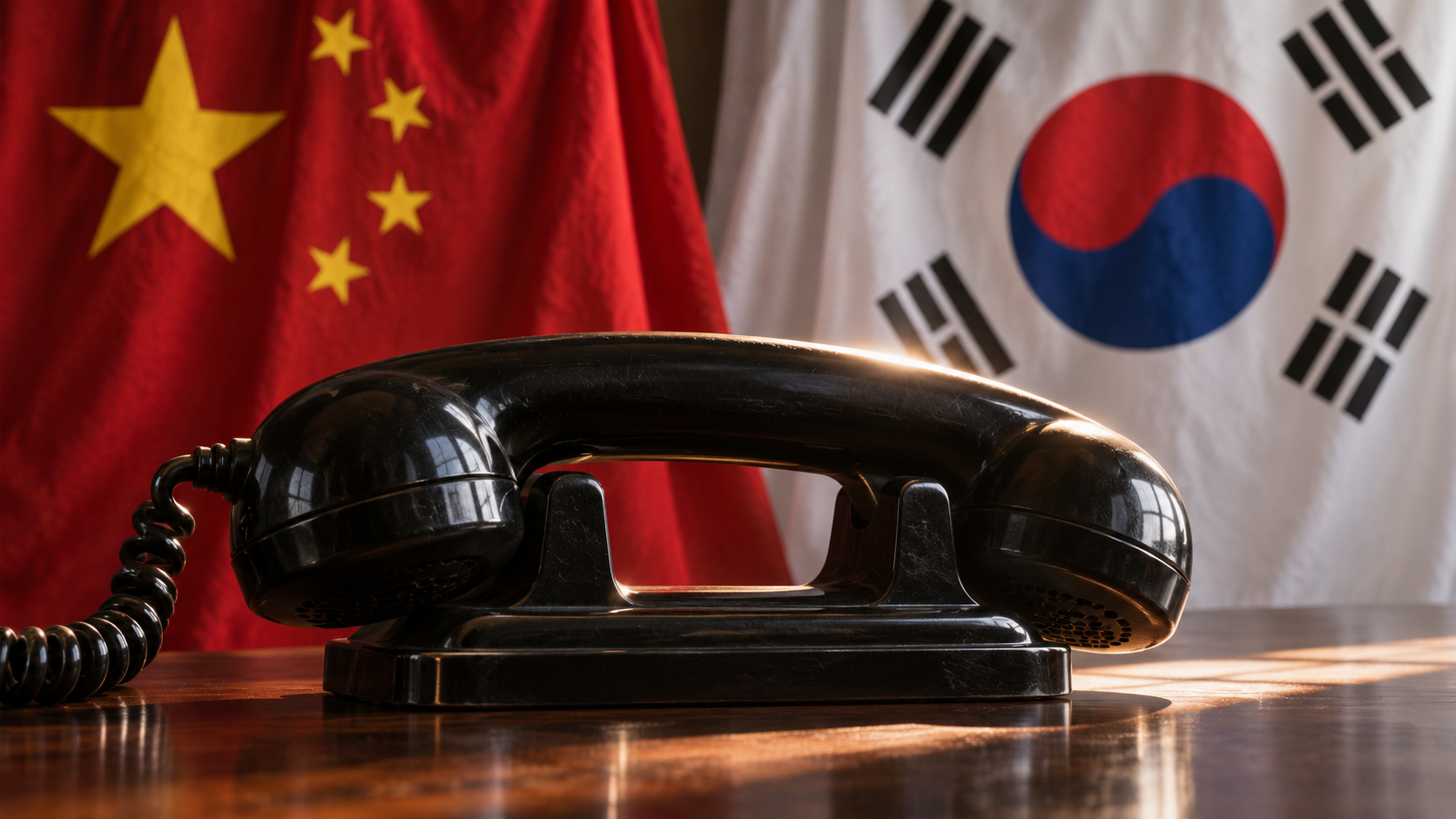
Xi Jinping told South Korean President Lee Jae Myung that China supported efforts to ease tensions on the Korean Peninsula, including renewed talks between the United States and North Korea, according to Lee’s national security adviser. The two presidents met in Shenzhen on 18 November 2026, while Donald Trump was publicly considering whether he might see Kim Jong Un during his trip to Asia.
The distinction matters for South Korea. Lee wants the two Koreas to live peacefully alongside one another. One way he hopes to get there is through a conversation his own government would not attend. If Washington and Pyongyang resume contact, Seoul sees a chance to improve its relations with the North. Xi gave Lee grounds to pursue that approach. Whether Kim sees any advantage in it remains the harder question.
What Did Xi Say to Lee?
South Korea’s national security adviser, Wi Sung-lac, gave the clearest public account of the exchange. Lee had described the peninsula’s security as a matter of vital national interest and asked China to help. According to Wi, Xi welcomed Seoul’s efforts, supported US–North Korean dialogue and said China would continue to play a constructive role. Seoul also said Xi briefed Lee on recent developments in Beijing’s relations with Pyongyang. The substance of that briefing remains private.
China’s foreign ministry published its own account of the same meeting. It covered trade, technology, cultural exchanges and Lee’s position on Taiwan in some detail. It omitted North Korea entirely. The specific assurance about talks therefore rests on an identifiable South Korean official’s account of what Xi said in the room. Beijing’s published statement gives readers a different piece of evidence: what China wanted to emphasise afterwards.
As of 18 November, neither government had announced a date, an invitation accepted by Kim or an agreed agenda. US Secretary of State Marco Rubio said Trump was prepared for dialogue while leaving open whether an encounter would take place during the visit.
Why Would Xi Back Direct Talks Between Washington and Pyongyang?
Lee gave Xi an immediate reason. In his opening remarks, the South Korean president tied the future of relations with China to peace on the peninsula. Beijing wanted to discuss how the two neighbours could deepen trade and investment. Lee was telling his host that, from Seoul, the prospects for that partnership also depended on what happened across the Korean border.
The economic agenda was substantial. Xi said negotiations on a second phase of the China–South Korea free trade agreement had largely concluded. He identified artificial intelligence and industrial supply chains as areas for closer cooperation. He also called for “strategic autonomy”, language that takes on particular significance when addressed to a US ally. South Korea has its own reasons to maintain a working relationship with Beijing, and access to a government that deals directly with Pyongyang is one of them.
Seen in that light, Xi’s answer was a relatively inexpensive way to respond to a serious request. China could endorse a channel that Lee values without asking Kim to make a public concession. And if Trump and Kim did choose to meet, Beijing could welcome the development without having made itself responsible for the outcome. The remarks are consistent with that strategy. They offer little evidence for the more ambitious idea that Xi had already brokered a meeting.
The Nuclear Question Xi and Lee Left Open
One word was missing from both leaders’ public opening remarks and from Seoul’s subsequent account: denuclearisation. That omission matters because Kim has identified the US demand that North Korea surrender its nuclear arsenal as an obstacle to renewed negotiations.
There is a recent history behind that dispute. In Singapore in 2018, Trump and Kim signed a statement in which Kim committed to work towards the complete denuclearisation of the Korean Peninsula. When they met in Hanoi the following year, the broad language gave way to a concrete disagreement over which North Korean nuclear facilities would be dismantled and how much sanctions relief Washington would offer in return. They left without a deal. Kim has since said he sees room for talks if Washington drops its demand that North Korea give up its weapons.
Xi’s formulation allowed Lee to welcome diplomacy without settling that argument in advance. Governments can agree that two adversaries should speak while holding sharply different views about what belongs on the agenda. For Pyongyang, entering a negotiation over its arsenal would itself be a consequential decision. For Seoul, a conversation that reduced the immediate risk of confrontation could have value even if the arsenal remained intact.
Silence on the nuclear question leaves room for both positions. It cannot establish that China has formally accepted North Korea’s nuclear status, or tell us what Lee and Xi said about it in private.
What Does South Korea Stand to Gain or Lose?
For Lee, the attraction of direct US–North Korean talks is that Washington can discuss things Seoul cannot deliver on its own. Hanoi demonstrated the point. South Korea could favour an agreement over nuclear facilities and sanctions, but a South Korean president could not make the American offer or accept the North Korean one.
That also explains Lee’s exposure. If Kim chose to deal with Trump, he could seek an agreement with Washington while continuing to keep Seoul at a distance. A successful American overture might give the two Koreas an opportunity to reopen contact. It would still take a separate decision in Pyongyang to use it. For people living on either side of the border, the practical measure of progress would be whether their own governments gained a reliable way to speak when tensions rose.
The timing gave Lee a reason to raise that concern directly with Xi. The Chinese president was due to meet Trump and Vladimir Putin in Shenzhen on 19 November. As with Trump’s consultations with Asian partners before Shenzhen, the order of the meetings mattered. Lee could explain South Korea’s interests to the host before the three presidents sat down. The published accounts give no indication that they had agreed to discuss a Korean settlement.
What Would Show That Talks Are Getting Closer?
The strongest indication would come from Pyongyang. Trump had already raised the possibility of meeting Kim in China, and Seoul had now put Xi’s support for dialogue on the record. An acknowledgement from North Korea that its officials were discussing a venue, an agenda or a preliminary meeting would add something neither Trump nor Xi could supply: evidence that Kim wanted to explore the offer.
For Lee, an even more telling development would be a North Korean willingness to speak to South Korea alongside any American talks. That would answer the question at the heart of his approach. Can a conversation between Washington and Pyongyang give the two governments that share the peninsula a way back into contact with each other?
Sources
Yonhap News Agency — Xi expresses support for efforts to restart N. Korea-U.S. dialogue: Cheong Wa Dae — Records national security adviser Wi Sung-lac’s account of Lee’s request and Xi’s response. Yonhap News Agency
Chinese Ministry of Foreign Affairs — President Xi Jinping Meets with ROK President Lee Jae Myung — Gives Beijing’s account, including Xi’s remarks on strategic autonomy and the second phase of trade negotiations. fmprc.gov.cn
Reuters — China’s Xi backs efforts to ease tensions with North Korea, South Korea says — Covers Rubio’s comments, the status of a possible Trump–Kim meeting and the absence of denuclearisation from the leaders’ opening remarks. Reuters
Next Reads
Could Trump Meet Kim Jong Un in China? What Both Sides Have Said — What Kim has said about his terms for talks, and where the negotiations in Hanoi broke down.
Why Is the Trump–Xi–Putin Summit Being Compared With Yalta? — Why the prospect of three powers discussing another country’s future troubles governments outside the room.
Why Is Trump Meeting India, Japan and Australia Before His Talks With Xi and Putin? — How the order of meetings gave Asian partners a chance to put their interests to Trump before Shenzhen.
