French Personnel in Ukraine and the Dispute Between Paris and Moscow
Why Would France Send An Engineer After Delivering A Fighter Jet?
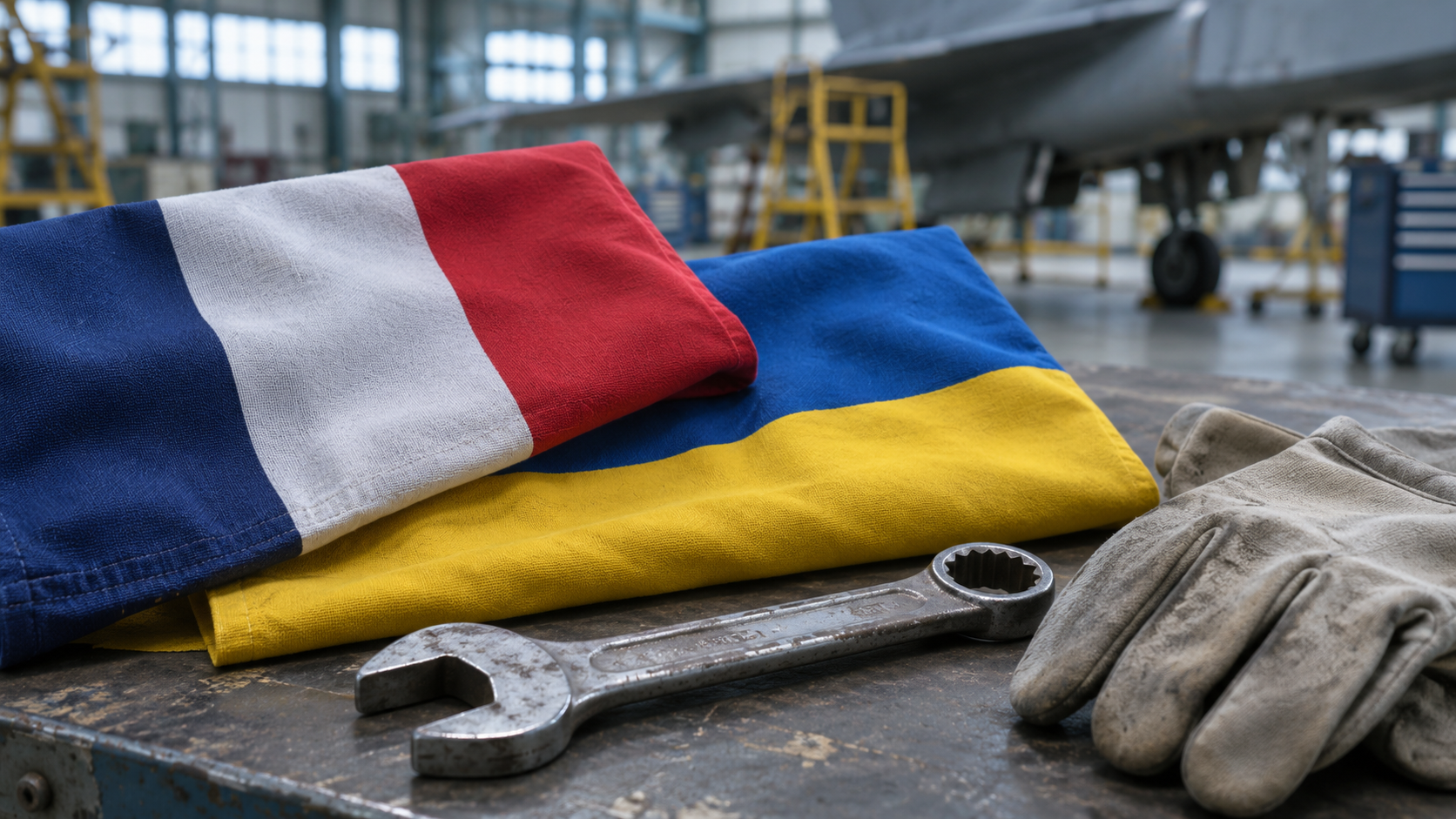
A Mirage fighter can appear twice in the story of French aid to Ukraine. The first occasion is the day France hands it over. The second comes months later, when a Ukrainian technician needs help keeping it in service. On 18 November 2026, France’s deputy defence minister, Alice Rufo, identified Mirage aircraft and Caesar artillery guns as examples of equipment that French military specialists can travel into Ukraine to help maintain. They also train Ukrainian personnel to work with particular equipment.
Rufo described occasional visits by small numbers of specialists, including armaments engineers, working far from the front. She gave no headcount. Her remarks answered a question that had hung over France’s support for Kyiv for years. Paris had long acknowledged training Ukrainians abroad. It has now publicly acknowledged that some French personnel do their work inside the country while the war is still being fought.
What France Has Confirmed About Mission Volia
The name Volia entered public discussion on 16 November, when the first detailed account of the mission appeared. It placed small French teams in Ukraine on short rotations from at least the summer of 2026. On 17 November, Foreign Minister Jean-Noël Barrot was asked about Volia on French television. He confirmed the presence of trainers and maintenance personnel and said France intended to continue supporting Ukraine’s defence. Rufo supplied the equipment examples the following morning.
Those dates tell us when French citizens learned about the mission and when their ministers addressed it. The date of the first visit is harder to establish. A separate account, based on information from a source familiar with the arrangements, described intermittent training and repair visits earlier in the war and a recent increase in personnel. The two accounts can fit together. A practice can acquire a name, or grow in scale, well after the first specialist crosses a border. Neither minister supplied a complete chronology.
What a Mirage Handover Leaves Unfinished
Ukraine received its first French Mirage 2000 fighters in early 2025. The handover followed months of training in France for Ukrainian pilots. Mechanics also trained to support the aircraft. From Kyiv’s perspective, one of the Mirage’s most valuable jobs is defending Ukrainian airspace against cruise missiles and drones. What matters during an attack is how many aircraft are fit to fly that day. A delivery total can never quite answer that question.
Consider what changes for a mechanic after an aircraft arrives in Ukraine. Before delivery, an instructor can teach a class about a type of aircraft its members will soon receive. Months later, a Ukrainian mechanic may have a question about the particular aircraft in front of them. A visiting specialist can examine the same machine, hear what the Ukrainian team has already tried and explain a finding to the people who will look after it once the visit ends. A single repair can double as a lesson that stays with the crew.
There is a similar calculation with a Caesar, the French-built artillery gun mounted on a wheeled vehicle. A repair that requires equipment to leave Ukraine adds two journeys and a wait to the work itself. Bringing expertise into the country could spare some of those journeys. Paris has released no figures showing how many repairs the teams have completed or how much time they have saved. Rufo named the kinds of equipment for which France can offer assistance. She gave no inventory of individual aircraft or guns its personnel have returned to service.
Why Crossing the Border Changes the Politics
For France, moving the work changes who shoulders the risk. Training in France asks Ukrainians to leave their country for a course. Sending a French instructor in the other direction allows Ukrainians to learn at home while placing a member of France’s armed forces in a country under attack. Distance from the front matters to that decision, although it cannot remove the possibility that someone on a visit could be hurt.
Russia’s foreign minister, Sergei Lavrov, called the French presence direct participation in the war. His objection concerns what the work achieves. When French help keeps equipment available to Ukraine, Russia faces an opponent better able to resist it. Barrot’s argument concerns who actually fights. France openly wants Ukrainian forces to succeed and describes its own personnel’s duties as teaching and maintenance. The public accounts of Volia provide no evidence that its personnel fly Ukrainian combat sorties, fire artillery at Russian forces or command Ukrainian troops.
The disagreement has consequences even if those duties stay the same. Were a French specialist injured during a visit, Paris would face questions at home about the risks ministers had accepted and what they had told the public beforehand. Moscow has already made clear how it views that person’s presence. A similar dispute has arisen over British support for Ukrainian drones. In the French case, an additional fact gives the argument particular weight. The people whose work the two governments interpret so differently are physically in Ukraine.
How the French Visits Differ From the EU Training Mission
Nine days before Rufo spoke, the Council of the European Union made a separate announcement that is easy to confuse with the French one. On 9 November, it extended the EU Military Assistance Mission for Ukraine until November 2028. It also decided that the mission should establish a presence inside Ukraine to work directly with Ukrainian military authorities and international partners. The Council gave a practical reason for the change. European training should keep pace with what Ukrainians are learning in combat.
That reverses a familiar assumption about who teaches whom. A European instructor may know a French-built system well. A Ukrainian crew knows what it has been like to use that system in this war. Direct contact gives the people designing courses a chance to hear where their teaching matches a crew’s experience and where it has fallen behind. The Council explicitly included lessons from the battlefield in the renewed mandate.
The figures attached to the EU decision need careful reading. The Council says its mission has trained more than 100,000 Ukrainian soldiers since its creation in October 2022. That figure counts Ukrainian trainees across the programme. It tells us nothing about how many French specialists have visited Ukraine. Nor does an EU decision to establish a coordination presence put every visiting French engineer under EU command. Each announcement describes a different authority answering for its own work.
Would French Troops Stay After a Ceasefire?
A third undertaking has a different timetable altogether. In the Paris Declaration of 6 January 2026, Ukraine and its partners set out plans for a multinational force. The proposed European-led force would help Ukraine rebuild its armed forces and deter a renewed attack. The declaration attached two conditions to those measures. Ukraine would have to request them, and a credible halt to the fighting would have to take place.
For a Ukrainian mechanic seeking help with an aircraft today, a promise contingent on a future ceasefire answers a different need. For a French family asking what duties a relative might be sent to perform, the distinction is equally important. An occasional technical visit during a war and a multinational commitment to help secure a peace carry different responsibilities, even when both involve soldiers wearing the same French uniform.
The question still open in Paris is how much the public will learn about the limits of the present mission. Ministers have named the specialists involved and given examples of the equipment. They have left the scale and duration imprecise. Authorising a French pilot to fly a Ukrainian combat mission, for example, would require Paris to answer for a different decision. This week’s disclosure gives the French public something concrete against which to judge any future change. It now knows what its government says a French specialist goes to Ukraine to do.
Sources
Associated Press — Why France Is Sending Soldiers Into Ukraine and How Russia Is Responding — Alice Rufo’s account of specialist visits, the equipment she identified and Sergei Lavrov’s response.
Reuters — France Is Not ‘Co-Belligerent’ in Ukraine, French Minister Says — Jean-Noël Barrot’s 17 November confirmation and the account of Mission Volia first published by Radio France Internationale.
Le Monde — French Troops Are Now Operating in Ukraine — Separately sourced reporting on earlier visits, recent reinforcements and the logistics of cross-border repairs.
Ukrainian Ministry of Defence — France Strengthens Ukraine’s Skies — Ukraine’s account of Mirage deliveries, pilot training and the aircraft’s air-defence role.
Council of the European Union — Council Extends EU Military Assistance Mission Mandate for Two Years — The EU decision of 9 November, its purpose and the number of Ukrainian soldiers trained.
Élysée — Paris Declaration on Security Guarantees for Ukraine — The proposed multinational force and the conditions attached to its deployment.
Next Reads
Russia Warns Britain of ‘Consequences’ Over Ukraine Drones — What Could Happen Next? — How Moscow interprets another European country’s contribution to Ukraine’s defence.
Ukraine Faces Enormous $56bn War-Funding Hole as Russian Strikes Hammer Its Economy — The financial pressures behind Kyiv’s dependence on sustained European support.
Russia’s Long Game in Ukraine — Why the endurance of Ukraine’s partners matters in a prolonged war.
