Why China Is Suddenly Reaching Back Towards South Korea After Five Years
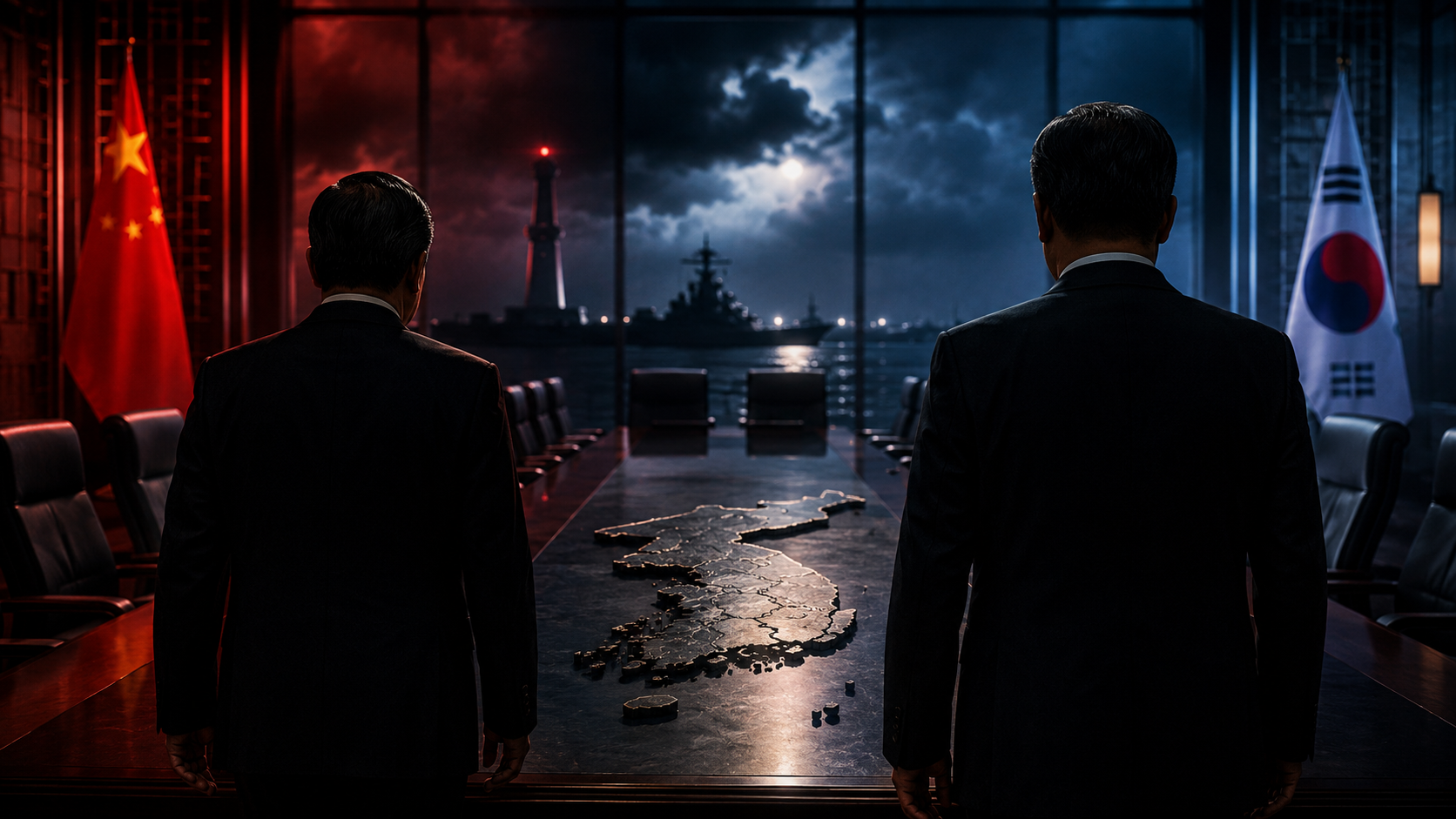
Wang Yi Returns To Seoul As China, America And North Korea Jostle For Influence
Wang Yi’s South Korea Visit Is About Far More Than Diplomacy
China’s most powerful diplomat is returning to South Korea for his first official visit in five years at a moment when almost every major relationship around the Korean Peninsula is shifting. Foreign Minister Wang Yi is due in Seoul on August 19 and 20 for meetings with President Lee Jae Myung, Foreign Minister Cho Hyun and National Security Adviser Wi Sung-lac, with China-South Korea relations, North Korea and wider regional security expected to dominate the agenda.
The timing makes the trip far more important than a ceremonial diplomatic exchange. South Korea is trying to preserve its security alliance with the United States while repairing relations with China, reopening possibilities for diplomacy with North Korea and avoiding being trapped inside an increasingly rigid confrontation between Washington, Beijing, Tokyo, Pyongyang and Moscow. Wang’s arrival therefore offers Beijing something it has wanted for years: another opportunity to influence where Seoul places itself in Asia’s emerging balance of power.
Why Wang Yi Is Going To South Korea Now
The immediate diplomatic explanation is straightforward. Seoul says the visit will allow the two governments to review the progress made in restoring relations and prepare for further high-level exchanges before the APEC summit scheduled to be held in Shenzhen in November. Wang is expected to meet Lee at the Blue House on August 20, while separate discussions with Wi and Cho will address bilateral relations, the Korean Peninsula and international affairs.
But the wider context is much more significant. Lee has deliberately pursued a less confrontational relationship with Beijing while remaining committed to South Korea’s alliance with Washington. During his state visit to China in January, he met Xi Jinping and directly asked the Chinese president to help mediate with North Korea, arguing that Seoul’s own communication channels with Pyongyang had effectively collapsed.
That gives Beijing an opening. South Korea cannot solve the North Korean problem alone, Washington has repeatedly struggled to secure lasting concessions from Pyongyang, and China remains North Korea’s dominant economic partner and one of its most important diplomatic relationships. Beijing may not be able to dictate Kim Jong Un’s decisions, but it still possesses influence that Seoul cannot simply ignore.
There is also a broader contest for South Korea itself. Seoul is a treaty ally of the United States and has developed increasingly close security cooperation with Japan, yet China remains its largest trading partner. South Korean government figures put bilateral trade with China at approximately $272.7 billion in 2025, with more than $130 billion of South Korean exports going to the Chinese market.
That combination makes South Korea strategically unusual. It depends heavily on Washington for security but remains deeply integrated economically with China. Beijing has every incentive to prevent those two realities from collapsing into a simple choice in which Seoul permanently joins an American-led containment strategy.
Why Has It Taken Five Years?
The five-year gap does not mean China and South Korea stopped talking. Ministers have met elsewhere, presidential envoys have travelled between the countries and high-level diplomacy continued. What disappeared was the symbolism of Wang making an official bilateral trip to South Korea itself.
Part of the explanation lies in how strained the strategic environment became. Relations had already suffered from the dispute over South Korea’s deployment of the American THAAD missile-defence system, which Beijing argued could undermine Chinese security. The pandemic then disrupted diplomatic and public exchanges, while the subsequent South Korean government moved much more visibly towards Washington and Tokyo.
At the same time, the geopolitical divide around Northeast Asia hardened. South Korea strengthened military cooperation with the United States and Japan. China increasingly viewed American alliance networks in Asia as part of a strategy to constrain its rise. North Korea expanded its missile and nuclear capabilities, while its relationship with Russia became much stronger.
By the middle of the decade, Seoul and Beijing were also confronting a maritime dispute in the Yellow Sea. South Korea expressed deep concern over Chinese structures inside waters where the two countries’ exclusive economic zones overlap, while Beijing maintained that the installations were connected to aquaculture rather than sovereignty. One disputed structure was subsequently removed, which Seoul described as meaningful progress.
These disagreements did not make diplomacy impossible. They made a major visit politically harder to arrange and more meaningful when it finally happened.
Lee’s arrival in office changed the atmosphere. His government has tried to create greater diplomatic flexibility rather than treating relations with Beijing purely through the lens of strategic competition. The result is not a South Korean pivot towards China. It is an attempt to reduce unnecessary confrontation while keeping Washington as Seoul’s central security partner.
That distinction is crucial.
China Wants To Prevent South Korea Becoming Irreversibly Anti-Beijing
For Beijing, perhaps the biggest strategic reason for improving relations with Seoul is preventing Northeast Asia from dividing permanently into two hardened blocs.
One side increasingly resembles the United States, Japan and South Korea. The other contains China, North Korea and Russia, although the relationships inside each group are more complicated than a formal alliance system. North Korea itself has increasingly portrayed the region in precisely those terms, accusing Washington, Seoul and Tokyo of developing a more integrated military structure.
China has reasons to resist that outcome.
A firmly anti-China South Korea would give Washington an even stronger military, technological and economic position on China’s doorstep. Seoul possesses advanced semiconductor manufacturing, major defence companies, enormous industrial capacity and a geographically critical position between China and Japan.
South Korea also sits close to some of the most dangerous potential flashpoints in the world. Conflict involving North Korea would immediately affect China. A Taiwan crisis could place intense pressure on American military facilities and allies across the region. A deeper China-Japan confrontation would make Seoul’s alignment increasingly consequential.
Beijing therefore benefits from a South Korea that remains allied with America but resists automatically following Washington on every issue involving China.
Wang’s visit is partly about nurturing exactly that space.
South Korea Wants Something From China Too
This is not simply China courting Seoul. Lee has his own reasons for wanting the relationship repaired.
North Korea is the most obvious.
Lee has recently called for renewed engagement and ultimately a peace structure capable of replacing the armistice that has governed the Korean Peninsula since the end of major fighting in 1953. Pyongyang, however, has rejected Seoul’s overtures, described South Korea as a hostile state and continued expanding its military capabilities.
China is one of the few governments capable of talking regularly to both sides.
That capability has become even more relevant because Beijing has recently intensified its own engagement with Pyongyang. Wang travelled to North Korea earlier this year, while Xi subsequently made a rare visit to the country as China and North Korea moved to strengthen their relationship following a period in which Kim Jong Un had become dramatically closer to Russia.
From Seoul’s perspective, better relations with Beijing create another possible diplomatic channel into Pyongyang.
There is no guarantee China will use that influence in the way South Korea wants. Beijing generally prioritises stability and the survival of the North Korean state over forcing Pyongyang into concessions that could destabilise the regime. But having China engaged remains preferable for Seoul to having Beijing detached or actively hostile.
The Trump Factor Makes The Visit More Important
The United States is another reason the timing matters.
President Donald Trump has once again shown interest in direct diplomacy with Kim Jong Un, while discussions have emerged around reducing the scale of some US-South Korean military exercises. South Korean officials have said they hope renewed communication between Trump and Kim could eventually reopen meaningful negotiations.
That creates a rare moment when Washington, Seoul and Beijing may all have reasons to explore whether tensions with Pyongyang can be reduced.
Their objectives remain different.
Washington wants to protect American security interests and constrain North Korea’s nuclear threat. Seoul wants to avoid war while creating a sustainable relationship with the North. China wants stability on its border, reduced American military pressure in the region and continued influence over events on the peninsula.
Those interests overlap enough to create diplomacy but diverge enough to make any lasting agreement extremely difficult.
Wang’s talks in Seoul could help establish whether China sees the current moment as a genuine opening or simply another opportunity to strengthen its position.
The North Korea Question Is Becoming More Complicated
China’s role is also changing because North Korea is no longer as dependent on Beijing as it once appeared.
Pyongyang’s deepening relationship with Moscow has given Kim another source of diplomatic, economic and potentially technological support. That reduces China’s monopoly over external influence on the regime and may make North Korea more difficult for Beijing itself to manage.
From China’s perspective, that is uncomfortable.
Beijing wants North Korea stable, but it does not necessarily want a North Korean leadership so strategically independent that Russia becomes its preferred great-power partner. Strengthening ties with both Pyongyang and Seoul allows China to reinforce its position as the indispensable diplomatic power on the peninsula.
Wang’s movements this year are therefore revealing. His diplomacy has involved engagement on both sides of the Korean divide rather than simply reinforcing Beijing’s traditional relationship with Pyongyang.
That gives China more leverage whichever direction events move.
Japan Will Be Watching Closely
Tokyo also has strong reasons to follow the visit.
Relations between South Korea and Japan have improved markedly, with the two governments cooperating more closely on defence, intelligence, economic security and the North Korean threat. Japan has simultaneously expanded its own military capabilities and acquired longer-range weapons as concern grows over China and North Korea.
China does not want stronger South Korea-Japan cooperation automatically turning into a broader anti-China military alignment.
That does not mean Beijing expects Seoul to abandon Tokyo. It means China has an interest in encouraging South Korea to preserve strategic independence whenever Japanese and Chinese interests collide.
Lee appears interested in doing exactly that.
His broader foreign policy suggests an attempt to avoid forcing South Korea into binary choices. He can deepen cooperation with Japan, maintain the American alliance and simultaneously improve relations with China.
Whether that balancing strategy remains sustainable during a serious regional crisis is another question.
Taiwan Is The Issue Nobody Can Ignore
The most difficult test may eventually be Taiwan.
Washington increasingly views regional alliances through a broader Indo-Pacific framework rather than solely around individual treaty threats. China, meanwhile, considers Taiwan a core national interest and reacts strongly to foreign military involvement around the island.
South Korea would face an extraordinarily difficult choice if tensions escalated into conflict.
American forces stationed in Korea and elsewhere in the region could become part of a wider American response. Beijing would almost certainly pressure Seoul not to participate. South Korea would simultaneously have to consider North Korean behaviour while American attention and military resources were focused elsewhere.
The United States has already discussed modernising the alliance in ways that could connect South Korean security more closely with wider Indo-Pacific contingencies, including Taiwan, while Seoul remains cautious about expanding the alliance beyond its traditional focus on the Korean Peninsula.
That makes diplomatic contact with Beijing a form of strategic insurance.
Seoul cannot determine whether a Taiwan crisis occurs. It can, however, maintain channels that reduce the risk of misunderstanding if one does.
Economics Still Gives China Enormous Leverage
Security dominates the headlines, but economics may ultimately provide the strongest reason both governments keep returning to each other.
China remains South Korea’s largest trading partner. South Korean companies also possess enormous cumulative investment exposure to China, while Chinese consumers, manufacturers and supply chains remain closely connected to Korean semiconductors, chemicals, displays and technology.
The relationship is changing as South Korea diversifies production and strengthens economic ties with the United States, but economic separation from China would be extraordinarily expensive.
Beijing knows this.
Seoul knows it too.
That gives both governments powerful incentives to prevent strategic disagreements from turning into uncontrolled economic confrontation.
The memory of previous Chinese economic pressure following the THAAD dispute remains an important warning for South Korean policymakers. Dependence creates opportunity, but it also creates vulnerability.
Lee’s strategy appears designed to reduce that vulnerability without sacrificing access to the Chinese economy.
The Yellow Sea Remains A Warning
Improved diplomacy should not be confused with the disappearance of underlying disputes.
The Yellow Sea controversy remains one example. South Korea has challenged Chinese structures built in overlapping maritime areas and pushed for clearer management of the zone. Lee proposed a median-line approach during his January visit to China, while Beijing subsequently moved one disputed structure.
That progress matters because maritime disputes elsewhere in Asia have shown how apparently technical disagreements can develop into serious strategic confrontations.
South Korea is therefore trying to achieve something difficult: cooperate with China without allowing improved relations to weaken its defence of its own maritime interests.
The success of Wang’s visit should eventually be judged partly on whether practical disputes become easier to manage, not merely whether the diplomatic language becomes warmer.
What The Visit Really Signifies
Wang Yi’s return to South Korea does not signal a Chinese-South Korean alliance, a collapse of Seoul’s relationship with Washington or an imminent breakthrough with North Korea.
It signals something subtler.
South Korea is attempting to recover diplomatic room for manoeuvre.
The strategic environment around it has become increasingly dangerous. North Korea has nuclear weapons and a growing relationship with Russia. China and the United States are competing for influence across Asia. Japan is building greater military capability. Taiwan remains a potential flashpoint. Washington’s approach to alliances has become less predictable, while Seoul’s economic exposure to China remains enormous.
Under those conditions, talking to China becomes less a sign of political alignment than a requirement of national strategy.
Beijing understands the opportunity just as clearly.
China wants to demonstrate that the future of the Korean Peninsula cannot be managed solely through Washington, Seoul and Tokyo. It wants to remain the power that both Koreas must deal with, prevent a consolidated anti-China regional bloc and retain leverage over any future negotiations involving North Korea.
That is why five years of absence matter.
Wang is returning to a South Korea that is still firmly connected to the United States but increasingly aware that reliance on one strategic relationship cannot solve every problem surrounding it.
What Happens Next
The immediate test will be whether the visit produces more than diplomatic language.
China and South Korea will be preparing for further high-level contact ahead of November’s APEC summit in Shenzhen. North Korea will watch for any suggestion that Beijing might support Seoul’s efforts to restart dialogue. Washington will watch for signs that improved Sino-South Korean relations affect alliance policy. Tokyo will monitor whether Seoul’s balancing strategy creates limits on trilateral security cooperation.
The more ambitious possibility is that Seoul could become a venue through which competing powers cautiously test new approaches to North Korea.
That remains uncertain. Kim Jong Un has repeatedly rejected South Korean overtures, North Korea continues to expand its military capabilities, and the fundamental strategic competition between China and the United States has not disappeared.
But the diplomatic map is moving.
Wang Yi’s first official South Korean visit in five years matters because Beijing is re-entering Seoul at precisely the moment when South Korea is trying to avoid being locked permanently into one side of Asia’s emerging geopolitical divide.
If that strategy works, Lee could preserve the American security alliance while rebuilding enough trust with Beijing to gain economic stability and another channel towards Pyongyang.
If it fails, South Korea may discover that the room between China and the United States is becoming too narrow to occupy.
That is the real significance of Wang Yi’s journey to Seoul.
