

Why Four European Powers Are Suddenly Preparing To Lift Iran Sanctions
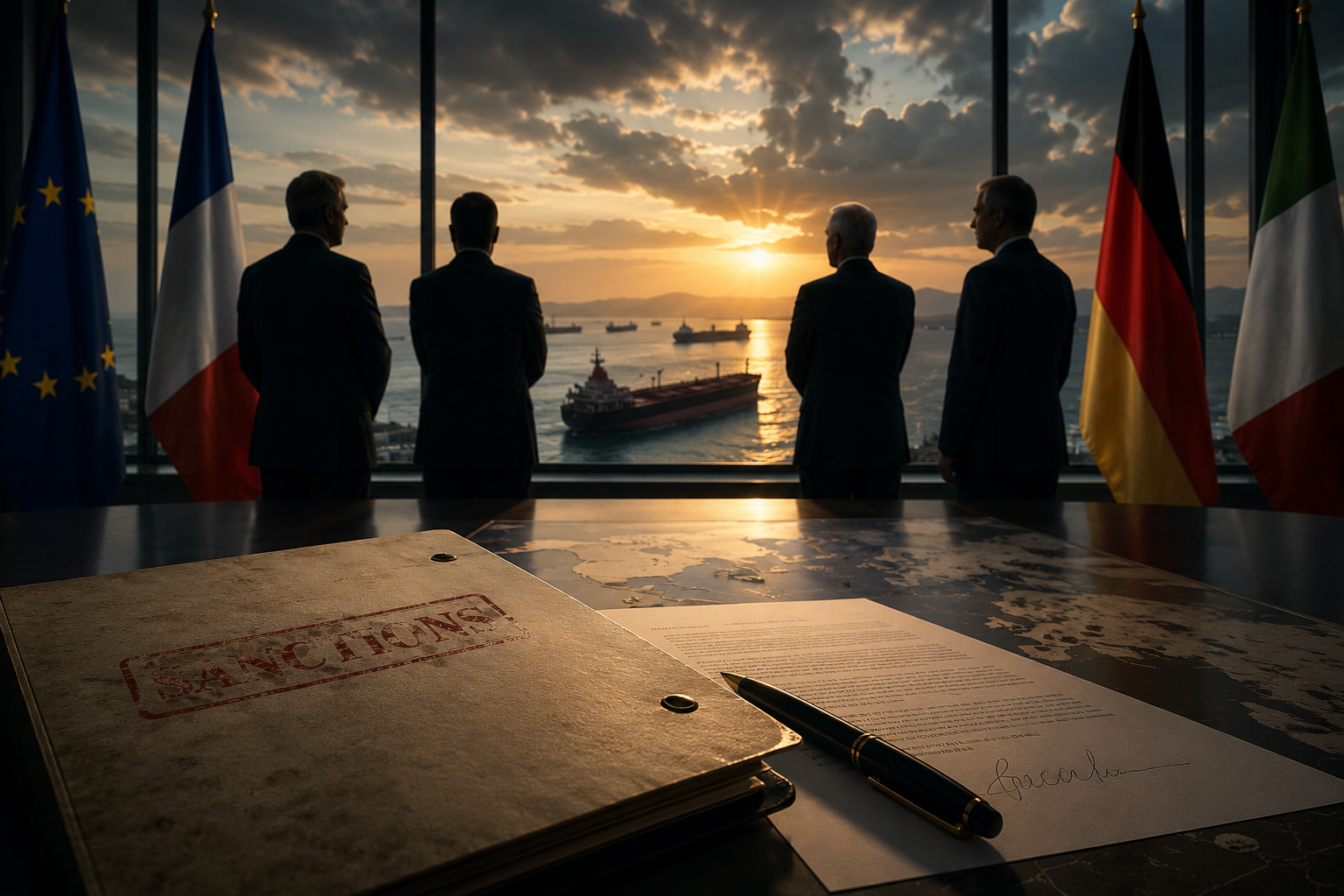
Britain, France, Germany And Italy Signal Major Shift On Iran
Europe’s Iran U-Turn Could Reshape The Middle East And Global Energy Markets
The United Kingdom, France, Germany and Italy have announced that they are prepared to lift sanctions on Iran if Tehran takes agreed steps relating to its nuclear programme. The announcement follows the recent US-Iran agreement that brought an end to months of conflict and reopened a path toward diplomacy.
The statement from the four European powers is significant because these same countries were among the strongest supporters of sanctions pressure on Iran over recent years. In 2025, Europe reimposed major nuclear-related sanctions after international tensions escalated and concerns about Iran’s nuclear activities intensified.
That makes this latest development more than a routine diplomatic announcement. It represents a potential reversal of one of the most important foreign policy positions Europe has held toward Tehran.
The Deal Behind The Decision
The European announcement comes after a breakthrough agreement between Washington and Tehran aimed at ending the conflict that has dominated regional politics and energy markets throughout 2026. The agreement includes the reopening of the Strait of Hormuz, one of the most strategically important shipping routes in the world.
The Strait of Hormuz handles a substantial portion of global oil exports. When disruption threatened shipping through the route, markets reacted immediately. Energy prices surged, governments worried about supply security and businesses faced renewed uncertainty.
The reopening of Hormuz is therefore about far more than regional politics. It affects inflation, fuel prices, supply chains and economic confidence across Europe, Asia and North America.
Why Sanctions Relief Matters So Much
Sanctions are among the most powerful economic tools available to governments. They restrict trade, financial activity, investment and access to international markets.
For Iran, sanctions have limited economic growth for years. Relief could potentially allow increased oil exports, greater access to international finance and improved trade relationships with foreign partners.
For Europe, sanctions relief offers a different opportunity. It provides leverage. European governments are making it clear that relief is not automatic. Instead, it is being positioned as a reward for verified cooperation on nuclear issues and broader regional stability.
This is diplomacy through incentives rather than punishment.
The Nuclear Question Has Not Disappeared
Despite the positive headlines, the central issue remains unresolved.
European leaders have been explicit that Iran must never acquire nuclear weapons. Their willingness to lift sanctions is tied directly to progress on nuclear commitments and cooperation with international inspectors.
Reports surrounding the draft agreement suggest Iran could halt further enrichment expansion, maintain limits on nuclear activities and participate in additional negotiations during a 60-day framework period. However, many details remain subject to future discussions.
This means the current agreement should be viewed as a starting point rather than a final settlement.
The difficult negotiations may actually begin now.
Markets Are Already Reacting
Financial markets rarely wait for final signatures.
The prospect of reduced tensions and the reopening of Hormuz has already contributed to falling oil prices and improving investor sentiment. Central bankers have openly welcomed the reduction in immediate energy-market pressure.
For consumers, cheaper oil can eventually translate into lower fuel costs and reduced inflationary pressure.
For governments struggling with economic uncertainty, that matters enormously.
The economic impact of the conflict stretched far beyond the Middle East. Energy costs influence almost every sector of modern economies, from transportation and manufacturing to food production and household bills.
The Bigger Story Is About Power
The most interesting part of this story is not sanctions relief itself.
The deeper issue is that Europe appears determined to regain influence in a region where events have often been shaped by the actions of Washington, Tehran, Moscow and regional powers.
By offering sanctions relief while simultaneously demanding nuclear guarantees, Britain, France, Germany and Italy are attempting to position themselves as essential players in whatever comes next.
This is a reminder that sanctions are not merely economic weapons. They are diplomatic currency.
When governments threaten sanctions, they are exercising pressure.
When they offer to remove them, they are exercising influence.
The willingness of four major European powers to discuss lifting restrictions shows that they believe the current moment presents a genuine opportunity to shape the future relationship between Iran and the wider international community.
Whether that opportunity succeeds depends on what happens during the next phase of negotiations. But one thing is already clear: Europe is no longer talking solely about containing Iran. It is now openly discussing what a future beyond sanctions might look like. And that alone marks a remarkable shift in the geopolitical landscape.
