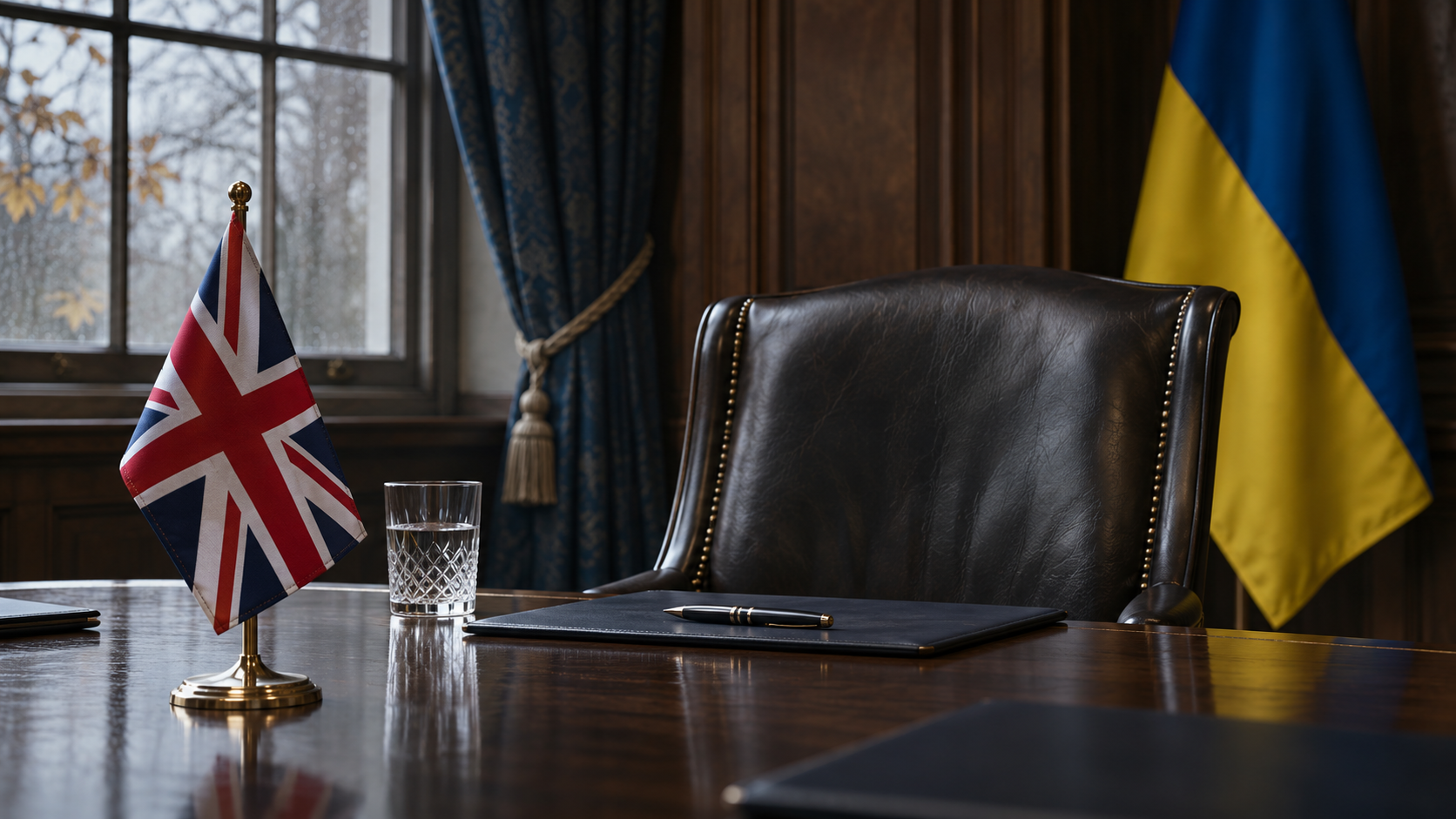
Europe Named Britain for Ukraine Peace Talks. Did Putin Agree to Let It In?
Britain Was In Abu Dhabi, But Its Place In The Next Round Is Still In Dispute.
Britain is on Europe’s list for the next Ukraine peace talks. Whether a British representative will sit down with Russia is a different question. On 12 November, American envoy Steve Witkoff emerged from talks with Vladimir Putin saying European representatives would join the next round. Four days later, Kremlin aide Yuri Ushakov said Moscow had agreed only to continue negotiations between Russia, Ukraine and the United States.
As of 16 November 2026, Britain has a place on the proposed European team and no confirmed seat at the negotiations with Russia. The best illustration of that distinction comes from Abu Dhabi, where British officials have already taken part in one of two quite different conversations about ending the war.
What Britain Actually Did in Abu Dhabi
On 10 November, Britain joined Ukraine, the United States, France, Germany, Italy, the European Union and NATO for a meeting in Abu Dhabi. The participants discussed what security guarantees Ukraine would need as part of a settlement. They also considered how to reduce the risk of another conflict after the fighting ended.
Russia was absent from that meeting. It took part in a separate round with Ukraine and the United States. Britain was absent from that one.
The distinction matters because it changes the meaning of an apparently simple piece of news. A British official can travel to the city hosting peace talks, discuss the terms of a settlement with Kyiv and Washington, and still have no opportunity to hear Moscow’s response firsthand. That was the arrangement last week. The joint statement issued after the allied meeting described wider negotiations as something the participants wanted to work towards.
For Britain, the immediate question is whether that second conversation will now open up. For Ukraine, the stakes are more practical. If a proposal depends on what Britain and other allies would do after a ceasefire, Kyiv needs to know how firmly those governments stand behind it.
What Witkoff Said After Meeting Putin
On Thursday 12 November, Witkoff and fellow US envoy Jared Kushner met Putin in Moscow. Witkoff subsequently said the Russian president had agreed to European participation in the next round. After speaking with the American envoys, Ukrainian President Volodymyr Zelenskyy also said the parties had accepted a place for Europe.
That sequence helps explain the confidence of the announcement that followed in Dublin. Kyiv had heard an account from the people who had just met Putin. European leaders had reason to settle a question within their own control. If Europe was going to attend, who would represent it?
On Friday, European Council President António Costa named the EU institutions and five countries from the Coalition of the Willing. Britain would join France, Germany, Italy and Poland. But the American announcement had concerned European participation. It had not specified whether each government would have its own representative in every session, who would speak for the group or which issues the Europeans would help negotiate. Those details matter particularly to London, whose place on the team comes through its national role outside the EU.
Moscow Says the Three-Way Format Still Stands
On Monday 16 November, Ushakov gave the clearest public indication of what Russia believed it had accepted. The understanding reached in Abu Dhabi, he said, was that the three participants would meet again. He said the date remained unsettled and Moscow had given no agreement to expand the format.
Ushakov went further on timing. Russia might want one or more additional rounds with Ukraine and the United States before accepting European participation. He also asked European governments to explain what they wanted to achieve and what they could contribute to a settlement.
His remarks leave open the possibility that Europeans could join later. On the narrower question of the next meeting, however, Washington and Moscow have given incompatible public accounts. Witkoff described Putin’s agreement as having been secured. Ushakov described it as a decision Russia had yet to make. The public statements cannot settle what passed between Putin and the American envoys in private.
There is also a limit to what can fairly be read into the Kremlin’s objection. Ushakov challenged the expansion of the talks to include Europeans. He did not announce that Moscow had accepted France, Germany or any other European country while singling out Britain for exclusion.
Why Kyiv Has a Stake in Who Attends
Costa’s explanation in Dublin gives the argument over attendance some substance. In his account, decisions about Ukrainian territory and sovereignty belong to Ukraine. The EU has responsibilities concerning reconstruction, financing and Ukraine’s European future. Security guarantees would require work by the Coalition of the Willing in coordination with NATO.
Consider what that means for a Ukrainian negotiator weighing a ceasefire proposal. A promise of future support raises an immediate question. What has each government actually agreed to do if the fighting resumes? A British representative in the room could explain London’s position while the wording was still being discussed. With Britain outside, Kyiv or Washington could consult London and carry its answer back. Both routes allow British input. Only the first lets the negotiators put a follow-up question directly to the government being asked to act.
That is the strongest case for involving Britain early. It also sets a limit on what a British seat would confer. London can speak for the commitments it is prepared to make. The decision about what those commitments are worth to Ukraine belongs to Kyiv.
What Would Confirm Britain’s Place?
The next announcement worth examining is the participant list for the session involving Russia. A statement from London that a British delegation is travelling, or another meeting between Britain and its allies at the same venue, would still leave room for the arrangement used in Abu Dhabi.
An announcement accepted by Russia, Ukraine and the United States that identifies European participants would settle the immediate disagreement over the format. Naming a British representative for that session would answer the UK question. Until then, the most revealing detail in any announcement will be who Britain is meeting once it arrives.
Sources
Reuters — Kremlin aide denies US assertion that Europeans will join next round of Ukraine peace talks — Ushakov’s account of the agreed format, possible timing and Russia’s conditions for wider participation.
European Council — Informal meeting of heads of state or government, 13 November 2026 — The five countries on Europe’s proposed team and the roles envisaged for Ukraine, the EU and the coalition.
European Council — Statement on the Abu Dhabi meeting of 10 November 2026 — The participants and purpose of the allied meeting held ahead of the three-way talks.
Next Reads
UK £540m Military Support Package for Ukraine: What Changes Now — The British funding decisions behind London’s claim to a role in Ukraine’s security.
Russia’s Long Game in Ukraine: Sanctions Fatigue, Energy Realignment, and Putin’s War of Attrition — How the durability of Western support affects Moscow’s calculations.
Russia’s War Just Hit the Gas Supply: Deadly Strikes Signal a New Economic Battlefield in Ukraine — What attacks on the energy system mean for the country a peace agreement would have to protect.
