

Xi Puts AI at the Centre of a ‘Greater BRICS’ Push — the Real Test Is Delivery
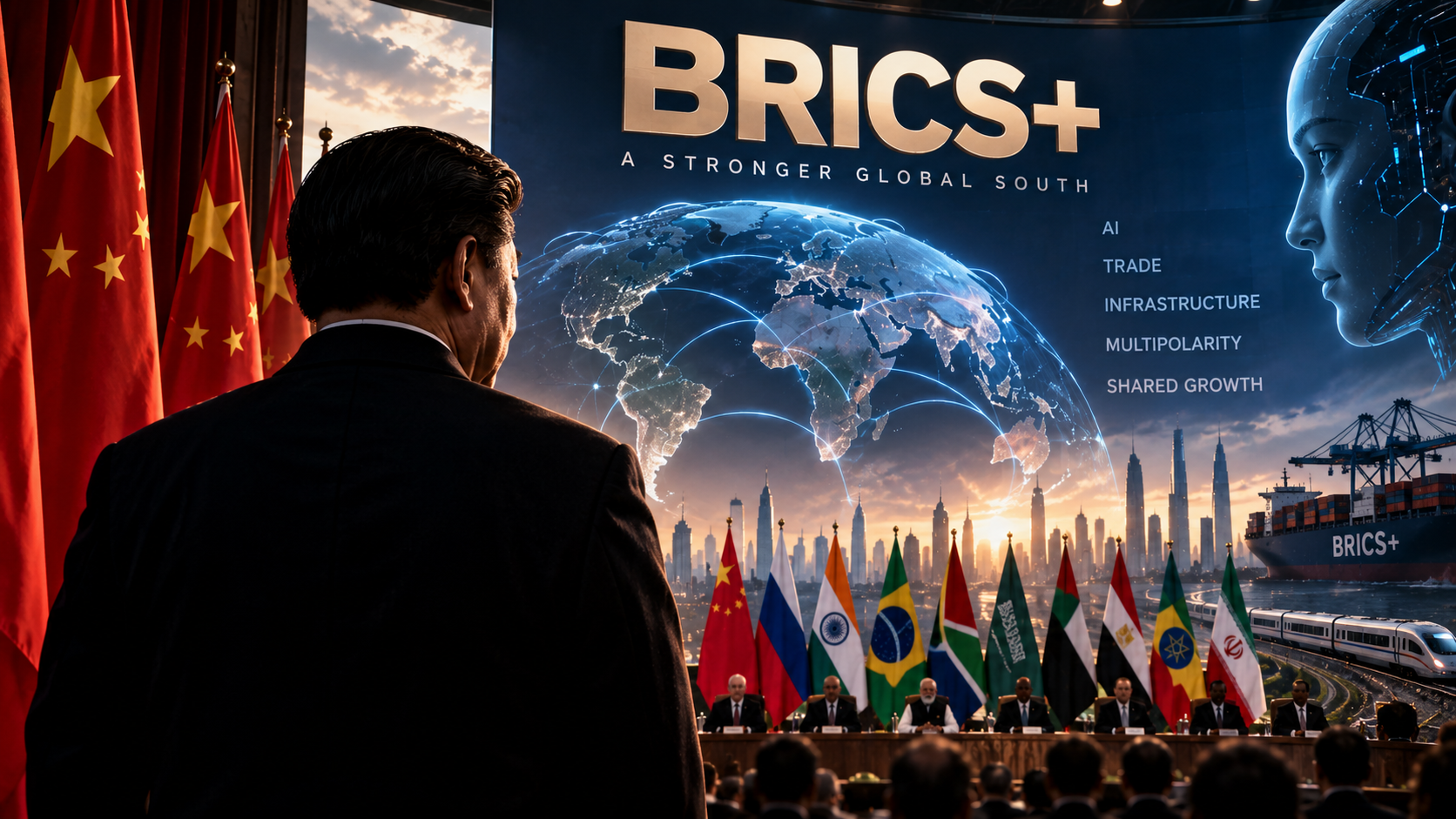
From BRICS Declaration to Working AI: What Is Missing?
China’s AI Cooperation Pitch Goes Beyond the Summit
Xi Jinping has proposed wider BRICS cooperation in artificial intelligence, trade, digital industry and manufacturing, placing technology inside a broader effort to strengthen economic links among emerging markets.
China’s official account says the president set out five initiatives at the New Delhi summit on 13 September. Reuters also reported a proposed BRICS AI Open Source Zone, alongside trade and investment measures.
The announcements establish an agenda. They do not, by themselves, demonstrate that a new AI platform is operating, that every member has accepted detailed terms or that new countries have joined the group.
The most useful question is what would turn the ambition into something researchers, businesses and governments can actually use.
‘Greater BRICS’ Is More Than a Membership Headline
The phrase can suggest that the main story is the addition of more countries. In this announcement, the emphasis is on making cooperation within the broader grouping more practical.
That distinction matters. Membership, a proposed programme and a functioning economic arrangement are different stages. A summit can move the political discussion forward without immediately changing how a company trades or which computing resources a researcher can access.
Xi’s official remarks emphasised closer markets and industrial links. The analytical challenge is to identify the mechanisms through which those goals might be achieved.
For example, a declaration favouring cooperation does not settle procurement rules, intellectual property terms or the conditions under which data can be shared. Those details often determine whether an initiative becomes useful outside the summit venue.
Why Put AI Alongside Trade and Manufacturing?
The connection is commercially understandable. AI can be used within industrial and administrative processes, so governments may see technology cooperation as part of economic development rather than a separate scientific exercise.
But announcing access to a model is not the same as delivering a productive application. An organisation must still identify a useful problem, prepare relevant information and check whether the system performs adequately in its setting.
A manufacturer assessing an AI tool, for example, would need evidence that it works on the tasks and conditions that matter to that business. A strong general demonstration would not necessarily answer those questions.
The same applies to language and local context. A tool intended for broad international use needs to be evaluated against the people and institutions expected to use it, rather than assuming success in one environment transfers automatically to every other.
These are implementation tests, not objections to cooperation. They help distinguish a programme with practical value from an impressive announcement.
What Would an Open AI Initiative Need to Disclose?
The word “open” can cover different arrangements.
Potential users would need to know what is available: model components, software, documentation, training resources or access to hosted services. They would also need clear terms governing modification, redistribution and commercial use.
Without those details, it is premature to describe the proposed zone as a fully available open-source ecosystem. The announcement should be reported as a proposal until implementation evidence supports a stronger description.
Practical questions also concern cost and control. Who supplies the computing resources? Who maintains the systems? What happens if a participating organisation wants to move to a different provider?
An arrangement can lower the barrier to initial adoption while creating a different form of dependence later. Whether that happens would depend on the technical and contractual terms, not simply the label used at launch.
China’s Influence Would Depend on Adoption
There is a plausible strategic advantage for a country whose technology becomes widely used. Familiar tools can shape training, procurement and the choices organisations make when extending existing systems.
That is an inference about how adoption can create influence, not proof that Xi’s proposals have already produced it.
The distinction is important because governments may welcome additional suppliers while resisting dependence on any one of them. Participating in a cooperation initiative does not necessarily mean accepting every preference of the country that proposed it.
For China, the strongest evidence of success would therefore come after the announcement: organisations using the resources, programmes receiving funding and tools meeting practical needs at competitive cost.
For other participants, success might mean a wider choice of technology, stronger local skills and greater ability to adapt systems to their own requirements.
Those objectives can overlap, but they are not automatically identical.
The Missing Details Are the Story’s Next Stage
A useful implementation plan would identify governance, funding, participation criteria and milestones.
Governance would clarify who makes decisions and how disputes are resolved. Funding would show whether the programme has resources beyond the announcement. Participation criteria would determine whether businesses and researchers can actually join. Milestones would make progress assessable.
The same applies to claims about shared benefits. A programme should eventually be judged through outcomes such as usable tools, completed training or demonstrable improvements in participating organisations, rather than repeated statements of ambition.
This does not require every detail to be available on the day of a summit. It does require reporting to distinguish what has been proposed from what has been delivered.
What This Means for the Wider AI Competition
The announcement broadens the geopolitical conversation beyond a simple race between two national champions.
Many governments and organisations are potential users, partners and rule-makers as well as customers. Their choices about suppliers, standards and training will help determine which technologies become embedded in everyday activity.
A successful cooperation programme could offer them additional options. An underdeveloped programme could remain largely diplomatic language. The evidence needed to tell the difference will be practical and cumulative.
Xi has put AI within a larger economic agenda for BRICS. The next question is whether the initiative produces accessible resources and durable partnerships — and whether participants can use them on terms that serve their own interests.
