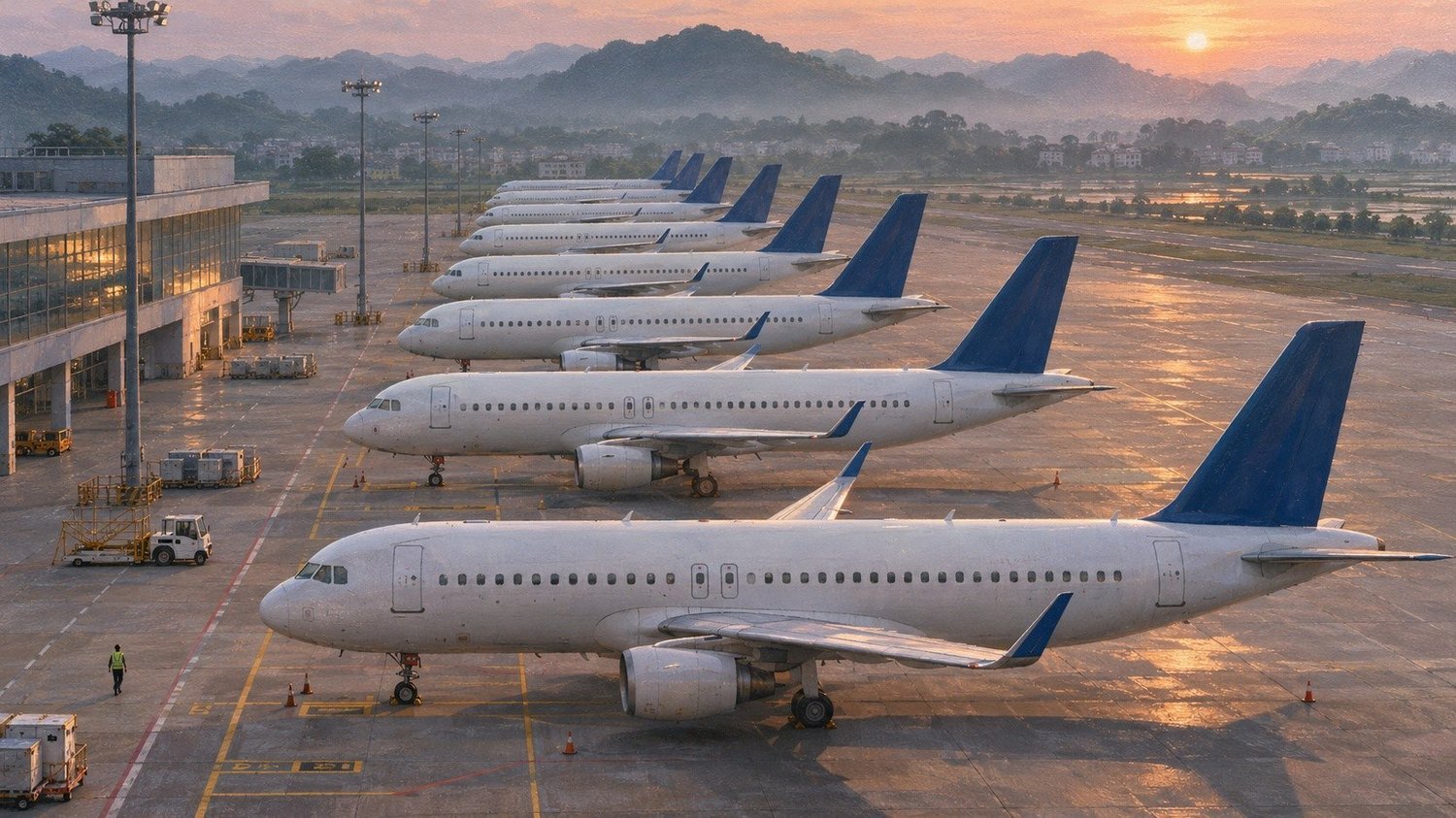
Xiamen Airlines Has Signed for 50 Boeing Jets, With Deliveries Scheduled to Begin in 2031
Fifty aircraft, 250 aircraft and $7.4 billion have all appeared in accounts of Boeing’s prospects in China this week. Only one of those numbers tells you how many planes a named airline has agreed to buy. In a Hong Kong stock exchange filing dated 24 November, China Southern Airlines disclosed that its subsidiary Xiamen Airlines had signed an agreement with Boeing for 50 new 737-8s. The purchase still requires approvals. The first deliveries are scheduled for 2031.
President Donald Trump’s reference a day earlier to a possible further 250 Boeing aircraft belongs to a different conversation. He expressed a belief about future Chinese purchases. He supplied no breakdown by airline, aircraft model or delivery year. As of the Xiamen announcement, Chinese officials had not confirmed an additional order on that scale. Treating the two figures as parts of one transaction would turn a political expectation into a fleet plan no airline has published.
Who Is Actually Buying the Aircraft?
Xiamen Airlines signed the purchase agreement. China Southern owns 55% of Xiamen, which is why the listed parent company issued a notice to shareholders. Boeing is the seller. The distinction matters because a deal attributed to China at the level of presidential diplomacy still needs an identifiable customer to take delivery, fund the purchase and put each aircraft to work.
The 737-8 is the MAX 8 variant of Boeing’s single-aisle 737 family. Fifty aircraft of one type give the agreement a specificity missing from the larger political claim. Somebody responsible for planning the fleet now has a model and a four-year delivery window to work with. The filing gives no basis for assigning the aircraft to individual routes or claiming that a passenger can already book a service that will use one of them.
The company also spells out what it still needs. Relevant Chinese government authorities must approve the transaction, and shareholders must give their approval. China Southern says it will convene a general meeting. Under Hong Kong listing rules it classifies the purchase as a major transaction. The directors signing off a stock market announcement and shareholders voting at a future meeting are separate steps. Calling the agreement signed is accurate. Calling the purchase unconditional would get ahead of the document.
Why $7.4 Billion Is the Wrong Answer to What Boeing Will Receive
The headline price is the combined catalogue value of the aircraft. Divide $7.4 billion by fifty and the result is roughly $148 million per plane. That is an average based on the published reference figure. China Southern says Boeing offered price concessions and that the actual consideration is lower. It did not disclose a negotiated price from which an outsider could calculate an accurate discount.
That leaves two common shortcuts without foundation. Dividing the list price by fifty cannot reveal the price of any single aircraft in the deal. Multiplying the resulting number by 250 cannot reveal the value of Trump’s suggested purchases. Even if another agreement were eventually signed, the types of aircraft, their equipment, commercial terms and timing could all differ. A precise-looking dollar figure would conceal every one of those unknowns.
The filing also says the payment is to be made in cash, in instalments tied to the respective delivery schedules. In this context cash describes what Boeing is to receive. It tells us little on its own about where Xiamen will obtain the money. The carrier can use funds from its operations, commercial bank loans or other financing arrangements. A buyer can make a cash payment to a manufacturer with money it has borrowed.
Why the Delivery Window Matters to Both Sides
The aircraft are scheduled to arrive in batches between 2031 and 2034. For Boeing, an agreement today can help fill production slots years ahead. For Xiamen, it means securing access to aircraft for a network the company expects to operate well into the next decade. Neither party has to pretend fifty aircraft will change hands in the same quarter as the announcement.
China Southern links the decision to its subsidiary’s hub plans in Fujian and the opportunity presented by the move to Xiamen Xiang’an International Airport. The directors also refer to the structure of the fleet and future development of the route network. Those details put a local business reason behind a deal that otherwise reads like a diplomatic scorecard. A government summit may create the occasion for an announcement. Aircraft still have to earn their keep on an airline’s schedule.
There is also an instructive comparison with Airbus. In April, China Southern and Xiamen agreed to buy 137 Airbus A320neo-family aircraft. The directors describe the Boeing purchase as complementing their Airbus plans. The two agreements make it difficult to read the latest one as a simple change of allegiance from Europe to the United States. An airline group can buy aircraft from both manufacturers for a fleet assembled over many years.
Where the Other 250 Planes Stand
In the context of the recent Shenzhen summit, the difference between a leader’s expectation and an airline’s disclosed commitment has considerable political value. A large prospective purchase can be mentioned before anyone has said which airline would take it. An investor deciding how much weight to give it needs rather more: a named buyer, a specification, the relevant approvals and an indication of when deliveries would begin.
The Xiamen filing contains enough of those details to be examined even where the answer remains private. We know who signed. We know the model and quantity. We know when deliveries are expected, whose approval is outstanding and why the catalogue price overstates what Boeing will receive. We even know the order is meant to sit alongside a substantial Airbus purchase.
For the 250, those same questions remain unanswered. A new filing could change the picture. Until one appears, the documentary record supports a significant, conditional agreement for fifty single-aisle jets. That is a substantial order on its own terms, and one whose commercial meaning will unfold aircraft by aircraft between 2031 and 2034.
Sources
- China Southern Airlines — purchase agreement, approval requirements and payment schedule filed in Hong Kong
- Reuters — Trump’s comments, the confirmed aircraft order and the earlier Airbus comparison
- Fujian Provincial People’s Government — proposed deliveries and funding arrangements
Next Reads
- What Did Trump, Xi and Putin Agree in Shenzhen, and What Did They Leave Open on Ukraine? — What the Shenzhen summit established.
- US-China Trade Talks in Paris Could Decide the Next Phase of the War — The trade discussions behind subsequent announcements.
- Trump Welcomes Xi to Washington — But Can the Spectacle Deliver a Real Deal? — The gap between diplomatic ceremony and a published agreement.
