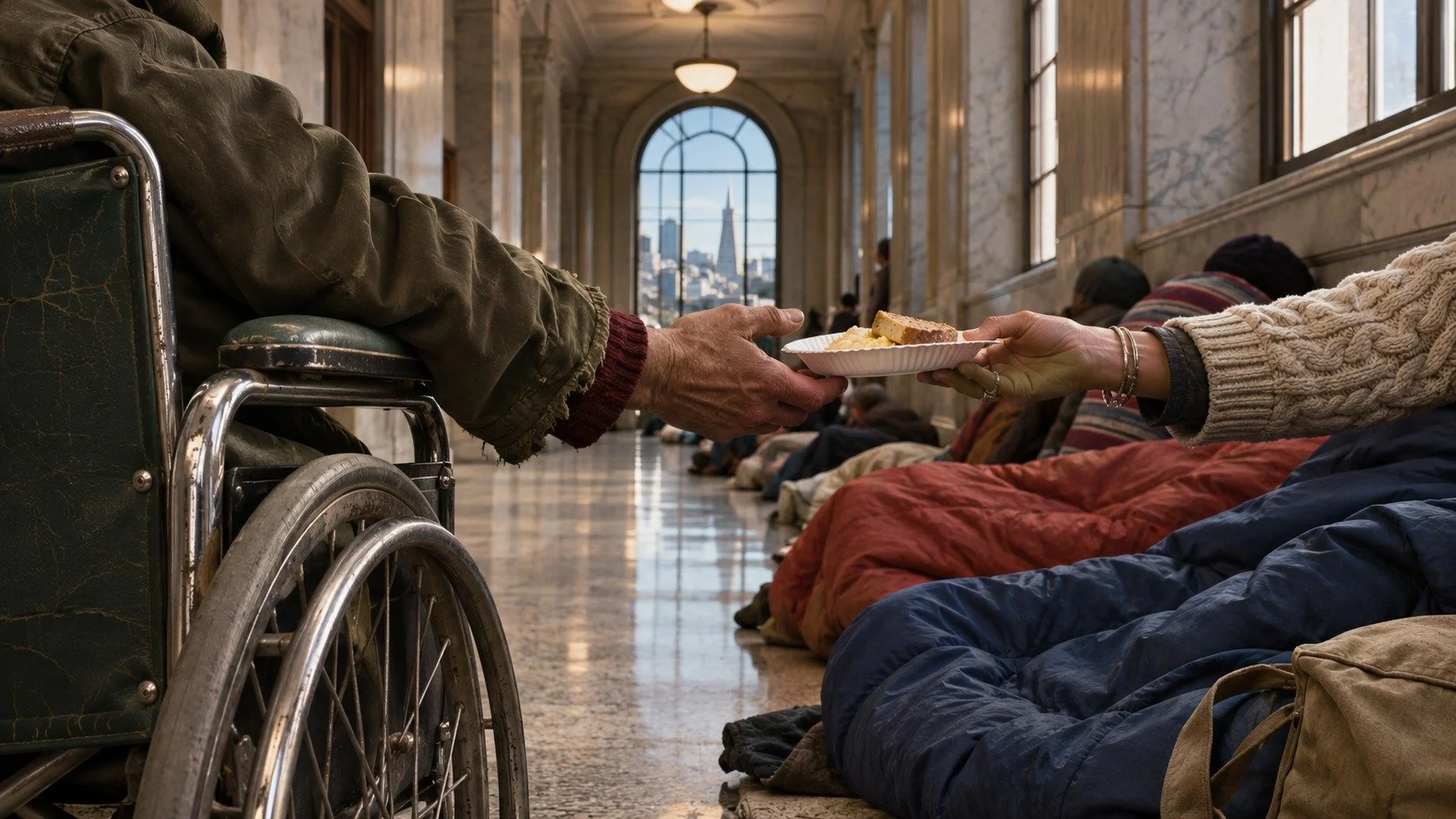
Inside the 1977 occupation that brought disability activists, local organisers and an unsigned set of federal regulations together in San Francisco.
How Do You Keep Medicine Cold During A Civil Rights Protest?
Kitty Cone helped turn an air-conditioning unit into a makeshift refrigerator. A box channelled the cold air so that protesters inside a San Francisco federal building could keep medication cool. The improvisation addressed an immediate problem. It also helped decide how long the US government would have to face the people waiting in its own offices.
Being Heumann, Siân Heder’s film about Judy Heumann and the disability rights movement, draws on the campaign known as the 504 Sit-In. The number belonged to a provision Congress had already passed. By the time protesters went through the doors in April 1977, four years had elapsed. A civil right existed on paper. Much of the argument concerned what would happen on Monday morning in the institutions obliged to honour it.
Why Did A Law Still Need A Signature?
Section 504 of the Rehabilitation Act of 1973 prohibited disability discrimination in programmes receiving federal financial assistance. That reach mattered. A hospital or school could be run locally and still depend on federal money. The government had a means of influencing institutions far beyond the buildings it owned.
Putting the principle into practice required regulations. Officials had to specify what recipients of that money were expected to do. Institutions facing new obligations had an interest in the wording, especially where compliance would cost money. Each further review created an opportunity to postpone a duty or weaken it before the people it was supposed to protect could use it.
By 1977 the draft regulations were with the Department of Health, Education and Welfare. Its secretary, Joseph Califano, had the authority protesters needed him to exercise. That gave the campaign a demand with an identifiable endpoint. Officials could voice sympathy, agree to a meeting or promise another review. The protesters could still ask whether the signature was on the page.
Why Did People Stay In San Francisco?
On 5 April demonstrators gathered at federal offices across the United States. San Francisco’s protest at 50 United Nations Plaza outlasted the others. Staying overnight changed the character of the action. People had come prepared to confront a department. They now had to solve the problems of living together inside one of its buildings.
A long occupation can select its participants very quickly. If medicine spoils, the person who needs it has to leave. If a meeting proceeds in a form some people cannot follow, those people lose their say while remaining physically present. Food, communication, personal assistance and sleep shaped who could participate in the decisions being taken in their name.
Heumann brought experience acquired well before the sit-in. She had challenged exclusion from teaching in New York and knew what it meant to confront an institution that treated a disabled person’s competence as an open question. Inside the building, leadership also meant attending to basic needs. There was a close relationship between the political principle she defended and the practical work she undertook to keep other people in the room.
Who Made The Occupation Possible?
Cone worked on logistics. Dennis Billups helped sustain morale and mediate disputes. Brad Lomax’s connections with the Black Panther Party helped bring vital outside support. The Panthers provided food, while local groups, including Glide Memorial Church and the Brick Hut cooperative, helped sustain the occupation. People with very different histories found concrete things they could do for one another.
A meal delivered to a federal office did political work. It bought the people inside another evening in which officials could not assume they would quietly go home. The same was true of refrigeration and assistance with communication. The building had been designed on assumptions about the bodies and routines of the people who used it. The protesters created arrangements that allowed a much wider group to occupy it on their own terms.
The campaign also reached Washington. Images from the time show Heumann alongside other activists and a sign-language interpreter. A familiar account of civil rights history reduces a victory to a leader delivering a speech. The interpreter in the photograph widens the frame. Someone had to make the words accessible to the people entitled to act on them.
What Did The Protesters Win?
Califano signed the regulations on 28 April 1977. The San Francisco occupation ended shortly afterwards. The rules gave practical force to the prohibition on discrimination in federally funded programmes and set an important precedent for later disability rights campaigning. A signature did not install a ramp, admit a student or retrospectively restore a lost job. It changed the grounds on which disabled people could challenge exclusion.
The film’s title singles out a woman whose work deserves to be known. The most revealing objects in the history around her include a box fitted to an air conditioner and the meals brought through the doors. Someone looking at either in isolation might see an act of kindness. The people organising the sit-in understood the larger consequence. Keeping a fellow protester well enough to stay meant the government had to keep dealing with them all.
