Biggest Proven CIA Conspiracies Ranked: What Declassified Records Actually Show
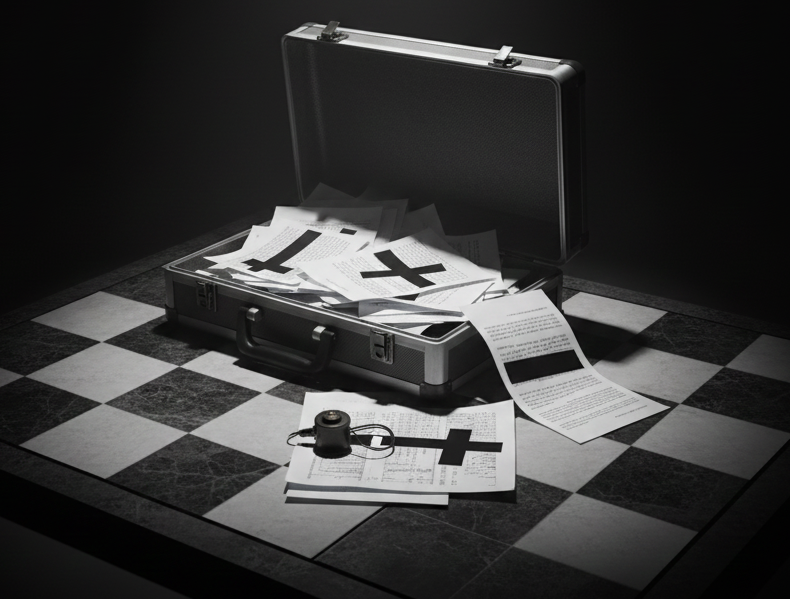
In the past week, a fresh wave of declassified-document roundups has pushed an old argument back into the spotlight: which “CIA conspiracies” are no longer theories at all, but documented covert programs.
The tension is simple. Intelligence services exist to keep secrets. Democracies rely on public consent. When the record finally surfaces—through declassification, oversight investigations, and court fights—it often reads less like a spy thriller and more like a ledger of decisions made in the dark.
This piece ranks the biggest proven CIA conspiracies by scale, duration, and real-world impact. It also draws a clear line between what’s firmly documented and what remains speculation, even if it’s popular online.
The story turns on whether secrecy that once looked defensible can coexist with accountability in an era where trust is already brittle.
Key Points
A recent surge of anniversary-driven document releases has revived public interest in “conspiracies” that are now backed by official records.
“Proven” here means supported by declassified documents, official investigations, or publicly acknowledged collections—not rumors.
The highest-impact cases tend to share a pattern: weak oversight, blurred legal boundaries, and long-lasting geopolitical blowback.
Some operations reshaped governments; others reshaped norms, especially around surveillance, interrogation, and secrecy.
Technology has shifted the battlefield from coups and clandestine raids to encryption, data access, and information influence.
More releases are still likely, but declassification is selective and slow, which keeps controversy alive.
Background: Proven CIA conspiracies and what “proven” means
The word “conspiracy” is doing two jobs at once. In pop culture, it suggests a grand hidden plan. In practice, many of the biggest CIA scandals were simply covert programs that were denied, compartmented, or kept from meaningful oversight until documents emerged.
For this ranking, “proven” means there is a strong paper trail: declassified internal CIA records, official congressional findings, inspector general reviews, or curated historical collections released through formal channels. That standard excludes a lot of viral claims. It also avoids the trap of treating “still classified” as proof of anything.
Why the renewed attention now? Partly because document ecosystems have matured. Large archives, FOIA-driven releases, and rolling declassification processes keep resurfacing old cases at moments when public trust is already under strain.
Analysis: Biggest proven CIA conspiracies ranked
The Ranking: 10 proven CIA conspiracies, from biggest impact to smallest
Rank 1 — Post-9/11 secret detention, renditions, and “enhanced interrogation.”
A global program of secret prisons, coercive interrogations, and transfers of detainees outside normal courts became one of the most consequential covert efforts of the modern era. Its impact still shapes U.S. alliances, counterterrorism legitimacy, and arguments about what democracies permit under fear.
Rank 2 — The Crypto AG encryption operation.
For decades, compromised encryption equipment sold worldwide gave U.S. intelligence extraordinary visibility into other governments’ communications. This was less about one country’s regime change and more about an entire era of quietly engineered access.
Rank 3 — The 1953 Iran coup (Operation Ajax).
Covert action helped topple Iran’s elected prime minister and reset the country’s political trajectory. The long tail includes deep mistrust of U.S. intent in the region and a durable cautionary tale about short-term wins and long-term backlash.
Rank 4 — The 1954 Guatemala coup (Operation PBSuccess).
A CIA-backed operation helped remove Guatemala’s president and set off a chain of instability and repression. It became an early, influential model for Cold War covert action in the Western Hemisphere.
Rank 5 — Covert action in Chile (1970–1973).
Efforts to influence Chilean politics and destabilize an elected government became one of the most studied cases of covert interference. The controversy persists because the human consequences were severe and the political debate remains live.
Rank 6 — The “Secret War” in Laos.
A large-scale clandestine conflict ran alongside the Vietnam War, involving paramilitary forces, proprietary aviation networks, and deep secrecy. It’s a prime example of how a covert program can become a major war without the public ever getting a clean vote on it.
Rank 7 — Assassination plots and the normalization of “plausible deniability.”
Multiple documented plots to kill foreign leaders—and adjacent planning—helped trigger a lasting backlash that shaped later executive restrictions. Even when plots failed, the institutional willingness to plan them left a deep mark.
Rank 8 — MKUltra and behavior-control experiments.
A covert research program explored mind control, drugs, and interrogation-related experimentation, including on unwitting subjects. It remains one of the clearest examples of ethical collapse justified by secrecy and perceived strategic need.
Rank 9 — Domestic spying, mail opening, and surveillance of activists.
Programs targeting Americans and domestic movements violated the spirit, and often the letter, of the CIA’s charter. The scandal mattered not just for what was done, but for how easily missions expanded once a secret capability existed.
Rank 10 — Relationships with journalists and media use as cover.
The documentary record shows covert relationships with media personnel and the use of journalistic cover in ways that damaged press credibility. Compared with coups or secret prisons, the body count is lower, but the institutional harm to public trust is enduring.
Political and Geopolitical Dimensions
The top of the list is dominated by two categories: regime influence and post-9/11 counterterrorism. The former changed governments. The latter changed norms. Both created blowback that outlasted the original tactical aims.
Major viewpoints divide around necessity versus restraint. Defenders argue that covert action filled gaps where diplomacy failed and open war was unacceptable. Critics argue that secrecy enabled errors that would never survive public scrutiny, and that the strategic cost—anti-American sentiment, instability, and weakened legitimacy—often exceeded the benefits.
Three future scenarios are plausible. First, a continued drift toward “gray zone” operations with tighter legal packaging but similar secrecy. Second, a reform cycle driven by scandal, with sharper oversight and narrower authorities. Third, a hybrid world where secrecy grows operationally while transparency grows historically through declassification, creating constant retroactive controversy.
Economic and Market Impact
Covert action reshapes markets in indirect ways. Coups and destabilization shift resource access, investment flows, and political risk premiums, sometimes for decades. Corporate decisions—whether in energy, mining, infrastructure, or telecoms—often follow the weather of geopolitical stability.
The Crypto AG case is a reminder that espionage can be an economic force multiplier. If states believe supply chains are compromised, they diversify vendors, harden standards, and politicize procurement. That raises costs and accelerates technological fragmentation.
Social and Cultural Fallout
There is a paradox at the heart of “proven conspiracies.” Documented wrongdoing can strengthen democracy if it leads to reform. But it can also poison trust if people conclude that secrecy always means abuse.
The cultural aftershock is visible in how people process current events. Once the public learns that major covert programs existed, many assume today’s scandals must be larger, even when evidence is thin. That dynamic turns genuine accountability work into fuel for misinformation, because real history becomes a launchpad for imagined history.
Technological and Security Implications
The older model of covert power leaned on money, intermediaries, propaganda, and paramilitary networks. The newer model leans on data access, encryption weakness, digital influence, and surveillance authorities. The ethical dilemmas did not disappear. They moved into infrastructure.
The lesson is not that intelligence should stop. It is that capability tends to expand unless actively contained. In practical terms, oversight that can’t audit technical systems will always arrive late, after the harm is already baked in.
What Most Coverage Misses
The most overlooked factor is that declassification is not a neutral window into the past. It is a curated process shaped by institutional incentives, legal fights, and political timing. That means the public record will always be incomplete, and the gaps invite both reasonable skepticism and irresponsible fantasy.
A second blind spot is how often “success” is defined internally. Many covert programs look tactically effective in the short run. The strategic ledger—civil conflict, radicalization, anti-U.S. sentiment, and weakened alliances—often posts its costs years later, under different leaders who inherit the consequences.
Why This Matters
People in countries targeted by covert action carry the long memory. So do diplomats and military planners who must repair relationships after revelations surface. At home, citizens are affected through trust in institutions, legal precedents around surveillance, and the boundary between wartime powers and peacetime rights.
In the short term, the issue shapes oversight debates, declassification battles, and political narratives about the “deep state.” In the long term, it shapes whether democratic societies can maintain effective intelligence services without eroding the legitimacy those services claim to protect.
Concrete events to watch next include upcoming oversight agendas as a new U.S. congressional year begins in early January, further assassination-record releases where applicable, and ongoing FOIA-driven disclosures that tend to arrive in batches rather than a single dramatic drop.
Real-World Impact
A cybersecurity lead at a midsize bank in Frankfurt reassesses encryption vendors after reading about historical supply-chain compromise. The result is a costly migration, but also a push for more rigorous procurement audits.
A human-rights lawyer in Santiago uses newly available records to argue that historical accountability is not abstract, because institutional patterns repeat when consequences are light. The work becomes part legal strategy, part public education.
A U.S.-based veteran working in private security hears old programs cited in online debates about current surveillance. The practical effect is simple: clients demand stronger compliance paperwork, because trust is now a business risk.
Conclusion
The documented history of CIA covert programs is not one story. It is a pattern: secrecy enables speed and deniability, but it also enables mission creep and moral shortcuts that can take generations to unwind.
The fork in the road is whether governments build oversight that can keep pace with modern covert capabilities, especially technical ones, without crippling legitimate intelligence work. The next signs will be visible in what gets released, what stays hidden, and whether reforms are structural or cosmetic.
