Biggest conspiracies that turned out to be true, ranked
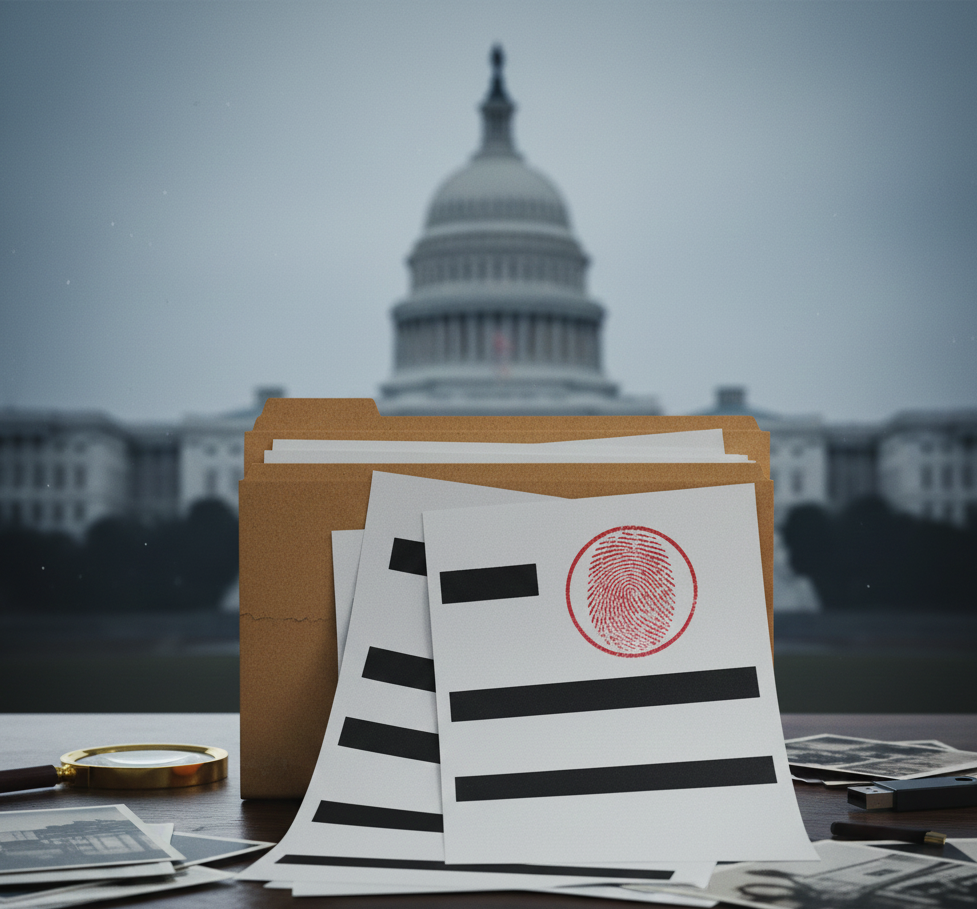
In recent days, lawmakers in Washington have been arguing over how much surveillance power the government should have, and how many checks should sit between that power and ordinary people’s lives. The debate is not abstract. One major authority is set to expire in 2026 unless Congress renews it, and the fight is already heating up.
That timing matters because history has a pattern. Many of the biggest proven conspiracies were not wild fantasies. They were real programs, run by real institutions, defended as necessary, and hidden until a leak, a court case, or an investigation dragged them into daylight.
This piece ranks the biggest conspiracies that later became fact. It also explains the common mechanics behind them: how secrecy expands, how oversight fails, and how the truth usually arrives late, after the damage is done.
The story turns on whether transparency is rising faster than the machinery of secrecy.
Key Points
A high-stakes surveillance authority is approaching a hard deadline in 2026, sharpening a familiar conflict between security claims and civil liberties.
Many “paranoid” suspicions in the past were not paranoia at all; they were simply early, incomplete descriptions of real covert programs.
The biggest proven conspiracies share repeatable features: mission creep, weak external oversight, and incentives to hide failure or abuse.
The harm is rarely just legal or political. It often shows up as lost trust in medicine, policing, elections, and basic public truth.
When the record finally becomes public, it is usually partial: destroyed documents, heavy redactions, and years of delayed disclosure.
The most important lesson is not “anything is possible.” It is that extraordinary powers, once built, tend to get used.
Background
A conspiracy, in plain terms, is a coordinated plan kept secret because public scrutiny would stop it. Not every scandal qualifies. This ranking focuses on cases where later documentation, official inquiries, court findings, or government admissions established that the core claim was real.
The list is not about proving every rumor. It is about the subset that crossed the line from suspicion into confirmation. The “biggest” label here is weighted toward three things: scale, human harm, and long-term consequences for law, culture, and trust.
One more rule matters. The existence of secrecy does not automatically mean a grand puppet-master story is true. In many cases, the reality is more mundane and more chilling: bureaucratic self-protection, political advantage, and the quiet belief that the ends justify the means.
Ranked: Biggest conspiracies that turned out to be true
1) The tobacco industry’s long deception campaign
For decades, major tobacco firms coordinated messaging and strategy that downplayed health risks, cast doubt on emerging science, and framed addiction as choice rather than design. Later litigation and court findings established that the public story and the private knowledge diverged sharply. The scale is unmatched: global reach, long duration, and consequences measured in lives, not headlines.
2) Mass surveillance of communications at industrial scale
Long before the public had vocabulary for metadata, “upstream,” or secret court processes, people suspected governments were collecting far more than they admitted. Disclosures and official oversight work later confirmed sweeping collection architectures and broad querying powers, often justified as foreign-intelligence tools but capable of pulling in domestic communications in practice. The impact is structural: once built, these systems become part of the state’s permanent wiring.
3) COINTELPRO and the domestic sabotage of political movements
For years, activists believed federal law enforcement was infiltrating, spying on, and disrupting lawful political organizing. That suspicion was later supported by documentation and investigations describing covert efforts to monitor, discredit, and fracture groups seen as “subversive.” The lasting damage was not just to targeted groups. It was to the idea that dissent can be separated from surveillance.
4) The Tuskegee syphilis study
This was not rumor. It was a long-running government public health study in which Black men with syphilis were misled and denied effective treatment even after it became available. The revelation reshaped medical ethics and permanently scarred trust in institutions meant to protect health. It also shows how a conspiracy can hide in plain sight when the victims lack power.
5) MKUltra and covert human experimentation
The idea that an intelligence agency would dose people with mind-altering drugs without consent used to sound like pulp fiction. It later became a matter of record: experiments with LSD and other methods in pursuit of interrogation and behavior-control research, with documentation gaps made worse by destroyed files. The horror here is not only what happened. It is how easily “research” becomes cover for abuse.
6) Operation CHAOS and domestic intelligence collection by an agency built for foreign targets
The public expects foreign intelligence agencies to operate abroad. Operation CHAOS punctured that boundary by gathering information tied to domestic dissent, with later inquiries concluding some activities exceeded lawful authority. It is a classic pattern: a mission framed as defensive becomes a catch-all repository of politically sensitive information.
7) The Iran–Contra network of covert policy
The core allegation sounded too baroque to be real: secret arms dealings tied to hostage diplomacy, with money diverted to fund a foreign proxy effort despite legal restrictions. Investigations later documented a web of improvisation, denials, and document problems. The deeper lesson is how foreign policy can drift into shadow channels when leaders believe formal constraints are obstacles, not guardrails.
8) Watergate as a blueprint for political espionage and cover-up
A break-in, a trail of money, and a scramble to contain the fallout became a defining case study in coordinated wrongdoing. The “conspiracy” was not just the initial operation. It was the sustained attempt to obstruct accountability, which eventually collapsed under legal pressure and recorded evidence. Its legacy is cultural: it permanently changed how the public imagines political power behaves when it thinks it will not be caught.
9) Operation Paperclip and the recruitment of enemy expertise
After World War II, the claim that the United States quietly brought German scientists into American programs, sometimes smoothing over past affiliations, carried an uncomfortable moral charge. The core reality became well documented: strategic competition drove decisions that prioritized expertise and advantage over clean narratives. The conspiracy was not a single crime. It was a state choice to trade ethical clarity for technological acceleration.
10) The Guatemala STD experiments
The outline is shocking, and it is real: vulnerable people were subjected to sexually transmitted disease research tied to U.S.-backed medical work in the 1940s. Later scholarship and official responses made clear that ethical lines were crossed in ways that would be unthinkable if done to powerful populations. It is a reminder that secrecy often travels along imperial gradients: what is hidden is frequently what would not be tolerated at home.
Analysis
Political and Geopolitical Dimensions
These cases show that secrecy is not only about hiding operations from adversaries. It is also about insulating decision-makers from domestic constraint. Whether the setting is surveillance, foreign policy, or counterintelligence, the political advantage is the same: power without immediate accountability.
There is also a geopolitical loop. When threats feel existential, leaders justify extraordinary tools. Those tools then outlive the emergency. Once embedded, they become bargaining chips in later fights, and “national security” becomes a reusable argument rather than a specific condition.
The near-term scenario is familiar. Authorities approaching expiration dates force a rushed debate. The long-term scenario is the real risk: renewals that keep expanding capability while oversight changes lag behind.
Economic and Market Impact
Proven conspiracies often reshape markets because trust is an economic asset. Tobacco litigation, health reforms, and corporate disclosures changed how whole industries operate. Surveillance controversies can hit technology firms through compliance costs, reputational harm, and cross-border data tension.
There is a subtler impact too: the “fraud premium.” When the public learns an institution lied for years, people begin pricing in deception everywhere. That corrodes compliance, cooperation, and the legitimacy that makes modern governance cheaper and smoother.
In future scenarios, the economic question becomes whether transparency mechanisms can keep pace with fast-moving technology and slow-moving institutions. If they cannot, uncertainty becomes the norm, and uncertainty is expensive.
Social and Cultural Fallout
The deepest damage often lands in the psyche. Tuskegee did not only injure participants. It reshaped community-level trust in medicine for generations. COINTELPRO did not only target groups. It chilled speech and widened suspicion between citizens and the state.
These cases also changed culture’s default posture. People learned that disbelief is not a proof of falsity. That lesson has a dark twin: once you know some conspiracies were real, it becomes easier for bad actors to sell fake ones. The social challenge now is to hold both truths at once: skepticism is healthy, and evidence still matters.
Technological and Security Implications
Technology turns small abuses into scalable ones. Surveillance is the clearest example: a tool designed for targeted collection becomes a platform for mass collection when storage and search get cheap.
Security institutions face real constraints, but the recurring problem is governance. Capabilities grow faster than rules. Oversight systems tend to be reactive, not anticipatory, and often depend on insiders acting with unusual courage.
The plausible future fork is not “surveillance versus no surveillance.” It is whether societies can build systems that log, limit, and audit power in real time, rather than decades later.
What Most Coverage Misses
Many people assume conspiracies succeed because of genius planning. The record suggests a different driver: fragmentation. Separate units pursue narrow goals, each with its own incentives, and the bigger system drifts into wrongdoing without a single mastermind.
The second overlooked factor is paperwork decay. Files are destroyed, records are scattered, and redactions can be so heavy that the “truth” arrives as a silhouette. That makes accountability feel incomplete, which feeds both cynicism and speculation.
The third is time. Even when truth surfaces, it often comes after statutes expire, careers end, and public attention moves on. That delay is not accidental. It is a feature of how institutions survive scandal.
Why This Matters
The immediate stakes are clearest in surveillance. A major U.S. authority is currently scheduled to expire in April 2026 unless renewed, and legislative fights over warrants, scope, and oversight are already intensifying.
Longer-term, the stakes are about trust infrastructure. Democracies run on consent, and consent depends on credible limits. When people believe the system operates by hidden rules, cooperation drops. That affects everything from public health uptake to crime reporting to election legitimacy.
Concrete events to watch next are procedural, not dramatic: committee hearings, draft reauthorization language, oversight board updates, and court challenges that clarify what “incidental collection” and “querying” mean in practice. The details are where power hides.
Real-World Impact
A public defender in Arizona tries to advise clients about digital exposure. The law is complicated, and the client’s fear is simple: “They’re watching everything.” Even if the claim is overstated, the history makes it harder to dismiss, and harder to reassure.
A nurse in Birmingham counsels a patient who refuses a test because of inherited distrust. The nurse is not arguing about science. She is arguing against memory, passed down like scar tissue, from earlier institutional betrayal.
A tech compliance manager in California watches policy shifts and deadlines. The question is not politics. It is cost and risk: which requests must be honored, which can be challenged, and what happens when the rules change mid-quarter.
A small activist group in Chicago debates whether to organize publicly or keep meetings private. The fear is not imaginary. It is informed by precedent. That changes civic life even when no one is actively being targeted.
Conclusion
The hardest part of writing about proven conspiracies is avoiding the lazy takeaway that “anything can be true.” The record says something narrower and more useful: when power operates behind sealed doors, abuse is not a rare glitch. It is a predictable temptation.
The fork in the road is not between innocence and paranoia. It is between institutions that can be audited and corrected in real time, and institutions that only answer decades later, after the harm has set like concrete.
The signs to watch are boring on purpose: deadlines, oversight language, disclosure rules, and whether lawmakers choose enforceable limits or comforting assurances. That is where the next “crazy theory” either dies, or becomes tomorrow’s confirmed history.
