

Worst Dictators Ranked: A Clear-Eyed Look at the Modern Age of State Terror
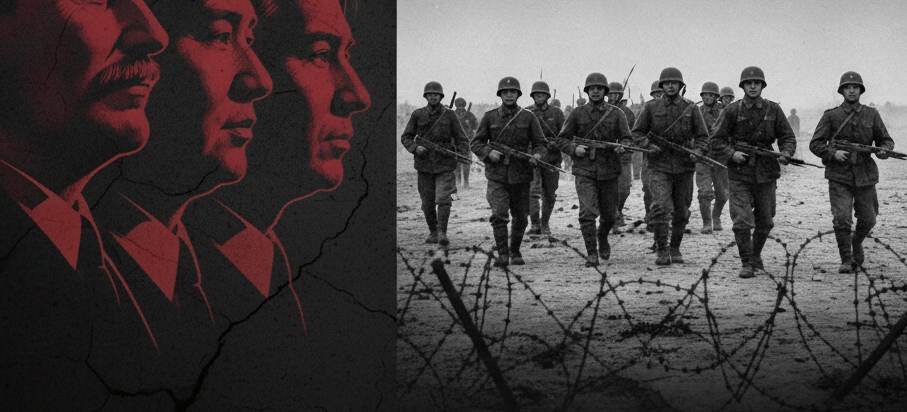
In the past few days, news about political prisoners, national security prosecutions, and overseas legal complaints has pushed an old word back into everyday conversation: dictator. It matters because the word is often used loosely, and that fuzziness is dangerous. If people cannot recognize dictatorship as a system, they tend to spot it only after the damage is done.
Ranking the worst dictators is uncomfortable. It can feel like turning human suffering into a scoreboard. But done carefully, a ranking can do something useful: it can reveal patterns. It can show which tools of control come up again and again, across continents and ideologies.
This piece ranks ten of the worst dictators of the modern era, using the best-established historical record. It also explains what made these regimes so lethal, and what present-day societies can learn from how dictatorship escalates.
The story turns on whether democratic societies can identify the machinery of dictatorship before it starts to kill at scale.
Key Points
“Worst” is not only about body counts. It also includes how systematic the violence was, how long it lasted, and how deeply it damaged institutions.
The top tier combines mass death with state planning: famine policy, industrialized killing, forced labor, and targeted extermination.
Some death totals are uncertain and contested, especially where records were destroyed or never kept. Ranges are more honest than single numbers.
Many dictatorships begin with emergency logic: security, purity, modernization, or revenge. The language changes first. The rules change next.
Technology rarely creates dictatorship by itself, but it often makes repression faster, cheaper, and harder to escape.
Memory fights are part of the struggle. When societies “rehabilitate” strongmen, they also rehabilitate the methods.
Background
A dictator, in the simplest sense, is a ruler who concentrates power and removes meaningful limits: free elections, independent courts, a free press, and the ability of citizens to organize against the state. Not every dictator commits mass murder. But the worst dictators tend to share one trait: they build institutions that turn cruelty into routine.
This ranking uses three overlapping measures. First, the scale of civilian deaths tied to state policy, including deliberate killing, forced labor, and engineered famine. Second, the degree of system design: secret police, camp systems, mass deportations, and ideological targeting. Third, long-run impact: how far the regime warped a society’s norms, demographics, and trust.
Numbers matter, but they do not settle the moral argument. A smaller death toll can still reflect a society terrorized into silence for generations. Where the record is unclear, this piece uses cautious ranges and plain uncertainty.
Worst Dictators Ranked
1) Mao Zedong (China)
The Great Leap Forward turned political fantasy into national policy and helped trigger a catastrophic famine. Estimates of deaths tied to that period vary widely, running into the tens of millions, with many scholars placing the range roughly between the low tens of millions and over fifty million. The defining feature was not only scale, but denial: local officials falsified reality upward while starvation spread downward.
2) Joseph Stalin (Soviet Union)
Stalin fused ideology with bureaucracy and created a system where arrest, exile, forced labor, and execution became normal tools of governance. Death estimates vary depending on what is counted (executions, Gulag mortality, deportations, and famine), but they commonly reach many millions. The terror was both targeted and indiscriminate: enemies, imagined enemies, and entire categories of people.
3) Adolf Hitler (Nazi Germany)
Hitler’s regime built an industrial machine of extermination. Six million Jews were murdered in the Holocaust, alongside the mass killing and persecution of many other groups. Hitler also unleashed a war that killed tens of millions more, blurring the line between battlefield and civilian annihilation in a way that permanently reshaped global politics and law.
4) King Leopold II (Congo Free State)
Leopold’s private rule over the Congo Free State created a model of extraction backed by terror. Forced labor and punishment regimes helped drive immense population loss; estimates of deaths vary and remain debated, often ranging from several million to around ten million. This is dictatorship without ideology: violence used as an economic instrument.
5) Pol Pot (Cambodia)
The Khmer Rouge tried to reset society to “Year Zero,” emptying cities and treating education, religion, and perceived disloyalty as crimes. Over roughly four years, an estimated one million to three million people died through execution, forced labor, starvation, and disease. A striking element was the speed: radical purification carried out at national scale in a short window.
6) Suharto (Indonesia)
Suharto’s rise was accompanied by mass killings of alleged communists and suspected sympathizers in 1965–66, with estimates often beginning around half a million and sometimes reaching far higher. His rule also coincided with severe violence in places such as East Timor, where large-scale civilian deaths are widely documented but hard to count precisely. The regime’s legacy includes not only repression, but the endurance of a narrative that justified it.
7) Francisco Franco (Spain)
Franco ruled for decades after a civil war and used the state to punish, erase, and intimidate opponents. Estimates of deaths from repression and the number of disappeared vary by method and definition, but the scale is widely recognized as massive, with long-running efforts still underway to recover remains and identify victims. The regime’s lasting damage sits in the silence it enforced inside families, schools, and institutions.
8) Saddam Hussein (Iraq)
Saddam used terror as governance and war as policy. The Anfal campaign against Kurds in 1988 is widely described as a genocide, with death toll estimates ranging from tens of thousands to around a hundred thousand, while some claims go higher. His rule also involved mass imprisonment, torture, and forced displacement, with consequences amplified by repeated wars.
9) Idi Amin (Uganda)
Amin’s rule was shorter than many on this list, but intensely lethal. A commonly cited estimate is that roughly 300,000 people were killed, alongside widespread torture and ethnic persecution. The regime also gutted the economy through expulsions and patronage, showing how quickly a state can be hollowed out when fear replaces competence.
10) Hissène Habré (Chad)
Habré’s security apparatus is linked to large-scale torture and political killing. A national inquiry in the early 1990s described approximately 40,000 killings and far larger numbers of torture cases. His case also stands out because it helped set a modern precedent: the idea that a former head of state could still face prosecution for crimes committed in office.
Analysis
Political and Geopolitical Dimensions
The worst dictators rarely rule alone. They build coalitions of fear and benefit: security chiefs who gain impunity, party cadres who gain status, business networks that gain monopolies, and local officials who learn that cruelty is rewarded. Foreign relationships can also extend a regime’s life. Trade, arms, and diplomatic cover can matter more than public speeches.
These regimes also weaponize identity. Some do it through race and ethnicity, some through class, religion, or “national purity.” The categories vary, but the political function is consistent: shrink the circle of who counts as fully human, then treat the excluded as a problem to be solved.
A final pattern is the “emergency state.” War, terrorism, sabotage, and disorder become a permanent explanation for permanent powers. Once a society accepts that logic, dictatorship no longer needs to announce itself. It simply renews itself.
Economic and Market Impact
At the extreme, dictatorship turns the economy into a control surface. Food becomes leverage. Jobs become loyalty tests. Housing becomes surveillance. The Great Leap Forward and Stalin’s collectivization show how policy failure becomes mass death when leaders refuse to admit reality.
Even when a dictatorship delivers short-term growth, it often does so by concentrating gains and privatizing risk onto ordinary people. Corruption is not a side effect. It is a tool: it binds elites to the ruler because everyone becomes complicit, and defection becomes dangerous.
Globally, the economic impact can be delayed but persistent. Refugee flows, sanctions, war-driven commodity shocks, and the long afterlife of trauma all shape markets. The costs do not end when the dictator falls. They migrate.
Social and Cultural Fallout
The deepest damage is often invisible. Dictatorship teaches people to lie for safety, then to believe their own lies for sanity. Families learn what not to say. Schools teach what not to ask. Trust decays, and when trust decays, rebuilding a functioning democracy becomes harder than holding an election.
A ranking can hide another truth: survivors do not experience horror as a number. They experience it as years of hunger, one missing parent, one prison sentence, one neighbor who suddenly avoids eye contact. Dictatorship scales by multiplying that small fear into a national climate.
Memory becomes a battlefield because it decides what a society is allowed to learn. When strongmen are reframed as “necessary,” the methods are reframed as “acceptable.” That is how the past recruits the future.
Technological and Security Implications
The twentieth century’s worst regimes relied on paper, files, and human informants. Yet even then, technology mattered: rail networks, industrial systems, radio propaganda, and modern weapons all widened reach. Today’s lesson is not that technology causes dictatorship. It is that it reduces the cost of repression.
Surveillance systems can turn dissent into data. Automated censorship can turn debate into silence. Digital ID systems can turn services into compliance. The same state capacity that makes life efficient can also make resistance risky.
The security state’s strongest weapon is not the prison. It is unpredictability. When rules are unclear, everyone self-polices. That is why dictatorships love vague laws and flexible charges.
What Most Coverage Misses
Most coverage treats dictatorship as a personality problem: one cruel leader, one bad temperament, one “strongman.” That misses the harder point. Dictatorship is an institution problem. The leader is the face, but the machine is the story.
Another overlooked factor is speed. Several of history’s worst escalations happened quickly after a turning point: a coup, a purge, a war, a “reform” campaign, a declared emergency. People tend to imagine tyranny as gradual. Often it is sudden, then normalized.
Finally, there is the quiet role of careerism. Many of the worst acts were carried out by ordinary people trying to be safe, useful, or promoted. That is why prevention is not only moral. It is administrative: guardrails, oversight, and consequences before the system learns it can get away with it.
Why This Matters
The modern world is living through a renewed argument about what counts as legitimate power and what counts as “security.” That argument shows up in courtrooms, in elections, in prison systems, and in the language governments use to describe opponents. History’s worst dictators reveal where that road can lead when restraints fail.
In the short term, the most affected groups are those who can be isolated: minorities, dissidents, journalists, union organizers, and people labeled “unpatriotic.” In the long term, whole societies pay through weaker institutions, lower trust, and the lingering economic drag of trauma and flight.
Concrete events to watch are often procedural, not dramatic: election timetables that exclude real opposition, expansions of national security laws, court decisions that narrow due process, and international legal filings that test whether impunity still holds. Dates matter because legitimacy is often manufactured through calendars.
Real-World Impact
A teacher in Warsaw tries to cover twentieth-century history while students arrive with conspiracy videos on their phones. The lesson becomes less about facts and more about how to spot manipulation before it feels normal.
A compliance officer in Silicon Valley is asked to sell surveillance tools abroad. The paperwork looks clean. The moral risk sits in what happens after deployment, when “crime prevention” becomes “opposition prevention.”
A museum worker in Phnom Penh watches a new generation arrive that did not live the Khmer Rouge era. The challenge is not only remembrance. It is making the past feel real enough to matter.
A nurse in London treats a refugee family with chronic insomnia and panic. There are no visible injuries. The harm lives in the body anyway, long after the border crossing is done.
Conclusion
The worst dictators ranked here differ in ideology, geography, and era, but they converge on one reality: mass harm is rarely accidental once the system is built. The killing may begin as policy failure, revenge, or “security.” It persists because the state learns it can.
The fork in the road is always the same. Either institutions hold and abuses stay punishable, or institutions bend and cruelty becomes a career path.
The signs that the story is breaking one way or the other are not mysterious. Watch whether opponents can organize without fear, whether courts can say no, whether facts can survive, and whether leaders accept limits even when limits are inconvenient.
