

Hezbollah History Explained: How Lebanon’s Most Powerful Militant Movement Formed and Why Israel Still Treats It as a Standing War
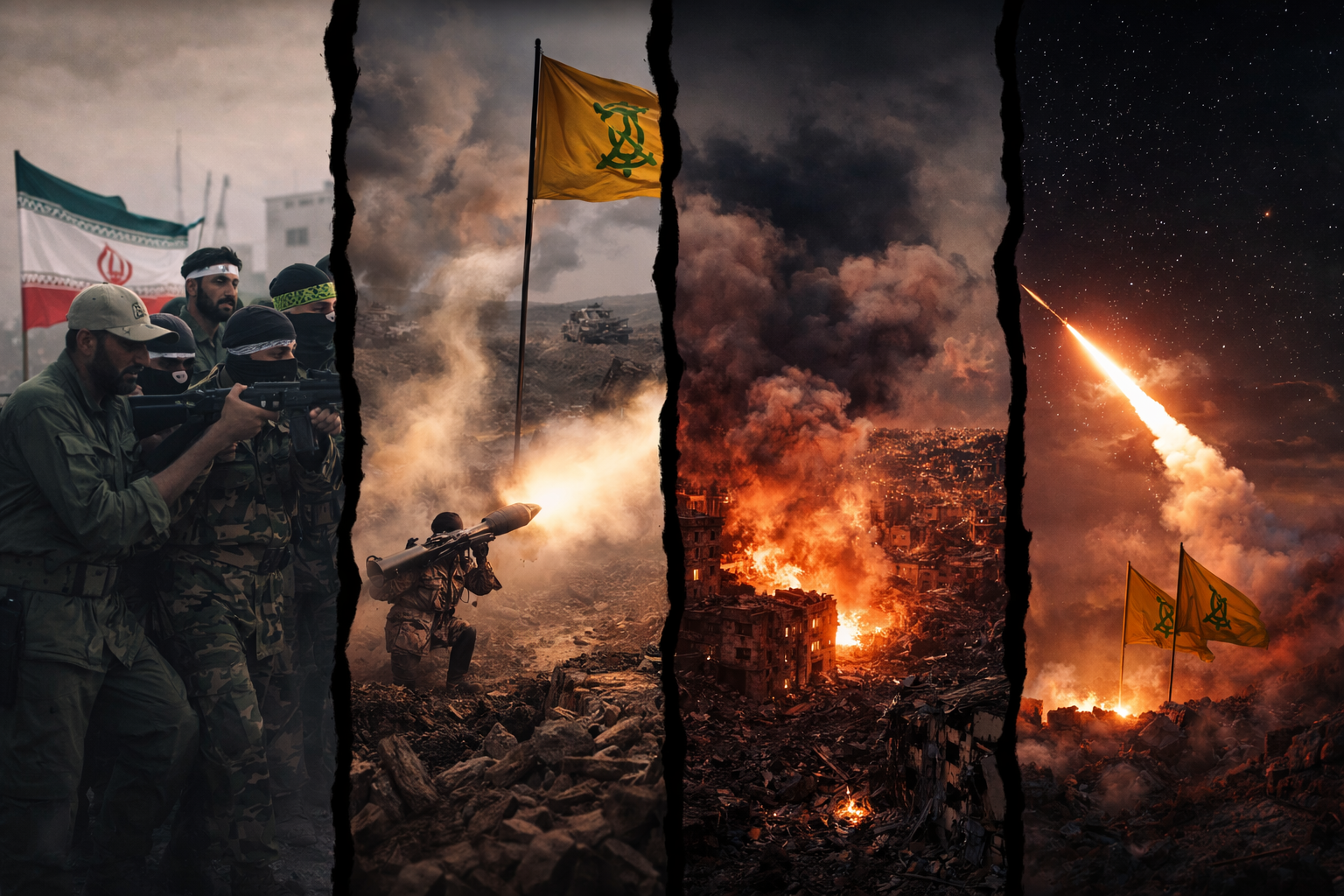
Hezbollah Explained: The Militant State Inside Lebanon
How Hezbollah Built an Army Without Becoming a State
Hezbollah is not just a militia, and that is why it has been so hard to contain. It began as a Shiite Islamist armed movement in Lebanon during the chaos of the civil war and the 1982 Israeli invasion, but over time it became something much larger: a political party, a social welfare network, an Iranian partner, and for years the strongest non-state armed force in the Middle East. It is again in open conflict with Israel after a fragile ceasefire collapsed in the wider regional war linked to Iran.
That combination is the key to understanding Hezbollah. Many armed groups can fight. Far fewer can root themselves inside a state, draw support from a marginalized community, build parallel institutions, enter parliament, survive assassinations, and still field rockets, drones, trained fighters, and a command structure that Israel treats as a serious military problem.
The overlooked factor is that Hezbollah's rise to power was not a result of Lebanon’s weakness. It became powerful because Lebanon’s weak state, sectarian system, and south-border exposure gave it room to be both protector and power center at once.
The story turns on whether Lebanon can ever reassert a true monopoly on force without breaking the political order that helped Hezbollah rise in the first place.
Where This Story Really Begins
Several crises colliding at once gave birth to Hezbollah. Lebanon’s civil war had already shattered state authority. Lebanese Shiites, long underrepresented in politics and poorer than many other communities, were concentrated in places that absorbed repeated shocks: the south, the Bekaa Valley, and parts of Beirut. Then came Israel’s 1982 invasion, which was aimed in large part at the Palestinian armed presence in Lebanon but transformed the political landscape for Lebanese Shiites as well.
Iran saw an opening. Revolutionary Guards helped organize, train, and fund emerging Shiite militants in Lebanon, and Hezbollah took shape from that environment. Its early ideology was explicitly Islamist, heavily influenced by Iran’s 1979 revolution and the doctrine of clerical rule associated with Ayatollah Khomeini. In its first phase, Hezbollah was both narrower and more radical than the organization many outsiders picture today. It was not yet a polished political machine. It was a militant project built for resistance, mobilization, and war.
Why Lebanon? Hezbollah's rise was facilitated by Lebanon's unique combination of factors: a constituency that felt exposed and neglected, terrain that directly touched Israel, and a broken state that couldn't dominate the south. Add Syrian control over key Lebanese territory during the war years, which helped Iranian personnel and support reach the Bekaa Valley, and the conditions for Hezbollah’s rise become much clearer.
From Underground Militia to “Resistance” Brand
In the 1980s, Hezbollah built its identity around armed resistance to Israel and opposition to Western military presence in the region. It also fought within Lebanon’s factional maze, including clashes with Amal, the older mainstream Shiite movement from which some of Hezbollah’s manpower and support base had partly split. But the core source of legitimacy that endured was simpler: Hezbollah claimed it was the force that would make Israel pay for occupying south Lebanon.
That claim became far more potent after Israel’s long occupation of southern Lebanon. When Israel withdrew in 2000, Hezbollah treated it as proof that armed resistance worked. That moment mattered enormously. It gave the group prestige far beyond its fighters. For many Lebanese Shiites, Hezbollah was no longer just an ideology or militia. It was the organization that had forced a much stronger enemy to leave.
The political shift followed. Hezbollah entered Lebanese parliamentary politics in 1992 and over time softened parts of its public program, including in its 2009 manifesto, which dropped the earlier demand for an Islamic republic in Lebanon. That did not mean it stopped being armed or anti-Israel. It meant it learned to operate on two tracks at once: revolutionary movement and embedded Lebanese power broker.
The Conflict With Israel, Phase by Phase
The first phase was insurgency during Israel’s occupation of south Lebanon. Hezbollah relied on guerrilla tactics, roadside bombs, rockets, and cross-border attacks to impose a constant cost. That conflict built the group’s myth and its recruitment base, as it portrayed Hezbollah as a defender of Lebanese sovereignty and resistance against Israeli aggression.
The second major phase was the 2006 Lebanon war. On July 12, 2006, Hezbollah carried out a cross-border attack that killed Israeli soldiers and captured two others. Israel responded with a 34-day war. Hezbollah showed it could sustain rocket fire into Israel under heavy assault, while Israel inflicted major destruction in Lebanon. Militarily, neither side achieved a clean, decisive end state. Politically, Hezbollah survived, and survival itself became part of its message.
The third phase was the long post-2006 rearmament era. UN Security Council Resolution 1701 called for a cessation of hostilities, stronger Lebanese state control, and no armed groups other than the Lebanese army and UNIFIL in the area south of the Litani River. In practice, that framework never fully solved the core problem. Hezbollah rebuilt, expanded its arsenal, improved training, and sought more accurate long-range weapons. By the 2020s, major analysts described it as the world’s most heavily armed non-state actor, with pre-2024 estimates for its rocket and missile stockpile often ranging well above 100,000.
The fourth phase was regionalization. Hezbollah intervened in Syria to support Bashar al-Assad, partly because Syria was its logistical lifeline to Iran. That move strengthened its battlefield experience but also deepened the argument inside Lebanon that the group no longer fought only for Lebanon, as critics argued that Hezbollah was increasingly acting as a proxy for Iranian interests in the region. It was acting as part of a wider Iran-led axis, which refers to a coalition of countries and groups in the region that are aligned with Iran's interests and policies.
The fifth phase began after October 7, 2023. Hezbollah and Israel slid into sustained cross-border fire connected to the Gaza war. In late 2024, Israel escalated sharply, killing Hassan Nasrallah and launching a major campaign that significantly weakened Hezbollah. A U.S.- and French-brokered ceasefire took effect on November 27, 2024, after roughly 14 months of conflict.
The sixth phase is the one still unfolding now. That 2024 ceasefire broke down in the wider regional war around Iran. CFR says Hezbollah launched strikes after the U.S.-Israeli campaign against Iran in February 2026, while reports say Hezbollah said it was avenging the killing of Iran’s supreme leader and had spent months rebuilding stockpiles and command systems beforehand. As of March 12, 2026, Israel is expanding operations in Lebanon, and Hezbollah is again firing rockets and drones.
Why Hezbollah Is Primarily in Lebanon
The primary reasons for Hezbollah's presence in Lebanon are demography, geography, and state failure. Hezbollah’s natural constituency was Lebanese Shiites, especially in southern Lebanon, the Bekaa Valley, and Beirut’s southern suburbs. Those are real social bases, not just military map points. Hezbollah built schools, clinics, charities, patronage networks, and reconstruction systems there, which made it more than an armed organization.
Just as important, Lebanon’s sectarian political order gave communities strong incentives to organize defensively, while the state often lacked the legitimacy or capacity to monopolize force. In that environment, Hezbollah could present itself as both shield and representative. Southern Lebanon also made Hezbollah strategically indispensable to Iran’s anti-Israel posture in a way a movement based far from the border never could be, as its geographical proximity allows for more effective military operations and logistical support against Israel.
Leadership, Size, Funding, and Military Capacity
Hezbollah’s current secretary-general is Naim Qassem, elected by the Shura Council in October 2024 after Israel killed Hassan Nasrallah and then Hashem Safieddine, another senior figure considered a likely successor. Qassem is an original-generation insider and longtime deputy, but even so, Hezbollah is designed to survive leadership loss through layered institutional control, which allows the organization to maintain its operational effectiveness and strategic direction despite changes in leadership.
Its size is disputed. Public estimates have always varied, and current figures are especially uncertain because of losses in 2024 and ongoing fighting in 2026. reported this month that Hezbollah lost 5,000 fighters in the 2024 war, while one Lebanese source said it still had around 95,000 fighters left; that figure should be treated cautiously because it comes from source reporting, not a neutral census. The more solid conclusion is that Hezbollah remains a massive armed organization even after major attrition.
Its military capacity is still serious, but not what it was before 2024. CSIS has long tracked Hezbollah as the most heavily armed non-state actor, with a vast rocket force and efforts to improve precision and range. reported that by early March 2026, some assessments put Hezbollah’s remaining arsenal at about 25,000 rockets and missiles after the 2024 campaign, while it was also rebuilding drone stocks and using local manufacturing. That suggests a force degraded in scale but still dangerous enough to sustain multi-day fire, threaten northern Israel, and force Israel to plan for ground operations.
Funding is similarly layered. Iran remains the central external backer, providing money, weapons, and training. U.S. government materials say Hezbollah draws almost $1 billion annually through Iranian support, businesses and investments, donor networks, corruption, and money laundering. Treasury sanctions in 2025 described Hezbollah finance teams using commercial projects and oil-smuggling networks tied to Iran’s Qods Force, while recently citing a roughly $50 million monthly wartime budget, mostly from Iran.
What Most Coverage Misses
The common shorthand is that Hezbollah is “an Iranian proxy.” That is true, but incomplete. Proxy language can make the group sound like a remote-controlled foreign instrument. In reality, Hezbollah became durable because it fused outside support with real local roots in Lebanon’s Shiite community, especially where the Lebanese state was weakest and the Israeli threat felt most immediate.
That changes the analysis. If Hezbollah were only an imported militia, cutting supply lines might be enough. But because it also became a social base, a political actor, and a prestige project tied to “resistance,” disarming it has always been harder than bombing depots, as these roles provide Hezbollah with significant support and legitimacy among its constituents. Israel can degrade it. Lebanon can pressure it. Iran can replenish it. But removing it altogether means changing the political bargain inside Lebanon, not just winning the next exchange of fire, as it would require addressing the underlying power dynamics and alliances that currently support Hezbollah's influence in the region.
What to Watch Next
Hezbollah today is weaker than it was under Nasrallah at its peak, but it is not gone. The more accurate picture is a wounded hybrid: less invulnerable, still dangerous, more politically contested at home, yet capable of pulling Lebanon and Israel back into war.
The next signposts are concrete. Watch whether Lebanon’s government can keep enforcing restrictions on Hezbollah’s military activity, whether Israel limits itself to degradation or tries to impose a deeper buffer by force, whether Iranian funding and supply routes recover despite pressure, and whether Hezbollah continues rationed guerrilla-style operations rather than returning to the kind of massed arsenal posture it once favored. Those signals will show whether Hezbollah is entering a long decline, adapting into a leaner insurgent force, or preparing for another cycle of rearmament and border war. In that sense, Hezbollah’s history is not a closed chapter. It is the clearest test of whether the Lebanese state, the Israeli deterrence model, and Iran’s regional network can all keep coexisting on the same frontier.
