History of Vampires: Vampires Survive Every Age. Here’s Why.
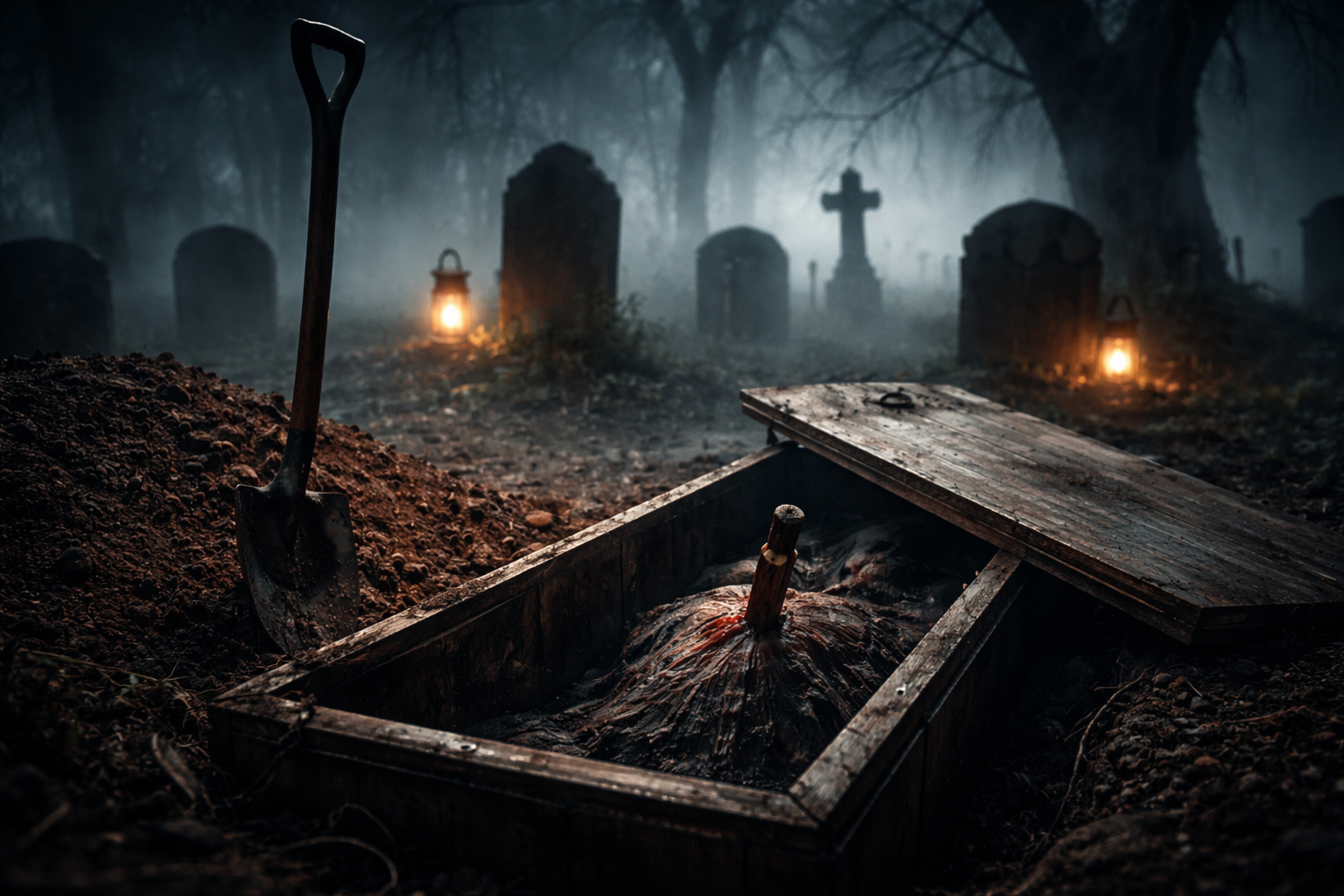
The history of vampirism, from Balkan grave rituals to Dracula and modern pop culture—how fear, disease, and media kept the vampire alive for centuries.
The Real Vampire Panic: When Europe Dug Up Its Dead—and Created a Monster
Vampires didn’t start as seductive aristocrats. They started as a community emergency with a body in the ground and neighbors dropping dead.
This story is about vampirism as a human system for explaining invisible harm: disease without a diagnosis, misfortune without a culprit, and grief without an off-switch.
The decisive window runs from the Balkan borderlands of the early modern era to the 18th century, when officials, doctors, and printers helped a local fear travel faster than any superstition should.
Once the vampire entered paperwork and print, it stopped being a village problem and became a portable idea—ready for literature, cinema, and every new anxiety that needed a face.
The story revolves around the intersection of borderland fear, state bureaucracy, and mass print.
Key Points
Vampirism is the belief that certain dead people can return and drain life from the living, often framed as blood-drinking or “consuming” vitality.
The decisive starting point is Southeastern and Eastern Europe, with the most influential flashpoint in the early 1700s along Habsburg-controlled border regions.
A major turning point came when official investigations and reports turned local grave rituals into widely circulated “cases” that Western readers treated as both horror and headline.
Another turning point was the 19th-century literary remake that transformed the vampire from a bloated corpse rumor into an elegant predator with social power.
The biggest constraint shaping outcomes was medical uncertainty: sudden clusters of death demanded an explanation before science could provide one.
The hinge shock was not a single “first vampire” but the moment rumor gained administrative legitimacy and distribution.
What changed most was the vampire’s image and function; what endured was its job as a model for unseen threat and intimate violation.
The clearest legacy signal is the vampire as a reusable social metaphor—contagion, exploitation, invasion—repackaged for each era.
Background
Before "vampirism" became a modern word, the practical problem was brutally simple: people died quickly, often in clusters, and communities had limited tools to explain why.
Frontier regions in Southeastern Europe lived under constant strain—war, shifting borders, forced migrations, and the everyday fragility of agrarian life. When illness moved through a village, the “cause” had to be something the community could act on.
Local belief systems already offered mechanisms for action: rules around burial, taboos about the dead, rituals to “fix” an unsafe corpse, and a moral logic that turned misfortune into accountability. Clergy, elders, and family networks managed these crises long before the modern state could.
Then the state arrived more forcefully—soldiers, administrators, and physicians—bringing a second system: paperwork, order, and the need to translate local practices into official categories that could be governed.
This collision paved the way for a local fear to transform into a European obsession.
The Origin
The most decisive origin point for vampirism as a recognizable European phenomenon sits in the early modern Balkan and Slavic world of revenant belief—dead bodies understood as active agents in the lives of the living.
What made it historically “sticky” was not just the folklore, but the setting. Border regions produced unusually intense pressures: population movement, fractured trust, sudden death, and a constant need to identify threats quickly. A corpse that looked “wrong” could become a practical explanation and a practical target.
The pivotal moment occurred when outsiders with institutional authority recorded, investigated, and transmitted those village explanations. Reports turned episodes of fear into a genre of evidence, and print turned evidence into repetition.
Enabling conditions were stacked: frontier governance, weak medical knowledge, religious conceptions of the restless dead, and a distribution system eager for the strange and alarming.
That combination is how a regional panic gained an exportable name and an enduring shape.
The Timeline
Revenants Before “Vampires”
Long before the modern vampire, cultures carried stories of predatory dead and night spirits—figures that explained wasting illness, sleep paralysis, and the feeling that something was stealing life while you lay helpless.
The mechanism was social control as much as superstition: burial rules, taboos, and rituals created a sense of agency when medicine could not. The constraint was ignorance of infection and decomposition; bodies did strange things in graves, and grief makes patterns feel mandatory.
These early templates supplied the vampire’s key feature: an unseen force made personal. The stage was set for a specific version to take over.
Borderlands, Epidemics, and Actionable Blame
In early modern Southeastern Europe, fear had its infrastructure: isolated villages, harsh winters, limited clinicians, and an economy in which one death could collapse a household. When multiple individuals fell ill, the demand was not for philosophical accuracy, but rather for a lever to activate.
The mechanism was community triage. Accusations often followed the logic of proximity and memory: the recently dead, the socially marginal, the suspected outsider, and the person whose death felt “unfinished.” A vivid detail appears again and again in accounts from the era: graves reopened, bodies inspected, and signs of “freshness” treated as proof.
The constraint was time. Without effective treatment, the window for action felt narrow, leading to ritual becoming the default policy.
These events created the conditions for official attention.
The Paperwork Vampire
The pivotal moment occurred when authorities viewed these incidents as administratively comprehensible. Once an official investigation was written down, translated, and circulated, the vampire was no longer confined to a local dialect of fear.
The mechanism was bureaucratic amplification: reports that described exhumations, testimonies, and “findings” traveled into urban reading publics hungry for marvels, scandals, and threats. Alternatives were limited because the state’s priority was stability; suppressing disorder mattered more than adjudicating metaphysics.
Here the vampire’s path changes most. A village story becomes a European “case,” and a case becomes a meme before the internet was imaginable.
Enlightenment Curiosity, Religious Authority, and the New Audience
Once the vampire reached educated readers, it was pulled into institutional competition: theologians, physicians, and editors each tried to define the borders of the credible.
Compilers gathered accounts, skeptics reframed them as error, and defenders treated them as proof that the world remained spiritually dangerous. The constraint was legitimacy: admitting the vampire too easily risked ridicule; dismissing it too aggressively risked alienating believers and local officials who had already acted.
What the vampire gained in this phase was narrative flexibility. It could live as superstition, as controversy, or as entertainment—often simultaneously.
That flexibility made the next transformation easier.
The Victorian Makeover: From Corpse to Count
The 19th century did not invent vampirism; it redesigned it for modern anxieties. The vampire became articulate, strategic, and socially mobile—less plague-corpse, more predator with manners.
The mechanism was cultural synthesis. Gothic fiction fused older revenant motifs with fears about modernity: urban anonymity, sexuality, class extraction, empire, and the porousness of borders. A vivid detail became iconic: the vampire crossing into England not as a superstition, but as a logistical problem—transport, property, and access.
The constraint was acceptability. Horror needed to be publishable and stageable, which pushed the monster toward metaphor and style.
Now the vampire could survive without literal belief.
Media and the Infinite Vampire
Film and television turned the vampire into a global product, and consumer culture gave it endless skins: monster, lover, antihero, addict, aristocrat, outsider, immortal teen, and corporate predator.
The mechanism is replication with variation. Each generation keeps the core transaction—life taken from the living—then swaps the surface to match the era’s fear. The constraint is attention: the vampire must keep changing to stay recognizably the same.
At that point, endurance is no longer mysterious. The vampire has become a format.
Consequences
The immediate consequence of the vampire panic era was a new boundary-making project: who gets to decide what is real and what the state will tolerate communities doing to the dead?
In the near term, official scrutiny pushed local ritual into the light and forced arguments about evidence, expertise, and public order. In the longer run, the vampire became a tool: a way to talk about contagion, exploitation, seduction, and invasion without naming the real target directly.
Second-order effects mattered most. The vampire taught modern culture how to turn private dread into a repeatable public narrative—one that can be moralized, politicized, eroticized, or monetized on demand.
That is why the next question is never “Do vampires exist?” but “What is the vampire doing for us right now?”
What Most People Miss
The vampire’s breakout wasn’t driven only by folklore. It was driven by distribution.
A rumor in a village can die in a generation. A rumor that gets written into reports, translated into major languages, and repeated by printers becomes a durable object—something strangers can inherit without sharing the original fear.
That administrative pipeline also changed the vampire’s shape. Once the monster had to be described for outsiders, it became standardized: a recognizable pattern of symptoms, evidence, and response.
That standardization is what later artists, filmmakers, and marketers could reliably remix.
What Endured
Fear of invisible causes of death remained constant, even as explanations changed.
Communities kept searching for actionable blame when medicine lagged behind experience.
Anxiety about outsiders and border-crossing persisted, whether the “outsider” was a stranger, a class enemy, or a desire you weren’t supposed to have.
The body remained central as contested evidence: what you see in the flesh becomes what you believe in your mind.
Story systems kept rewarding the vampire because it compresses multiple threats into one face: intimate, contagious, and hard to reason with.
Those forces are why the vampire survives every attempt to modernize it away.
Disputed and Uncertain Points
The origin of the word "vampire" remains contested, with competing theories about Slavic roots, transmission routes, and later reinterpretations by different linguistic traditions.
How “official” vampire investigations should be read is debated: some treat them as sincere documentation of belief and practice, while others emphasize sensational framing and the politics of frontier governance.
The relationship between Dracula and earlier historical figures is often overstated in popular retellings; the novel draws on multiple inputs, and direct one-to-one origins are harder to pin down than the myth suggests.
Whether vampirism episodes were primarily responses to disease patterns, social conflict, or a mix of both is not settled, because the same event can be read as medical confusion, communal policing, and narrative tradition at once.
Legacy
The vampire’s most concrete legacy is ritual and procedure turned into story: exhumation, inspection, staking, and burning—actions that feel like control when control is missing.
The deeper legacy is an administrative habit of mind. Once fear is written as a case, it can be filed, repeated, argued over, adapted, and sold. That is why vampirism endures: it is not just a monster but a method for making an unseen threat legible.
The vampire keeps returning because each era keeps inventing fresh ways to feel drained, invaded, and implicated.
Subscribe on Spotify, or explore more articles for more compelling insight.
